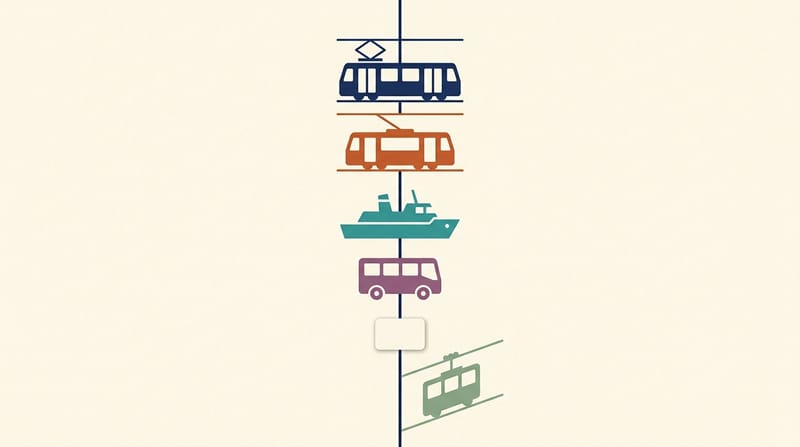
The most practical way to understand public transport in Istanbul is not to memorize individual lines, but to understand how the system works. As of 2026, Istanbulkart is the common payment method across integrated public transport modes; journeys can combine metro, tram, ferry, bus, and funicular. Because fares and transfer conditions can change, this guide avoids price figures and instead explains how the card is used, what each mode is best for, and which official sources should be checked for current information.
Three common myths about Istanbul public transport
A frequent mistake for first-time users is to treat every transport mode as a separate ticketing system. As of 2026, the core logic is to use the modes within the Istanbulkart integration under one payment system and transfer when needed. Transfer discounts may apply to eligible journeys made within a defined period, depending on card type, journey, and the current tariff. For changing details such as fares, discount rules, or the transfer window, use the official pages of Istanbul Metropolitan Municipality, Istanbulkart, Metro Istanbul, and City Lines.
Each transport mode requires a separate ticket.
As of 2026, Istanbulkart is a common payment method on integrated public transport such as metro, tram, ferry, bus, and funicular. Check the relevant operator’s official source for the current scope.
Official source: Istanbul Metropolitan Municipality Transport Services and official Istanbulkart sources, as of 2026.
Every boarding is charged at the full tariff.
For eligible cards and journeys, transfers made within a defined period may qualify for a discounted tariff. Because conditions can change, verify the current transfer rule in official Istanbulkart and operator tariffs.
Official source: Official Istanbulkart and City Lines tariffs, as of 2026.
The ferry is only a tourist activity, not public transport.
City Lines ferries are part of Istanbul’s public transport network and can be used for normal transport journeys with Istanbulkart. Use the current official City Lines timetable for routes and services.
Official source: Official City Lines and Istanbul Metropolitan Municipality transport sources, as of 2026.
How the system is built: modes complement one another
Istanbul’s transport network does not depend on a single vehicle type. Rail provides more predictable movement on corridors separated from road traffic; tram is useful in central and historic corridors where closely spaced stops reduce walking. Ferries can remove road traffic from some trips between the European and Asian sides. Buses complete neighborhood and cross-connection coverage where rail does not reach directly, but travel time can vary with traffic. Funiculars handle short links with steep elevation changes. As of 2026, the practical choice is not one “best” mode, but a combination based on origin and destination.
A transport network with one card
The main transport modes serve different purposes; the aim is to combine the most suitable connections for the origin and destination within the same payment system.
Metro
Urban backboneA more predictable choice on major corridors separated from road traffic, especially during busy periods.
Tram
Historic peninsulaUseful for reducing walking in central and historic corridors where stops are relatively close together.
Ferry
Intercontinental crossingWhen suitable piers connect the route, it provides a crossing between the European and Asian sides without entering road traffic.
Bus
Feeder connectionConnects neighborhoods and corridors not directly served by rail; travel time can vary with traffic conditions.
Funicular
Steep connectionProvides a short link that reduces uphill walking where there is a clear elevation difference.
5 modes unlocked with one card
Eligible transfers made within a defined period may be discounted; verify current conditions in official Istanbulkart and operator tariffs.
Because line, station, and service information can change, rely on official sources from the relevant operators such as Metro Istanbul, IETT, and City Lines.
A journey in Istanbul often consists of connecting legs rather than a single boarding. One section may be by rail and the next by ferry or bus; the key is to plan each mode as part of the same journey rather than as a separate system. Istanbulkart brings these connections into one payment framework. Eligible transfers may receive a discount, but entitlement and scope can vary by card type and current tariff. Do not assume a fixed number of minutes for the transfer window: know only that eligible transfers made within a defined period may be discounted, and verify the current value through official sources. For fare and tariff changes use official Istanbulkart and municipal channels; for rail use Metro Istanbul, and for ferries use City Lines.
How to get an Istanbulkart and prepare it for use
As of 2026, the standard anonymous Istanbulkart is a card that is not tied to personal discount or free-travel entitlements and can be used for regular public-transport payments. A personalized card is linked to its user; benefits such as transfers, distance-based refunds or certain public entitlements depend on the card type and current rules. An anonymous card can be tapped consecutively for more than one person at some gates, but transfer and refund benefits may not be applied separately to every passenger when the card is shared. Personalized, discounted or free cards should not be shared. Balance can be loaded at official sales and top-up points or through supported methods in the official Istanbulkart app. Card types, personalization requirements and current travel rights should be verified through official Istanbulkart channels. The convenience of an anonymous card should not be confused with person-specific entitlements; one shared card does not function as a separate personalized card for every member of a group.
How are you starting?
Getting the card and loading enough balance before entering public transport makes the connections after the terminal easier to manage.
Find the machine
Follow public-transport signs to an official Istanbulkart or ticket vending machine; check on-site signs because terminal layouts can change.
Get the card
Obtain an appropriate anonymous card for standard travel from an official sales point; personalized or discounted cards may have separate eligibility requirements.
Load balance
Load enough balance for the first journey and possible connections; check the current fare on official Istanbulkart and operator sources.
Pass the gate
Tap the card clearly once on the validator and pass after seeing the confirmation; entry or refund rules can vary by transport mode.
Sales points and transport access vary by airport and terminal, so as of 2026 follow the official guidance of the airport you are using and Istanbulkart.
Inside the city, the most practical start is to prepare the card at a nearby official sales or top-up point and plan the journey as a chain of connections.
Go to the station
Go to the public-transport access point you will use and follow the official signs for card sales, top-up or validation at the entrance.
Get and top up the card
If needed, obtain an anonymous Istanbulkart and load enough balance for the full chain of travel; remember that the card cost and travel balance are separate.
Use the transfer
Plan the trip as connections rather than a single boarding; transfers within a certain period may be discounted on eligible cards, but verify the current conditions in official sources.
Transfer discounts and distance-based refunds can vary by card and service type; as of 2026 verify the current rule with official Istanbulkart and operator sources.
Which transport mode is the better choice, and when?
Mode choice should not be based only on the shortest line on a map. During heavy road traffic, rail can be more predictable than road transport; in the historic center, trams can reduce walking thanks to closely spaced stops; and when a suitable pier connection exists between the two sides, ferries provide a crossing independent of road traffic. Buses play a connecting role in areas not directly served by rail. Because service, station and route conditions can change, check the relevant operator’s official information before travel. There is no single correct mode for the same origin and destination; crowding, the number of transfers, walking distance and the current status of scheduled services can change the best choice.
| Situation | Recommended mode | Why |
|---|---|---|
| Long distance during periods of heavy road traffic | Metro or rail | On corridors separated from road traffic, travel time can be more predictable; check the current route in official rail-system sources. |
| Short trip within the historic peninsula | Tram | Closely spaced stops on central corridors can shorten walking and make frequent-stop trips easier. |
| Crossing between the European and Asian sides | Ferry | With a suitable pier connection, it crosses between the two sides without entering road traffic; because services follow a timetable, check the current Şehir Hatları schedule. |
| District not directly served by rail | Bus | It connects neighborhoods outside the rail network to main transport corridors; travel time can vary with traffic, road works and crowding. |
How does mode choice change during crowded periods?
During busy periods, the same route may be easier to manage with a different transport mode. When road traffic becomes heavy, rail usually stands out for predictability where available; if a suitable ferry connection links the two sides, it can also avoid road congestion. At the same time, passenger density can rise in metros, trams and transfer hubs, so the choice should consider not only vehicle speed but also station access, waiting, transfers and walking. Rather than relying on a fixed duration, assess the route using official service information at the time of travel. Where practical factors such as luggage, a stroller or limited mobility matter, a connection with fewer transfers and easier access may be preferable to the option that appears fastest.
- Load balance in advance: Checking that the card has enough balance before the trip reduces interruptions, especially on routes with transfers.
- Tap the card correctly: Hold the card briefly and clearly to the validator and do not pass before the confirmation signal; if there is an error, ask staff or use an official support channel.
- Use the transfer window consciously: Connections within a certain period may be discounted on eligible cards; because the exact time or rate can change, verify the current rule in official Istanbulkart and operator tariffs.
- Check the ferry timetable in advance: Sea transport operates on scheduled services rather than a continuous flow, and schedules can change for seasonal or operational reasons; rely on official Şehir Hatları service information.
- Plan for loss risk: If an unpersonalized anonymous card is lost, its balance may not be protected; for personalized cards, use official Istanbulkart channels for loss and balance-protection options.