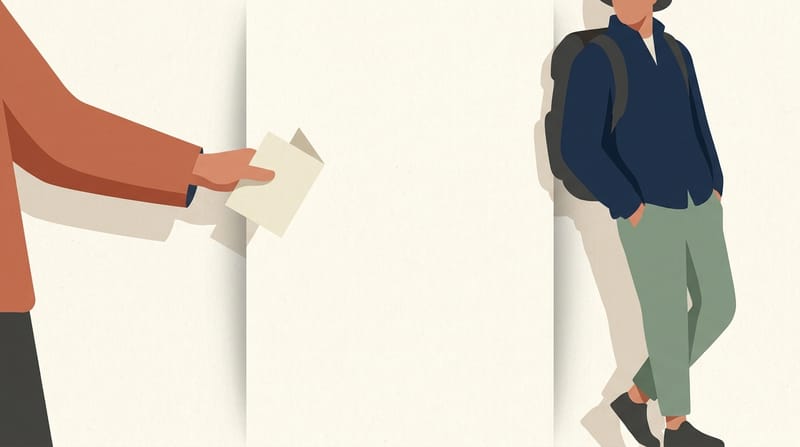
Treating a travel scam as a single payment moment is one of the most common assessment errors. When people say “I would never fall for that,” they often picture only the final scene: a card being handed over, money being demanded, or an inflated bill appearing. The risky decision usually starts earlier: an unexpected approach, a few minutes of stalling, a small favor or gift, then a commitment that becomes psychologically harder to reverse. This guide explains those mechanisms without blaming any city or community, focusing on signs visible in the first moments and on safe ways to leave. The goal is not to avoid strangers; it is to notice when control over the decision is beginning to shift. As of 2026, official travel-safety and card-security guidance follows the same principle: do not decide under pressure, verify terms through an independent source, and report suspicious payment activity promptly to the card issuer.
Why does a scam start before the payment?
An effective setup often advances not through one dramatic lie but through small steps that each seem reasonable on their own. At the first step, ending the conversation is easy. A few minutes later, a person may have spent time, moved to another place, accepted a service, or taken an object. At that point, thoughts such as “I do not want to be rude,” “we have already started,” or “I do not want an argument” raise the cost of leaving before any money is lost. The key defensive question is not “Is this person a scammer?” because that is often impossible to know immediately. A safer question is: “Can I independently verify the price, identity, route, or authority involved in this transaction?” If not, the lowest-cost move is not to proceed to the next stage.
EXIT FUNNEL
Approach
FreePitch“One minute, let me show you for free.”
MoveDo not stop; give a brief “no” and keep walking on your own route.
Stalling
FreePitch“Just two minutes, let us step over here.”
MoveDo not move to another location; end the conversation and return to your route.
Commitment
CostlyPitch“We already started, you cannot stop now.”
MoveIf there is no written price or clear condition, do not accept the service; return any item and leave.
Payment
No returnPitch“Pay now, there is no other option.”
MoveDo not give a new approval; take back your card, move to a safe place, and contact the issuer or local police if needed.
This is a typical sequence; some schemes skip a stage or move through several stages very quickly.
Common scam setups
Common setups look different across countries, but they share one feature: they shorten the traveler’s decision time or remove independent verification. The examples below do not explain how to commit a crime; they summarize the mechanism from the victim’s perspective, the early sign, and the move that ends the interaction. Phrases such as “closed,” “meter broken,” “free,” “last chance,” or “pay now” can be harmless by themselves; they become meaningful when there is no opportunity to verify the claim. As of 2026, Visa and Mastercard’s official security pages advise prompt reporting of suspicious card activity to the issuer and the use of transaction alerts, while official travel-safety guidance also emphasizes clarifying transport and payment terms in advance.
| Setup | How it works | Early sign |
|---|---|---|
| Closed-place redirection | You are told the place you planned to visit is closed and are immediately pushed toward another shop, tour, or ticket point; the aim is to change your decision before independent verification. Exit: Verify the closure through the venue’s own official channel or ticket office and decline the redirection. | You are told “it is closed” before asking, while one specific alternative is pushed immediately. |
| Broken meter | The meter is not started or the fare method is left unclear at the beginning of the ride, and an unexpected amount may be demanded on arrival. Exit: Clarify the meter, app, or fare method before the vehicle moves; if there is a dispute, end the ride at a safe place. | The vehicle moves without the meter being activated, or a fare question gets no clear answer. |
| Friendly bracelet | An unsolicited bracelet, flower, or small item is placed in your hand and a fee or donation is then requested. Exit: Do not take the item; if you already have it, return it and leave without prolonging the argument. | Immediately after greeting you, someone tries to place something in your hand or on your wrist. |
| Card-skimming risk | Your card or PIN may be exposed at an ATM or payment terminal that appears altered or poorly controlled. Exit: Cancel the transaction; use a bank-operated or well-supervised terminal, prefer contactless payment when available, and shield PIN entry. | A loose card slot, unusual overlay, adhesive marks, or a suspicious extra component aimed at the PIN area. |
| Fake ticket or tour | An unauthorized person or site uses an official-looking presentation to sell an invalid ticket or a product with different terms. Exit: Do not pay until the seller and booking can be verified through the official operator, ticket office, or verification channel. | “Only now” pressure, a request to pay outside the official channel, or a booking number that cannot be independently verified. |
Three situations, three correct responses
The same defensive move does not work in every situation. In a street approach, the goal is to end contact early; in a transport fare dispute, the price and route evidence should be fixed first; with a card or ATM concern, stopping the financial transaction comes immediately after physical safety. The three scenarios below separate the early warning sign from the exit move.
Persistent street approach
Early sign: help, a gift or a direction starts without being requested, and your attempt to end the conversation is ignored.
Persistent street approach
Early sign: help, a gift or a direction starts without being requested, and your attempt to end the conversation is ignored.The exit move is simple: keep walking without stopping, avoid physical contact and do not take the offered object. If you feel followed, blocked or threatened, move toward a busy, well-lit area, security staff or a police point. Ending the contact is safer than trying to win an argument.
Do
- Give a brief refusal and keep walking.
- Keep your bag closed and your phone under control.
- If the pressure continues, move to a guarded or crowded place.
Don't
- Do not accept an unsolicited bracelet, card, flower or similar object.
- Do not give unnecessary personal details such as ID, hotel, room number or travel plans.
- Do not prolong the conversation just to avoid appearing rude.
Official source: The destination's official police or tourism-police safety page; local police in an emergency.
Taxi or transport fare dispute
Early sign: the fare, meter, app price or route cannot be clarified before departure, or a different rule is introduced afterward.
Taxi or transport fare dispute
Early sign: the fare, meter, app price or route cannot be clarified before departure, or a different rule is introduced afterward.The exit move is to clarify the pricing method before the ride starts: the fare shown in an official app, a working meter or a written fixed price. If a dispute arises during the trip, ask to stop in a safe public place and keep details such as the vehicle, plate, time, route and receipt. Rather than escalating a physical confrontation, report the issue to the official operator, transport authority or police.
Do
- Confirm the pricing method on screen or in writing before departure.
- Keep the plate number, vehicle ID and app trip record.
- If there is a dispute, ask to get out in a safe, well-lit public place.
Don't
- Do not start a ride with a vague 'we'll settle it later' price.
- Do not leave your phone or passport as collateral.
- Do not enter a physical confrontation; preserve evidence and use an official channel.
Official source: The destination's official transport authority, taxi regulator or tourism police.
Suspicious card or ATM transaction
Early sign: an added part on the ATM, an unusual screen, unsolicited help from a stranger, or your card being taken out of sight.
Suspicious card or ATM transaction
Early sign: an added part on the ATM, an unusual screen, unsolicited help from a stranger, or your card being taken out of sight.The exit move is to cancel the transaction and retrieve the card. If the ATM looks physically suspicious, use another machine, preferably at a bank branch or in a controlled area. If the card is lost, retained or an unauthorized-transaction alert appears, lock it immediately and report the transaction through the card issuer's official app or phone number.
Do
- Cover the keypad when entering your PIN and check your surroundings.
- If in doubt, cancel and use another ATM or payment point.
- On an unauthorized-transaction alert, lock the card immediately and notify the issuer.
Don't
- Do not let a stranger guide you at an ATM or touch your card.
- Do not let the card leave your sight during payment.
- Do not delay reporting a suspicious transaction because the amount is small.
Official source: Mastercard ATM Safety Tips, Visa security and fraud guidance, and the card issuer's official security channels.
Money and card safety: simple habits
Financial safety is less about choosing one 'safest payment method' and more about spreading risk. Cash is useful for some small payments; cards can provide a transaction record and, depending on the issuer and transaction, dispute options. A stronger approach is to avoid keeping all cash and cards together, keep transaction alerts enabled and never approve extra options such as currency conversion without reading the screen.
- Split cash: Keep the amount needed for the day in an accessible place and reserve cash separately in a safer location. If a wallet is lost, this prevents all cash from disappearing at once.
- Enable card alerts: Turn on instant transaction notifications in the card issuer's app. Locking the card as soon as an unfamiliar transaction appears can help limit further use.
- Choose ATMs carefully: Prefer well-lit, monitored ATMs, ideally inside or next to a bank branch. If you see a loose or added part around the card slot, keypad or machine, cancel the transaction.
- Assess and, when appropriate, decline DCC: As of 2026, Visa says a Dynamic Currency Conversion offer should clearly show the amount in local and cardholder currency, the exchange rate and any additional fee. If these details are unclear, decline the conversion; choosing the local currency often makes the cost easier to compare.
- Keep the card in sight: For in-person payments, do not agree to the card being taken to another room or out of view. Ask for a portable terminal or go to the till yourself, and do not leave before the card is returned.
What to do if you have been scammed
First, stop any transaction still in progress: lock the card, sign out of the digital account, or try to cancel a transfer if it has not yet completed. Then contact the card issuer or payment provider only through its official app, the number printed on the card, or its official website and open a fraud/dispute case. If the incident involves physical theft, threats, fake tickets, deceptive transport services or a significant financial loss, file a report with local police and keep the report or reference number. If a passport or travel document is also lost, contact the nearest consulate or diplomatic mission of your own country. Finally, card-dispute deadlines can vary by card scheme, issuer, transaction type and jurisdiction, so do not wait; as of 2026, confirm the applicable deadline directly with the issuing institution.
Common mistakes
The first mistake is failing to report the incident out of embarrassment. Because scams use social pressure and distraction, thinking 'I should have been more careful' should not delay evidence collection. The second mistake is ignoring a transaction because the amount is small; a small unfamiliar card charge can be the first sign that card details were compromised. Third is relying on a single card for the entire trip; a backup payment method kept separately reduces the logistical problem if the main card is lost. Fourth is standing in a crowd with a phone exposed for a long time while checking directions; reviewing the map from a safer spot makes it easier to maintain awareness of the surroundings.