Solo travel changes the allocation of responsibility more than the destination itself. There is no companion to split route finding, accommodation checks, taxi fares or last-minute decisions, so preparation has a larger effect on comfort. This does not mean every trip needs a rigid schedule.
What changes when you travel alone?
Solo travel changes the allocation of responsibility more than the destination itself. There is no companion to split route finding, accommodation checks, taxi fares or last-minute decisions, so preparation has a larger effect on comfort. This does not mean every trip needs a rigid schedule.
Independence also changes the economics. A room priced per room is not automatically half-price because one person sleeps in it; a taxi or private transfer is paid by one passenger instead of being divided; and some escorted tours, cruises or resorts apply a single supplement when a package is designed around double occupancy.
Guide by situation
Open the situation that applies to you. The summary gives the main rule; the expanded text explains the reasoning and practical steps.
Late-night return
Decide the return route before going out and verify the transport that will actually be operating at that hour.
Late-night return
Decide the return route before going out and verify the transport that will actually be operating at that hour.Check the official operator timetable before leaving; keep the accommodation address offline and have a licensed backup option where available.
Do
- Save the accommodation address offline.
- Check the last practical return option.
Don't
- Assume daytime transport runs all night.
- Follow an unfamiliar shortcut only because it looks faster.
Source: Official transport operator / destination travel advice
Choosing accommodation
Prioritise a location you can reliably reach, not only the lowest nightly price.
Choosing accommodation
Prioritise a location you can reliably reach, not only the lowest nightly price.Check the official address, access rules, reception or self-check-in procedure, and the route from the main station or airport before paying.
Do
- Compare total cost and access, not only room rate.
- Read the property access and check-in rules.
Don't
- Book without checking the arrival procedure.
- Choose an isolated location only for a small saving.
Emergency preparation
Save the local official emergency number, accommodation address and insurance assistance contact before arrival.
Emergency preparation
Save the local official emergency number, accommodation address and insurance assistance contact before arrival.The U.S. Department of State recommends reviewing destination-specific advice and organising travel documents before departure. In the EU, 112 is the free common emergency number.
Do
- Keep emergency contacts available offline.
- Know how to contact your insurer.
Don't
- Rely only on internet access in an emergency.
- Assume the same emergency number works in every country.
Source: U.S. Department of State; European Commission
Eating alone
Choose formats that match your comfort and budget; eating alone does not require a special type of restaurant.
Eating alone
Choose formats that match your comfort and budget; eating alone does not require a special type of restaurant.Counter seating, food halls, markets, casual restaurants and reservations for one can all work. Check reservation rules when a venue is popular or fixed-menu based.
Do
- Reserve when a venue requires it.
- Use busy food halls or counters if you prefer a less formal setting.
Don't
- Skip meals because a venue looks designed for groups.
- Assume every restaurant accepts walk-ins.
Money and documents
Separate the passport, backup payment method and copies so one loss does not remove every option.
Money and documents
Separate the passport, backup payment method and copies so one loss does not remove every option.Official U.S. guidance recommends multiple copies of important travel documents and keeping a set separate from the originals.
Do
- Keep a backup payment method separately.
- Store document copies apart from originals.
Don't
- Carry all cards and cash in one wallet.
- Leave the only passport copy with the passport.
Source: U.S. Department of State
Finding your way
Build each day around a few transport anchors and keep an offline map available.
Finding your way
Build each day around a few transport anchors and keep an offline map available.Save the accommodation, main station and return stop. Recheck the route before leaving reliable connectivity, especially when services change at night.
Do
- Download an offline map.
- Save stations and accommodation as favourites.
Don't
- Depend on a single live-map app with no offline backup.
- Board a service without confirming direction when lines branch.
Source: Official local transport operator
Meeting people
Use public, purpose-based settings and keep control of your own return transport.
Meeting people
Use public, purpose-based settings and keep control of your own return transport.Walking tours, classes, language exchanges, hostel common areas and small-group activities provide a shared context. Keep first meetings public and retain your own documents and payment methods.
Do
- Choose public venues for first meetings.
- Keep independent transport back.
Don't
- Hand over passport, bank card or room key as a trust gesture.
- Make your return dependent on someone you just met.
Health and insurance
Confirm medical coverage and emergency assistance before the trip, not after care is needed.
Health and insurance
Confirm medical coverage and emergency assistance before the trip, not after care is needed.Official U.S. guidance recommends considering travel medical insurance and reviewing what is and is not covered, including medical evacuation.
Do
- Read exclusions and assistance procedures.
- Save insurer contact details offline.
Don't
- Assume domestic health coverage automatically applies abroad.
- Buy a policy without checking evacuation and pre-existing-condition rules.
Source: U.S. Department of State
The real cost of travelling alone
Room pricing and the solo premium
Independence also changes the economics. A room priced per room is not automatically half-price because one person sleeps in it; a taxi or private transfer is paid by one passenger instead of being divided; and some escorted tours, cruises or resorts apply a single supplement when a package is designed around double occupancy.
Transport that cannot be split
Independence also changes the economics. A room priced per room is not automatically half-price because one person sleeps in it; a taxi or private transfer is paid by one passenger instead of being divided; and some escorted tours, cruises or resorts apply a single supplement when a package is designed around double occupancy.
Tours and single supplements
Independence also changes the economics. A room priced per room is not automatically half-price because one person sleeps in it; a taxi or private transfer is paid by one passenger instead of being divided; and some escorted tours, cruises or resorts apply a single supplement when a package is designed around double occupancy.
Where to start
For a first solo city, practical friction matters more than a universal ranking. Tokyo has an extensive rail and subway network, multilingual signs and many hostels and business hotels. Singapore combines dense public transport with a compact central area.
Tokyo
Tokyo is a strong candidate when transport coverage is the main criterion. GO TOKYO describes an extensive rail and subway network, multilingual signs and many accommodation types including hostels and business hotels. The network is large, so the useful preparation is to learn the station nearest the accommodation and use an IC card or ticket method supported by the operator.
Singapore
Singapore is practical when a compact city core and integrated public transport matter. The official tourism material maps MRT and LRT lines across the city and major visitor areas are linked by rail and buses. Accommodation can be expensive compared with some regional alternatives, so the solo budget should be checked carefully.
Amsterdam
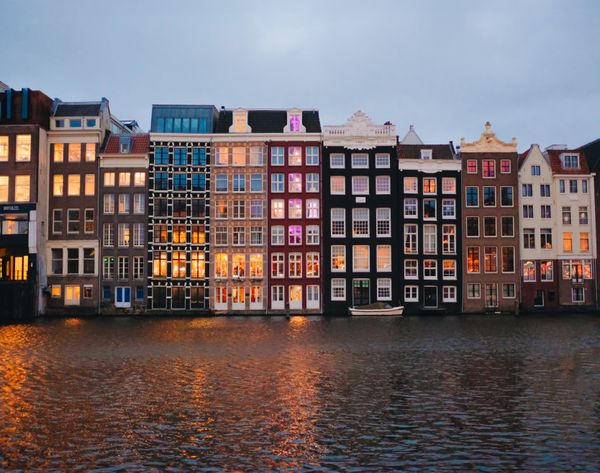
Amsterdam works well for travellers who want to combine walking with trams, metro and trains. Central accommodation can reduce transport dependence, while staying farther out can lower the room price but adds daily travel. The important solo calculation is whether a cheaper outer-room rate still saves money after transit and time are included.
Prague
Prague offers a compact historic core supported by trams, metro and buses. Many central sights can be linked on foot, while public transport covers longer movements. For a solo traveller the practical advantage is the ability to avoid taxis for many ordinary trips.
Budapest
Budapest combines a walkable central area with metro, tram and bus networks. Distances across the Danube and between outer districts can still be significant, so choosing accommodation near a useful line can reduce both time and solo taxi spending.
Barcelona
Barcelona has a broad metro and bus network and a dense central visitor zone. That makes it possible to plan many days around public transport and walking rather than private transfers. Accommodation prices vary sharply by season and event dates, so the useful solo comparison is total room cost plus airport and local transport, not a generic claim that the city is cheap or
Meeting people without depending on chance
Shared-purpose activities
Meeting people works best when the setting has a shared purpose. Hostel common areas, walking tours, language exchanges, cooking classes, coworking events and small group day tours create a reason to talk that does not depend on approaching strangers at random.
Hostels and common spaces
Meeting people works best when the setting has a shared purpose. Hostel common areas, walking tours, language exchanges, cooking classes, coworking events and small group day tours create a reason to talk that does not depend on approaching strangers at random.
Tours, classes and exchanges
Meeting people works best when the setting has a shared purpose. Hostel common areas, walking tours, language exchanges, cooking classes, coworking events and small group day tours create a reason to talk that does not depend on approaching strangers at random.
Boundaries and return transport
Meeting people works best when the setting has a shared purpose. Hostel common areas, walking tours, language exchanges, cooking classes, coworking events and small group day tours create a reason to talk that does not depend on approaching strangers at random.
When not to socialise
Meeting people works best when the setting has a shared purpose. Hostel common areas, walking tours, language exchanges, cooking classes, coworking events and small group day tours create a reason to talk that does not depend on approaching strangers at random.
Planning and navigation
Offline maps
A sensible first-day plan is deliberately simple. Reach the accommodation in daylight if possible, learn the nearest station or reliable transport stop, save the address offline, and walk one short route that you can recognise later. Avoid turning arrival day into a long list of attractions. The goal is to reduce navigation uncertainty before fatigue sets in.
Arrival day
A sensible first-day plan is deliberately simple. Reach the accommodation in daylight if possible, learn the nearest station or reliable transport stop, save the address offline, and walk one short route that you can recognise later. Avoid turning arrival day into a long list of attractions. The goal is to reduce navigation uncertainty before fatigue sets in.
Night transport
A sensible first-day plan is deliberately simple. Reach the accommodation in daylight if possible, learn the nearest station or reliable transport stop, save the address offline, and walk one short route that you can recognise later. Avoid turning arrival day into a long list of attractions. The goal is to reduce navigation uncertainty before fatigue sets in.
Flexible planning
A sensible first-day plan is deliberately simple. Reach the accommodation in daylight if possible, learn the nearest station or reliable transport stop, save the address offline, and walk one short route that you can recognise later. Avoid turning arrival day into a long list of attractions. The goal is to reduce navigation uncertainty before fatigue sets in.
Money and document security
Passport copies
Money and documents should be separated so that one loss does not become a complete trip failure. Carry only the cash needed for the day, keep a backup payment method apart from the primary wallet, and store passport copies separately from the original. The U.S.
Backup payment methods
Money and documents should be separated so that one loss does not become a complete trip failure. Carry only the cash needed for the day, keep a backup payment method apart from the primary wallet, and store passport copies separately from the original. The U.S.
Accommodation storage
Money and documents should be separated so that one loss does not become a complete trip failure. Carry only the cash needed for the day, keep a backup payment method apart from the primary wallet, and store passport copies separately from the original. The U.S.
Lost documents
Money and documents should be separated so that one loss does not become a complete trip failure. Carry only the cash needed for the day, keep a backup payment method apart from the primary wallet, and store passport copies separately from the original. The U.S.
Health, insurance and emergencies
Medical cover abroad
Health preparation is more important when nobody else is automatically available to explain what happened. Save the local emergency number, the address of the accommodation and the insurer's assistance line in an offline note. Check whether existing health insurance covers treatment abroad and whether emergency evacuation is included. Official U.S.
Emergency numbers
Health preparation is more important when nobody else is automatically available to explain what happened. Save the local emergency number, the address of the accommodation and the insurer's assistance line in an offline note. Check whether existing health insurance covers treatment abroad and whether emergency evacuation is included. Official U.S.
Medication and records
Health preparation is more important when nobody else is automatically available to explain what happened. Save the local emergency number, the address of the accommodation and the insurer's assistance line in an offline note. Check whether existing health insurance covers treatment abroad and whether emergency evacuation is included. Official U.S.
When plans change
Health preparation is more important when nobody else is automatically available to explain what happened. Save the local emergency number, the address of the accommodation and the insurer's assistance line in an offline note. Check whether existing health insurance covers treatment abroad and whether emergency evacuation is included. Official U.S.
Sources
U.S. Department of State — International Travel Checklist — accessed 2026-08-23
European Commission — 112, the EU emergency phone number — accessed 2026-08-23
GO TOKYO, Tokyo Metropolitan Government — Transportation in Tokyo; Accommodations — accessed 2026-08-23
Official tourism and transport information for Singapore, Amsterdam, Prague, Budapest and Barcelona — accessed 2026-08-23; current fares, schedules and local rules should be rechecked before travel.