Tbilisi Travel Guide
Old stone, sulfur steam and creative city life on the hills of the Caucasus
Last updated: 2026-09-05
The city's 24-hour rhythm.
Turn the dial to any hour and it tells you where you should be.
The treasure hunt begins
Antiques, old records, Soviet-era curios and local art spread across the stalls. Even if you buy nothing, browsing and chatting with vendors is part of the fun.
Tbilisi: places to visit
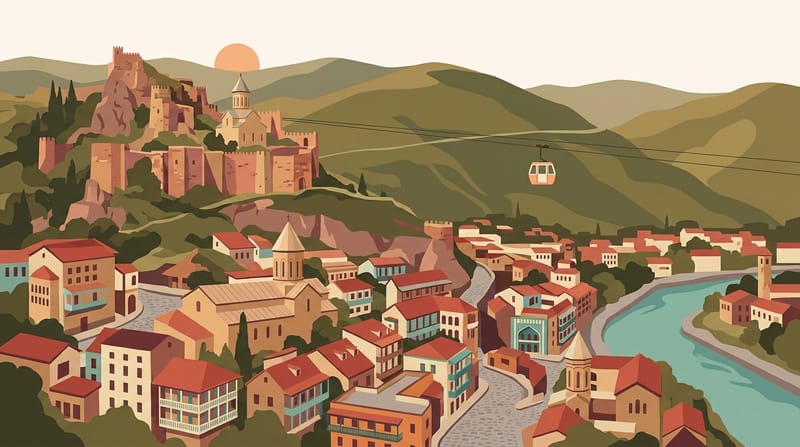
Narikala Fortress
Ancient hilltop fortress above Old Tbilisi with one of the city’s best panoramas. Pair it with the cable car or walk up through the old lanes.
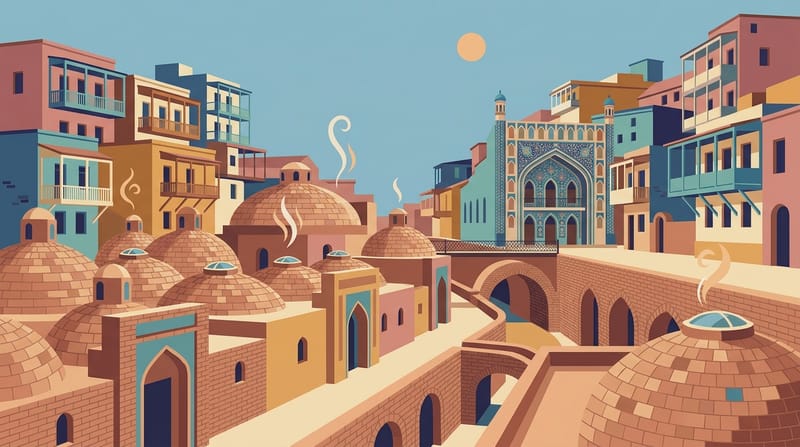
Abanotubani Sulfur Bath District
The brick-domed sulfur-bath quarter where Tbilisi’s story is said to have begun. Wander the lanes, see the bathhouses and continue toward the waterfall.
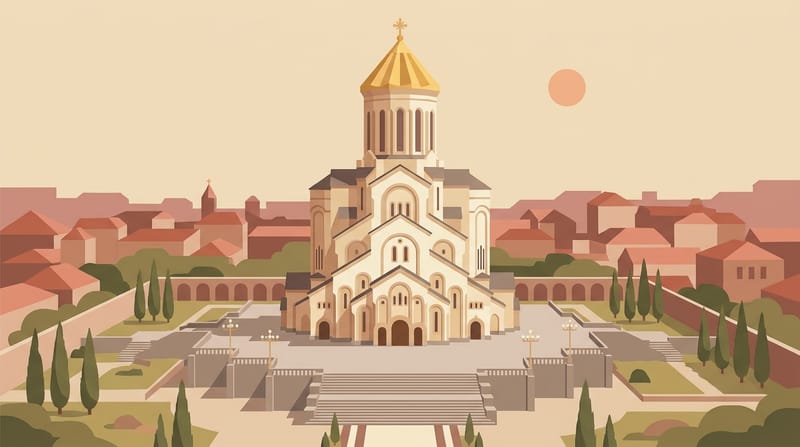
Holy Trinity Cathedral of Tbilisi
Known as Sameba, this monumental cathedral rises above the city with a vast courtyard and wide views. Dress respectfully and keep services quiet.
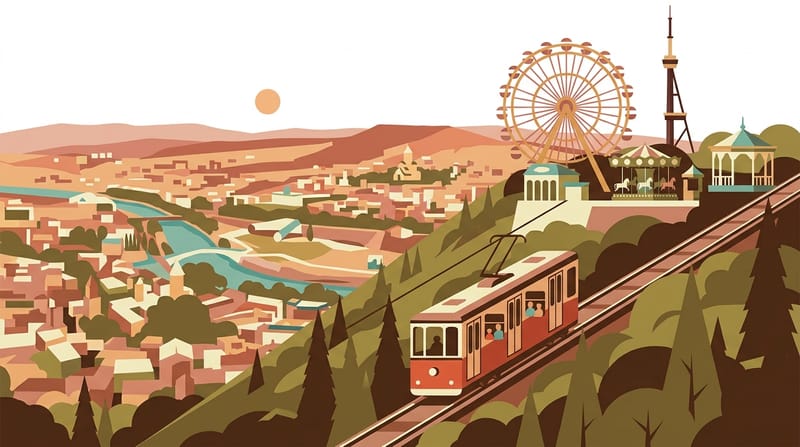
Mtatsminda Park and Funicular
A hilltop park with sweeping city views, a historic funicular and classic amusement rides. Sunset is especially rewarding on a clear day.
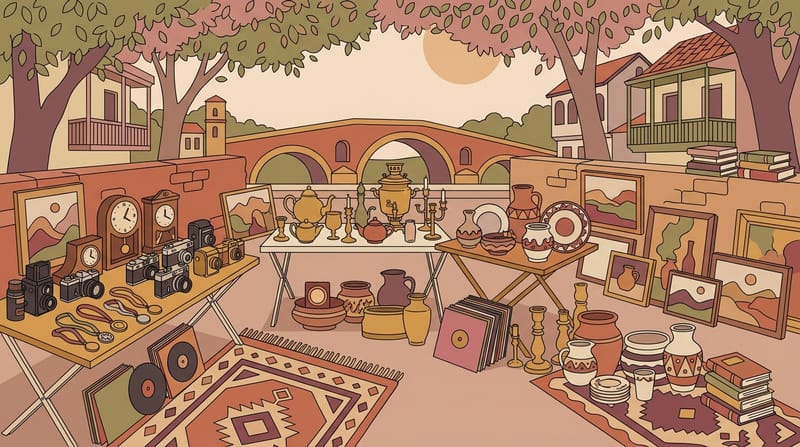
Dry Bridge Market
Tbilisi’s best-known flea market for antiques, Soviet-era curios, paintings, old cameras and unexpected finds. Bargaining is part of the experience.
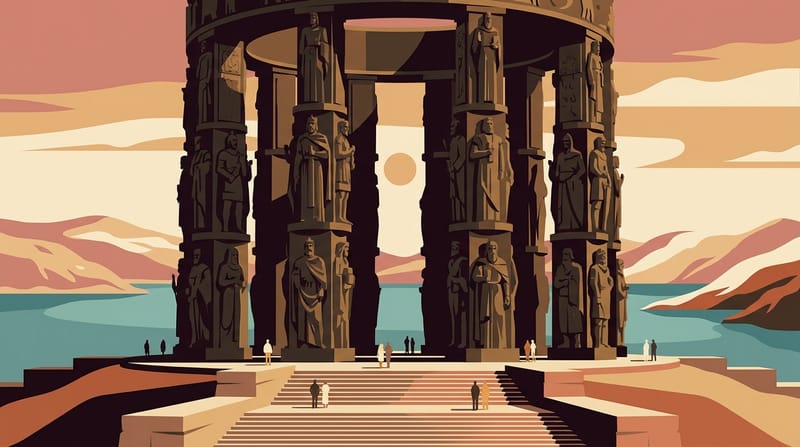
Chronicle of Georgia
A monumental Soviet-era sculpture complex above the Tbilisi Sea, with towering bronze columns and a dramatic sense of scale.
What to eat in Tbilisi
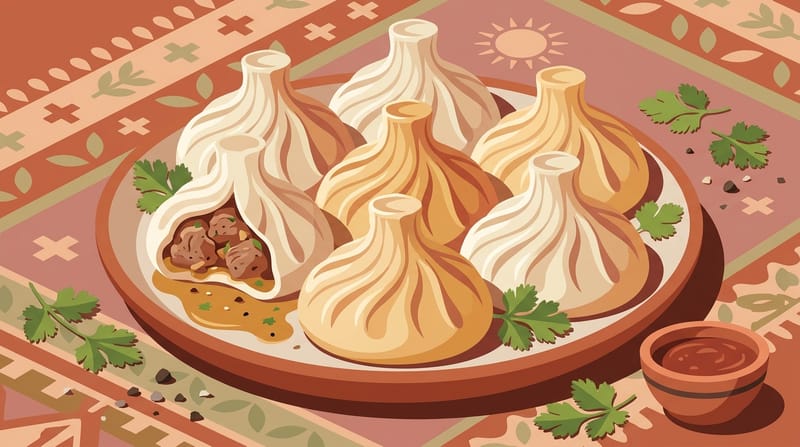
Khinkali
Eat it without losing the brothThe whole point is the spiced, meaty broth trapped inside the thin dough. Hold the dumpling by its twisted top, take a small bite, sip the broth, then keep eating; Tbilisi’s herb-filled kalakuri style is especially common.

Adjarian Khachapuri
Cheese, egg and butterThis boat-shaped bread arrives hot with melted cheese, egg and butter in the centre. Stir the filling first, then tear off pieces of crust and dip them in; despite appearances, it is definitely more than a light snack.
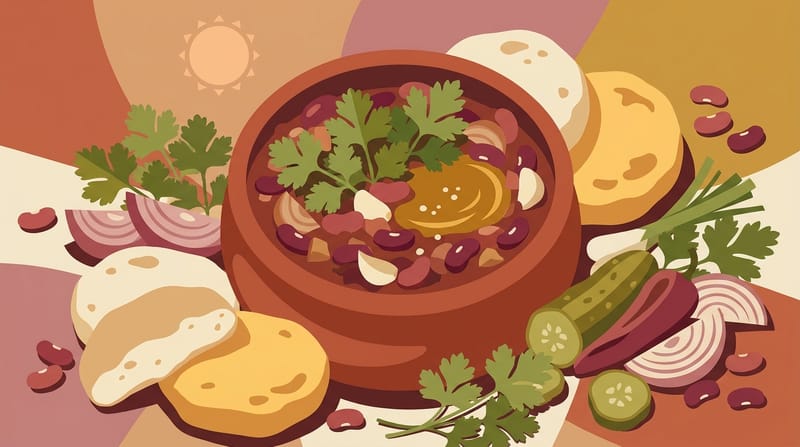
Lobio
Comfort food in a clay potRed beans are cooked into a rich, warming dish with coriander, onion, garlic and spices. It is often served in a clay pot with mchadi cornbread and pickles, making it one of Georgian cuisine’s best vegetarian classics.
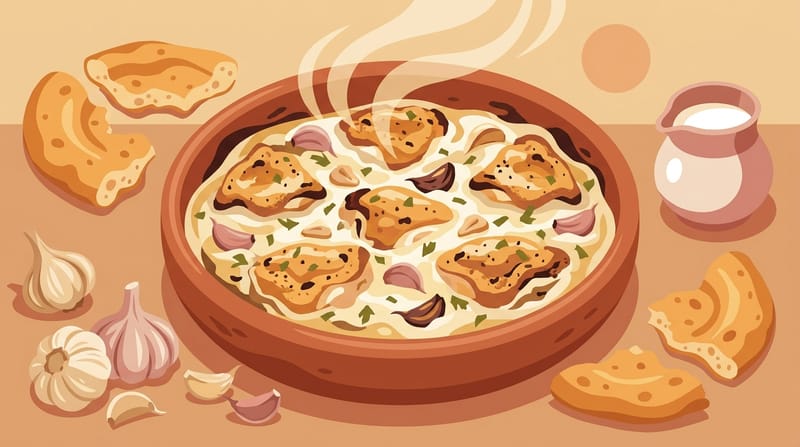
Shkmeruli
Chicken made for garlic loversThis Racha dish pairs fried chicken with a hot sauce heavy on garlic, milk or cream. The Tbilisi version is usually especially creamy, and leaving any of that sauce behind without bread feels almost impossible.
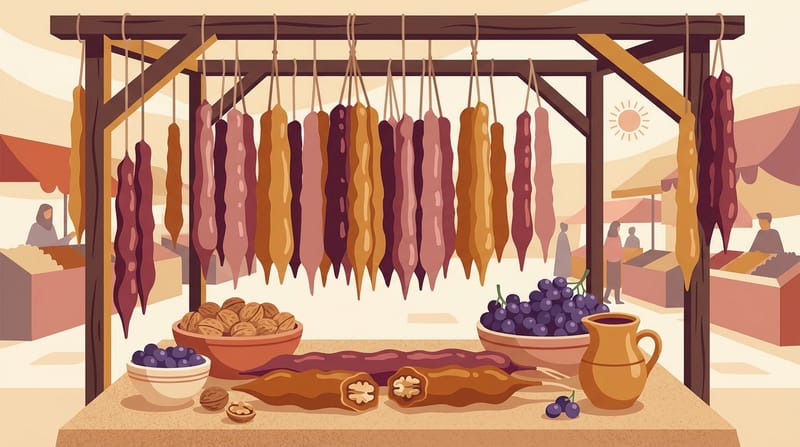
Churchkhela
Georgia’s grape-and-walnut sweetWalnuts are threaded on a string, repeatedly dipped in grape must thickened with flour, then dried. At Dezerter Bazaar you will see many colours and textures; a fresher one should still have some softness and a clear walnut flavour.
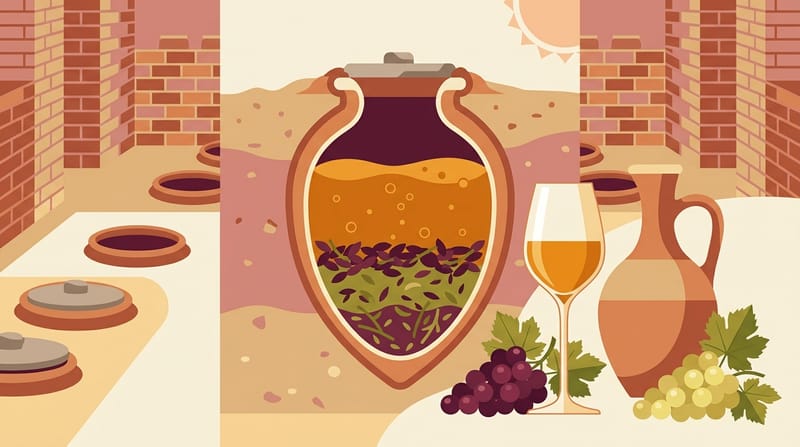
Traditional Qvevri Wine
Wine fermented beneath the groundOne of Georgia’s most distinctive winemaking methods ferments wine in large clay qvevri buried underground. In Tbilisi, starting with an amber wine at a good wine bar is an easy way to understand the method’s skin-contact texture and tannins.
Where to stay
| Areas | SololakiPrice: medium-high | VeraPrice: medium-high | AvlabariPrice: Medium | Chughureti and MarjanishviliPrice: Medium | Rustaveli and MtatsmindaPrice: medium-high |
|---|---|---|---|---|---|
| Atmosphere | One of the most characterful central bases for first-time visitors, thanks to its historic apartment buildings, ornate entrances and easy walk to Old Tbilisi. | A good choice for travellers who want wine bars, boutique venues and a creative urban feel without leaving the centre, but prefer a little distance from the busiest tourist streets of Old Tbilisi. | Close to Sameba, Metekhi and the eastern side of Old Tbilisi, with its own metro station for quick access to the centre and a practical position for heading toward the airport. | A strong alternative combining historic character with a younger urban scene around Aghmashenebeli Avenue, Ninoshvili, cafés, bars and Marjanishvili metro. | A classic central option for travellers who want museums, theatres, larger hotels, restaurants and direct access to the city's main axis; it feels more like a grand avenue and hotel district than Sololaki. |
| Best for | First-time visitorsHistory and architecture loversTravellers who prefer exploring on footWine bars and small restaurants | Cafés and wine barsCouplesModern city atmosphereTravellers who want to stay central with a more local feel | Travellers who value metro accessStaying close to the historic centreQuieter eveningsConvenient road access toward the airport | Cafés and barsA younger urban atmosphereMetro accessBoutique-hotel fans | Museum and culture-focused travellersA classic central locationTravellers who want a strong hotel selectionFirst-time visitors |
| Accommodation profile | Pricemedium-highNightlifeMediumWalkabilityHigh | Pricemedium-highNightlifeHighWalkabilitymedium-high | PriceMediumNightlifelow-mediumWalkabilityMedium | PriceMediumNightlifeHighWalkabilityHigh | Pricemedium-highNightlifemedium-highWalkabilityHigh |
| Transport | Freedom Square metro station is the nearest main rail transit access for the northeastern parts of Sololaki.Walking toward Old Tbilisi and Rustaveli is a practical option for most short trips.The standard 1 GEL/90-minute fare applies on the TTC metro and bus network. | Rustaveli metro station is convenient for the southern parts of Vera.Municipal buses operate along the Rustaveli and Kostava corridors.Many parts of the centre are walkable, but hills should be taken into account. | Avlabari metro station is the main advantage.Bus connections are available to the centre and other neighbourhoods.Road access to the airport via the eastern direction is more direct than from the western neighbourhoods. | Marjanishvili metro station is directly on the main avenue.Bus and minibus connections are also mentioned in the official tourism source.A short metro connection is possible toward Freedom Square and Rustaveli. | Rustaveli and Freedom Square metro stations are two important access points for the area.Numerous municipal bus routes operate along Rustaveli Avenue.Sololaki, Vera and the central museum district can be reached on foot. |
| Advantages |
|
|
|
|
|
| Consider |
|
|
|
|
|
Planning notes.
Researched recommendations, practical information and route decisions.
- Try a proper sulfur bath in Abanotubani; seeing the domes from outside is not the same as experiencing one of Tbilisi’s oldest living rituals.
- Ride the cable car from Rike Park to the Narikala ridge, take in the panorama, then walk back down through the Old Town.
- Wander slowly through Sololaki and the Betlemi slopes; painted entrances, courtyards and wooden balconies reveal Tbilisi’s character better than a rushed checklist.
- Avoid unmetered, unsolicited taxis outside the airport when the fare is not agreed clearly in advance; app booked rides are far more predictable.
- Do not make a rental car your default inside the city; traffic and parking can add needless stress, while walking, metro and taxis cover most visitor needs.
- In tourist areas, check the bill before paying; if a service charge or VAT is added separately, it should be disclosed on the menu.
- On the metro, buses and municipal transport, a bank card can be used for the 1 GEL fare that includes 90 minutes of transfers.
- Keep Bolt ready for airport trips and steep neighborhoods; it is a useful complement to walking for short rides around the center.
- Schedule a sulfur bath on a weekday morning or afternoon; evenings and weekends are busier, and advance booking is sensible if you want a private room.
Tbilisi map
What will it cost me?
Figures are per-person daily USD estimates compiled from BudgetYourTrip, Numbeo and recent traveller reports. Flight/ferry tickets not included.
✓ Treat this budget note as a planning estimate. Accommodation, restaurant and transport prices can shift with the season, exchange rates and neighborhood, so recheck current prices before booking, especially for weekends and peak travel periods. · Last updated: Aug 2026
How many days?
Choose the best route for your schedule.
What to know before you go.
Tourist traps, SIM, money, taxis, safety, health, transit and language — the city in eight answers.
In the Old Town, especially around Meidan and Shardeni, check the menu and any service charge before sitting down at the most tourist-oriented restaurants. At the airport, app-based rides are usually easier than street taxis that do not give you a clear price upfront.
scamTbilisi is generally a safe city for travellers. Still, use normal city precautions in crowded markets and late at night, and keep an eye on your phone and wallet. The emergency number is 112.
safetyTap water in Tbilisi is generally safe to drink and locals drink it routinely. If you have a sensitive stomach, bottled water may feel more comfortable for the first few days. Carry water on long walks in summer.
healthThe standard fare on the metro, municipal buses and minibuses is 1 GEL and, with an eligible payment method, includes free transfers for 90 minutes. A MetroMoney card costs 2 GEL, and many bank cards can also be used contactlessly.
cardGeorgian is the main language. In tourist areas and among younger people, English is usually enough for everyday needs; some people also speak Russian. “Gamarjoba” means hello and “madloba” means thank you, and using a few words is appreciated.
languageTbilisi: weather and crowds by month
🎒 What to pack
- ✔ Walking shoes
- ✔ Power adapter
- ✔ Jacket
- ✔ Layers
- ✔ Gloves & beanie
- ✔ Umbrella
FLIGHTS
Airport to city
Municipal Bus 337Tbilisi city centre / Station Square 1
The official airport page does not give a fixed journey time.
Best for: Travellers going to the centre cheaply, especially solo travellers or those with light luggage.
Limitations: Runs from 06:59 to 22:59, so it is not available for late-night arrivals. The 90-minute unlimited-transfer package does not apply when paying in cash or through the mobile app.
↗ Official sourceOfficial Airport TaxiTbilisi city centre
About 20–30 minutes depending on traffic.
Best for: Late-night arrivals, heavy luggage, door-to-door travel or groups of several passengers.
Limitations: Significantly more expensive than the bus; the final fare varies with traffic and the meter.
↗ Official source