Kuala Lumpur Travel Guide
Three cultures, one city beneath the skyscrapers
Last updated: 2026-09-05
The city's 24-hour rhythm.
Turn the dial to any hour and it tells you where you should be.
Air-conditioned lunch break
At midday, Pavilion, Lot 10 and the surrounding food halls offer an easy escape from the heat. Mall-based hawker-style food courts are also a practical way to sample local dishes.
Kuala Lumpur: places to visit

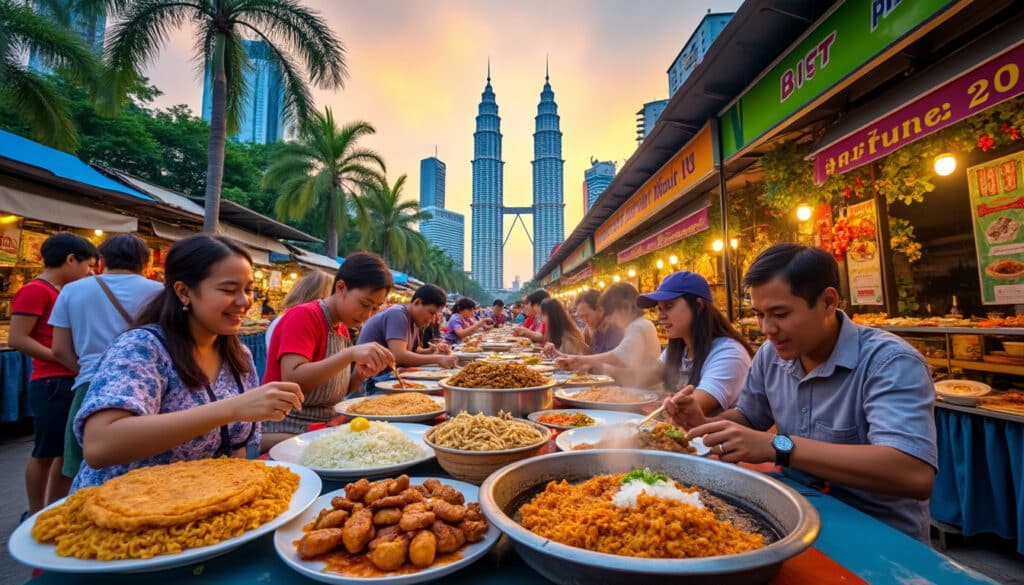
PETRONAS Twin Towers
The defining icon of Kuala Lumpur’s skyline. The Skybridge and the Level 86 observation deck make for a memorable city view, especially when paired with an evening walk through KLCC Park.

Batu Caves
One of the Kuala Lumpur area’s most striking cultural sights, with its giant Murugan statue, colourful 272-step staircase and limestone cave temples. It remains an active Hindu place of worship, so dress respectfully with shoulders and knees covered.
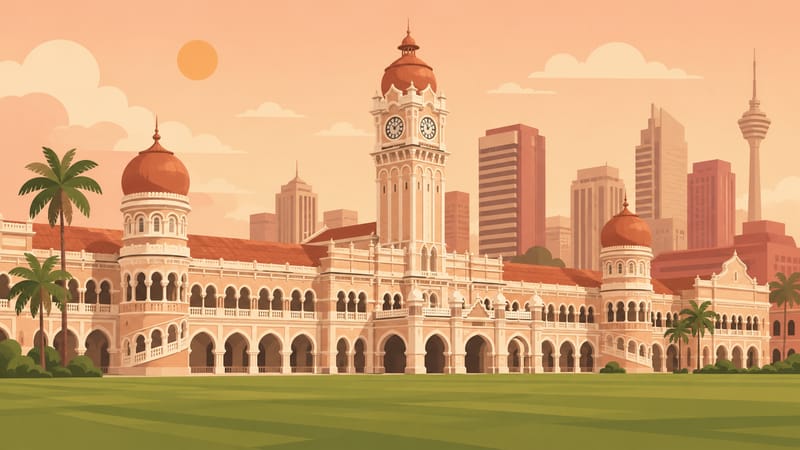
Merdeka Square
The historic heart of Malaysia’s independence story. With the Sultan Abdul Samad Building, colonial-era club architecture and a 100-metre flagpole, the square becomes especially photogenic around sunset and after dark.

Kuala Lumpur Tower
A classic 360-degree viewpoint from the top of Bukit Nanas. The open-air terrace can be weather-dependent, but its broad panorama, with the PETRONAS towers in the frame, gives it a distinctly different perspective on the city.

Thean Hou Temple
A six-tier Chinese temple on a hill in Seputeh, known for red lanterns, ornate roofs and city views. Mornings are calmer, while the atmosphere becomes especially vivid around Chinese New Year.
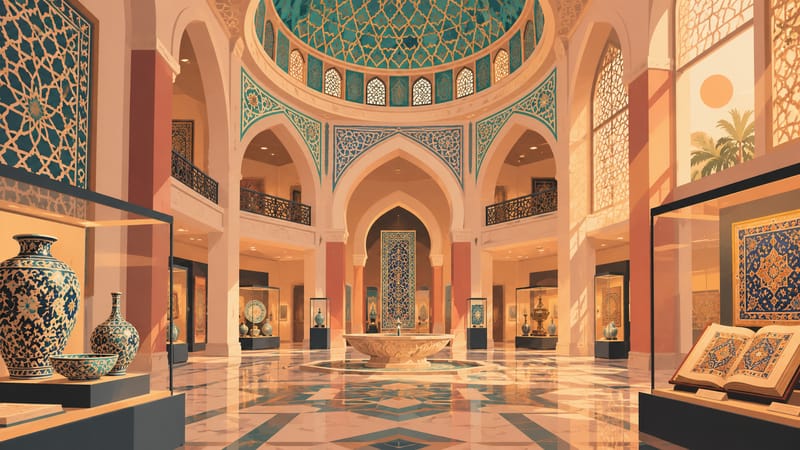
Islamic Arts Museum Malaysia
A superb museum tracing Islamic art across a wide geography through manuscripts, textiles, ceramics, jewellery and architectural models. The blue-domed building is nearly as impressive as the collection, making this an excellent choice for a hot or rainy KL afternoon.
What to eat in Kuala Lumpur
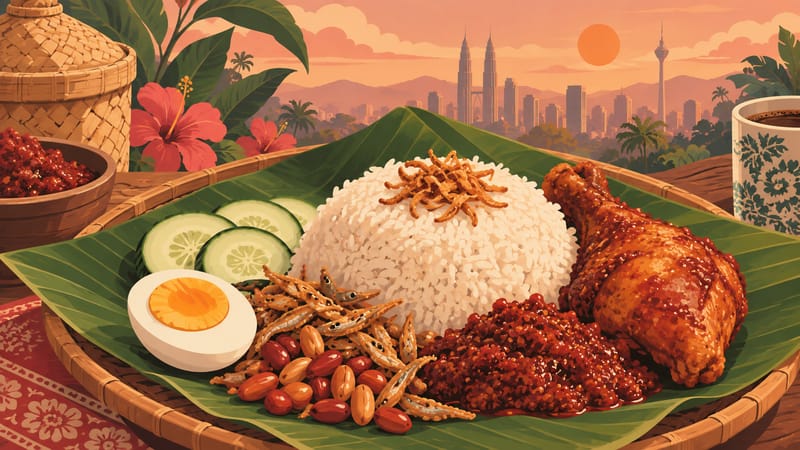
Nasi Lemak
Malaysia’s coconut-scented classicRice cooked in coconut milk is served with sambal, anchovies, peanuts, cucumber and egg. In Kampung Baru, it is one of the most local ways to start the day.

Kuala Lumpur-style Hokkien Mee
Dark sauce, fierce heat and plenty of wok aromaThick yellow noodles are fried over high heat with dark soy, prawns, meat and cabbage, creating a rich, lightly smoky plate. It is one of Kuala Lumpur’s signature Chinese-Malaysian dishes.
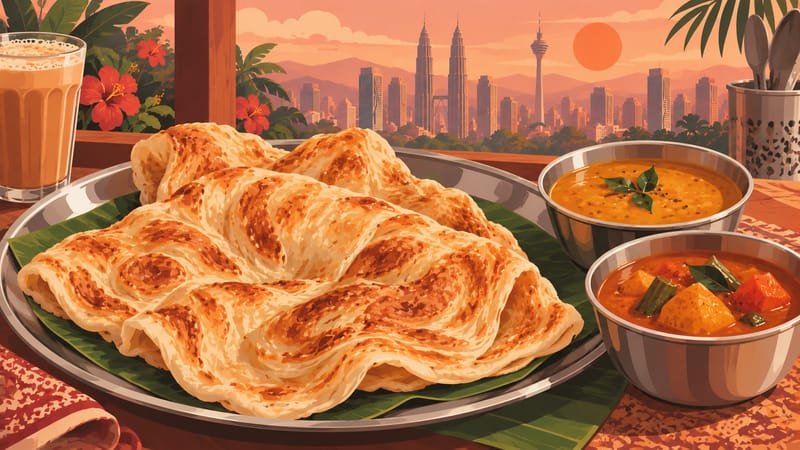
Roti Canai
Crisp layers made for dippingThis flaky flatbread is crisp outside and soft within, best torn apart and dipped into dhal and curry. Add a frothy teh tarik for the classic mamak breakfast.
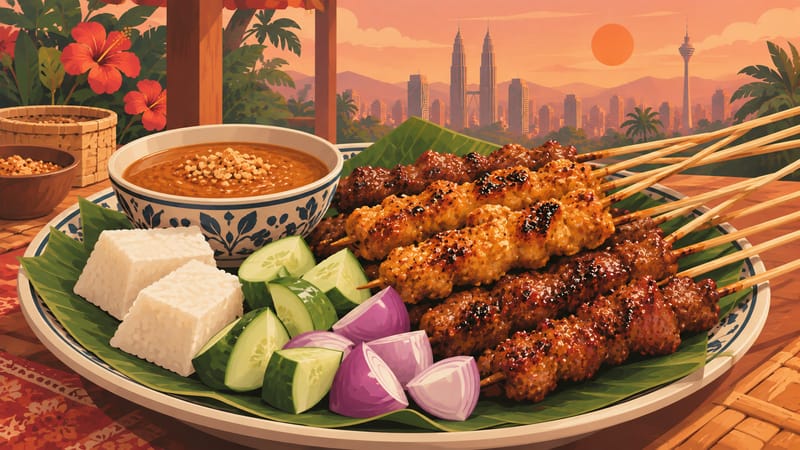
Satay
Small skewers with big charcoal flavourMarinated chicken or beef skewers are grilled over charcoal and served with peanut sauce, cucumber and onion. They are especially satisfying in the early evening around Datuk Keramat.

Char Kway Teow
The fragrance of the wok in every biteFlat rice noodles are quickly tossed over high heat with prawns, egg, bean sprouts and chives. The mark of a good plate is its lightly smoky wok hei.

Cendol
The sweetest break from the tropical heatShaved ice, coconut milk, pandan-green jelly and gula melaka come together in a cooling bowl. It is a simple, deeply local dessert for a hot Kuala Lumpur afternoon.
Where to stay
| Areas | Bukit BintangPrice: High | KLCCPrice: High | Chinatown / Pasar SeniPrice: Low | KL Sentral / BrickfieldsPrice: Medium | Kampung BaruPrice: Medium |
|---|---|---|---|---|---|
| Atmosphere | One of the easiest bases for first-time visitors who want shopping, food, evening activity and rail transport all close at hand. | A strong choice for travellers who want a more polished, premium city-centre experience around the Petronas Twin Towers, KLCC Park and Suria KLCC. | A balanced base for budget-conscious travellers who want to explore history, street food, Central Market and old Kuala Lumpur on foot. | Practical for travellers who prioritise airport links and intercity or rail transfers, while Brickfields keeps the area from feeling like only a transport hub. | A strong option for travellers seeking a more local Malay neighbourhood feel and local food beside the skyscrapers, though not the most effortless base for every first-time visitor. |
| Best for | First time visitorsShoppingFood and diningNightlifeTravellers who want to rely less on cars | Iconic viewsBusiness travelFamiliesPremium accommodationShort stays focused on KLCC | History and cultureBudget conscious travellersStreet foodWalkingPublic transport | Airport connectionsShort staysEarly flightsPublic transportLittle India | Local neighbourhood atmosphereMalay cuisinePhotographyProximity to KLCCQuieter evenings |
| Accommodation profile | PriceHighNightlifeHighWalkabilityHigh | PriceHighNightlifeMediumWalkabilityHigh | PriceLowNightlifeMediumWalkabilityHigh | PriceMediumNightlifeLowWalkabilityHigh | PriceMediumNightlifeMediumWalkabilityMedium |
| Transport | MRT Kajang Line: Bukit Bintang station.KL Monorail: Bukit Bintang station, with a direct connection toward KL Sentral. | LRT Kelana Jaya Line: KLCC station.MRT Putrajaya Line: Persiaran KLCC station. | MRT Kajang Line: Pasar Seni station.LRT Kelana Jaya Line access is available around Pasar Seni. | KLIA Ekspres and KLIA Transit.KL Monorail, LRT Kelana Jaya Line and MRT Kajang Line via Muzium Negara. | Pedestrian connection toward KLCC via Saloma Link.Nearby rail access depends on the exact location of the accommodation. |
| Advantages |
|
|
|
|
|
| Consider |
|
|
|
|
|
Planning notes.
Researched recommendations, practical information and route decisions.
- Visit the Petronas Twin Towers and KLCC Park together, and stay for the evening lights.
- Go to Batu Caves early in the morning, when both the steps and the weather are easier to handle.
- Walk a route linking Chinatown, Merdeka Square and Masjid Jamek.
- Avoid planning long outdoor walks between noon and 3 pm.
- Do not spend your whole stay around Bukit Bintang and skip the city’s historic and local neighbourhoods.
- At Batu Caves, avoid carrying food openly; the monkeys can be surprisingly bold.
- The Rapid KL network covers most major sights; combining it with short walks makes the city much easier to navigate.
- Keep a compact umbrella or light rain jacket in your bag because showers can arrive very quickly.
- If halal food matters to you on Jalan Alor, check certification or clear information stall by stall.
Kuala Lumpur map
What will it cost me?
Figures are per-person daily USD estimates compiled from BudgetYourTrip, Numbeo and recent traveller reports. Flight/ferry tickets not included.
✓ Treat budget figures as planning estimates rather than fixed prices. Exchange rates, weekends, events and the neighbourhood you stay in can all change the final cost significantly. · Last updated: Sep 2026
How many days?
Choose the best route for your schedule.
What to know before you go.
Tourist traps, SIM, money, taxis, safety, health, transit and language — the city in eight answers.
Around Bukit Bintang and Petaling Street, do not rush into taxi, tour or shopping offers. Agree on the price first, use a ride-hailing app for taxis, and do not accept the opening price immediately in markets where bargaining is normal.
scamKuala Lumpur is generally straightforward for visitors, but keep an eye on your phone and bag in busy central areas. Carrying a shoulder bag on the road-facing side can increase the risk of motorcycle snatch theft. For genuine emergencies, Malaysia’s unified emergency number is 999.
safetyTropical heat and humidity can be draining, so drink water, use sunscreen and take short air-conditioned breaks. Bottled water is widely available. If you have a sensitive stomach, a useful street-food rule is to choose busy stalls where ingredients turn over quickly.
healthA Touch ’n Go card is convenient on Rapid KL’s LRT, MRT, Monorail and buses. Tourists can also use the Rapid Kembara unlimited travel pass. Single-journey rail tokens can be useful, but buses require cashless payment, so carrying a card makes getting around easier.
cardA few Malay words go a long way: “terima kasih” means thank you, “tolong” means please or help, and “berapa?” means how much? English is widely spoken in Kuala Lumpur, so communication is easy in most visitor situations.
languageKuala Lumpur: weather and crowds by month
🎒 What to pack
- ✔ Walking shoes
- ✔ Power adapter
- ✔ Umbrella
- ✔ Sunscreen
- ✔ Hat
- ✔ Light clothing
FLIGHTS
Airport to city
KLIA EkspresKL Sentral
28 minutes between KLIA T1 and KL Sentral; 3 minutes between KLIA T1 and T2.
Best for: Travellers who want the fastest and most predictable public-transport transfer to the city centre.
Limitations: A final connection from KL Sentral to the hotel may still be needed; heavy luggage may make a taxi or another rail line useful for the last kilometre.
♿ Accessible
↗ Official sourceKLIA TransitKL Sentral via Salak Tinggi, Putrajaya & Cyberjaya, Bandar Tasik Selatan
Service between KLIA and KL Sentral with intermediate stops; total time varies by chosen station.
Best for: Passengers heading to Putrajaya, Bandar Tasik Selatan or intermediate stations.
Limitations: It is not as fast as KLIA Ekspres for passengers travelling directly to KL Sentral.
↗ Official sourceRapid KL Route 772Hab Pasar Seni / Subang corridor
Journey time depends on traffic and stops; the current official page does not publish a fixed airport-to-city-centre duration.
Best for: Travellers who want the lowest-cost public-transport option and do not mind a longer journey.
Limitations: It is affected by road traffic; Skypark Link is not listed as a rail alternative because the 2026 official KTMB terms mark it temporarily closed.
↗ Official sourceSkyPark Budget / Executive TaxiKuala Lumpur and Klang Valley
SkyPark Terminal is about 24 km from KL Sentral; the terminal’s official page quotes about 30 minutes in off-peak traffic.
Best for: Travellers with luggage who want a door-to-door trip without transfers.
Limitations: Travel time depends on traffic, and no fixed city-centre fare is published on the official terminal page.
↗ Official source