Porto Travel Guide
A stone city descending from the Douro hills to the Atlantic
Last updated: 2026-09-05
The city's 24-hour rhythm.
Turn the dial to any hour and it tells you where you should be.
The old centre fills up
By late morning pedestrian traffic is noticeably heavier, and the Clérigos area and Rua das Flores move into their busy part of the day.
Porto: places to visit
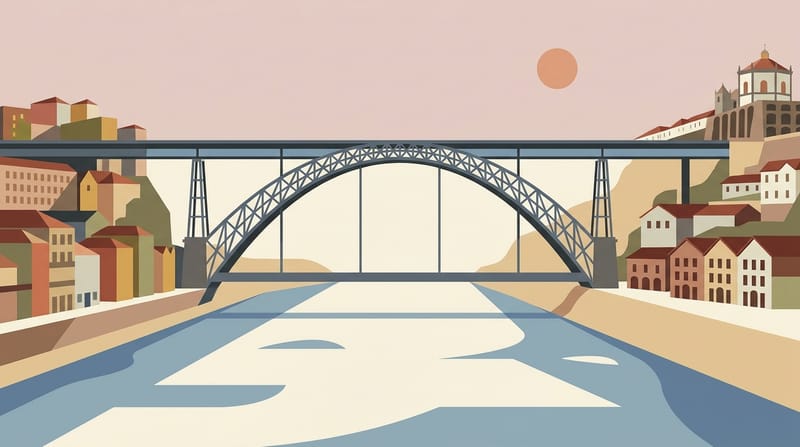
Dom Luís I Bridge
One of Porto's defining landmarks, this double-deck iron arch spans the Douro between Porto and Vila Nova de Gaia. The upper deck gives especially strong views over the river and Ribeira.
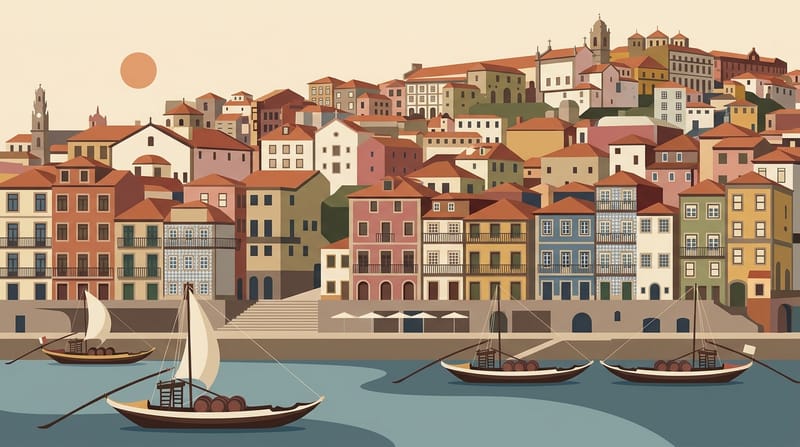
Ribeira
The historic riverfront is one of Porto's most characteristic areas, with colourful façades, narrow lanes and the Douro quay. Treat it as more than a meal stop: it is where the steep city and the river are best read together.
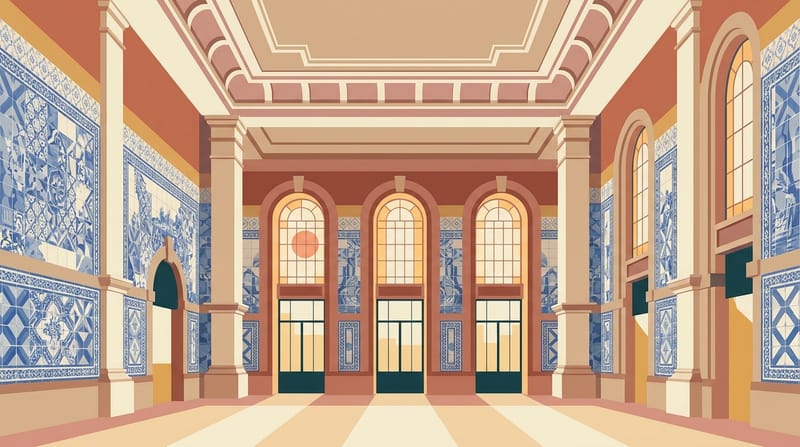
São Bento Railway Station
Jorge Colaço's roughly 20,000 azulejos cover the main hall with scenes from Portuguese history and daily life. Because it remains a working station, even a short visit fits easily into a central Porto route.
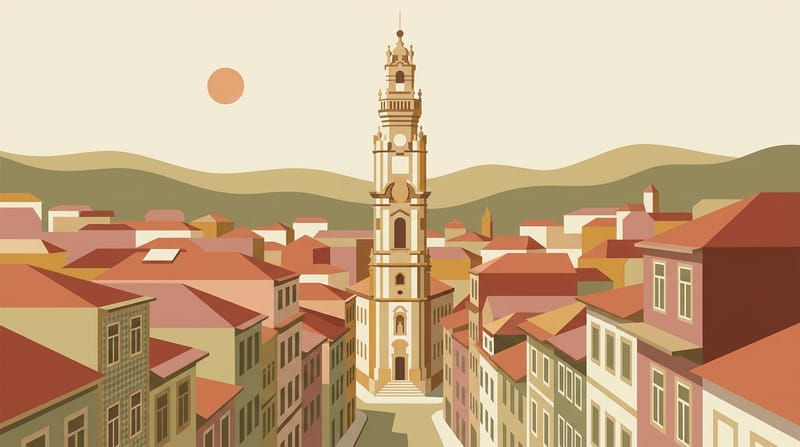
Clérigos Tower
Nicolau Nasoni's Baroque tower is one of the clearest markers on Porto's skyline. After the stair climb, the viewpoint opens across the centre, the Douro and toward Gaia.

Livraria Lello
Its neo-Gothic interior, crimson staircase and stained glass make it one of Porto's most visited cultural stops. Entry uses a timed Ticket-Voucher, and booking ahead is more comfortable when demand is high.
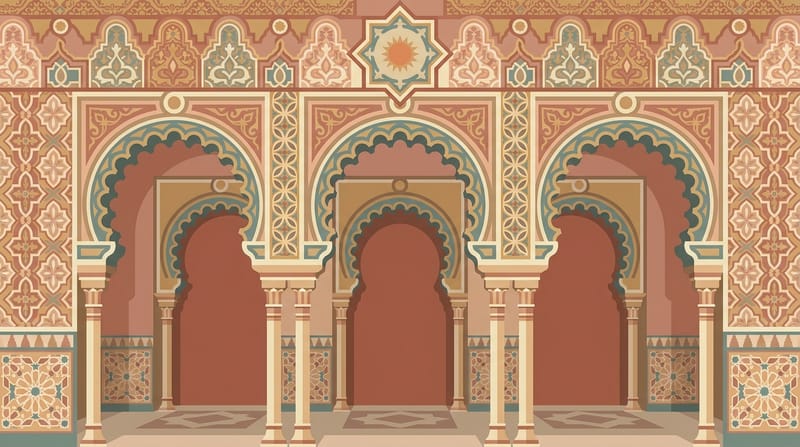
Bolsa Palace
Built in the 19th century for Porto's Commercial Association, the palace is best known for its Moorish-inspired Arab Room. The interior is visited only on a guided tour, so it is worth planning the time in advance.
What to eat in Porto

Francesinha
Porto's saucy heavyweightSteak, sausage and cured meats are layered between bread, covered with cheese and finished with a hot, mildly spicy house sauce. Fries are the usual companion, and some versions add a fried egg on top.
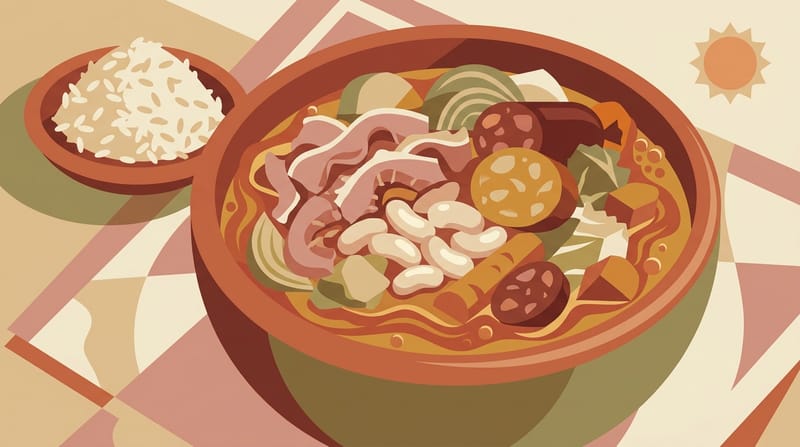
Porto-style Tripe
One of the city's oldest food identitiesTripas à Moda do Porto is a rich stew of tripe, white beans, assorted meats and spices. The dish is closely tied to Porto's history and to the nickname “tripeiros” traditionally used for the city's inhabitants.

Porto-style Cachorrinho
Thin, crisp and unmistakably localSmaller and crunchier than a standard hot dog, it packs spiced sausage and cheese into a thin roll that is pressed, toasted and sliced into bite-size pieces. A spicy sauce is a common finishing touch.
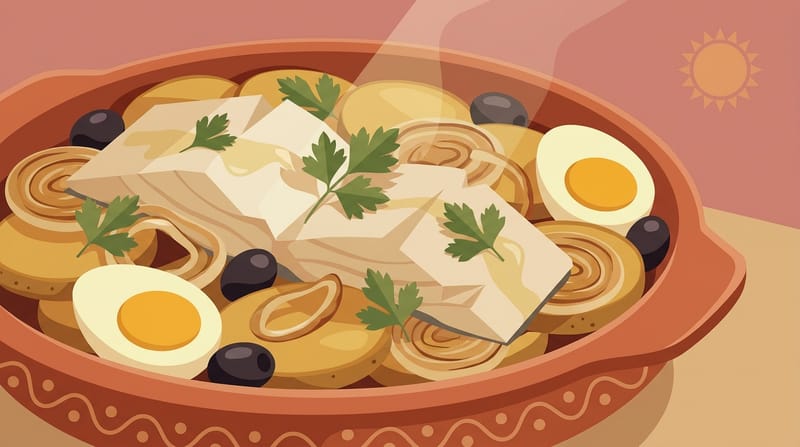
Gomes de Sá-style Cod
A cod classic born in PortoSalt cod is combined with potatoes, onion, olive oil, boiled egg, olives and parsley. Closely associated with Porto, the dish relies on simple ingredients rather than heavy sauces and remains one of the city's classic bacalhau preparations.
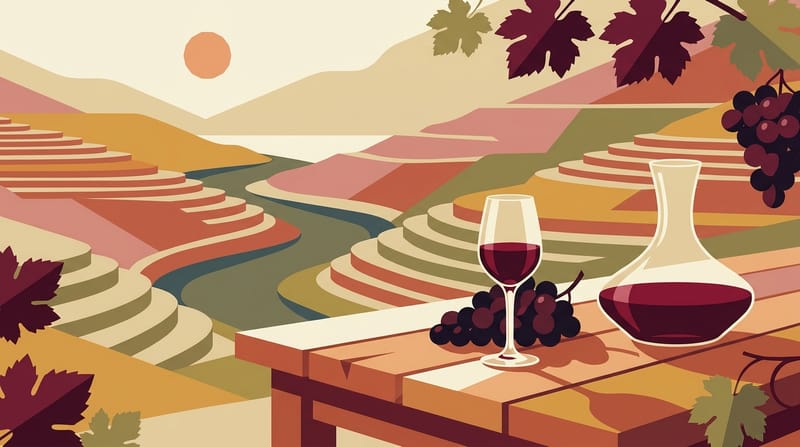
Port Wine
From the Douro vineyards to the Gaia lodgesA fortified wine made from Douro Valley grapes, with grape spirit added during fermentation. Ruby and Tawny are among the best-known styles, and tasting Port in the historic lodges of Vila Nova de Gaia is a classic part of visiting Porto.

Pork Shank Sandwich
A simple Porto favourite made famous by Casa GuedesSlow-cooked pork shank or leg is piled generously into a crusty roll. Strongly associated with Porto through Casa Guedes, it is an excellent quick local meal when you want something substantial without sitting down for a long lunch.
Where to stay
| Areas | Baixa / Aliados / TrindadePrice: Medium | Ribeira / Sé / Historic CentrePrice: High | CedofeitaPrice: Medium | Boavista / Casa da MúsicaPrice: High | Foz do DouroPrice: High | BonfimPrice: Medium |
|---|---|---|---|---|---|---|
| Atmosphere | The most balanced central choice for first-time visitors. Aliados, Bolhão, Santa Catarina and Clérigos are easy to reach on foot, while Trindade gives a direct connection to the airport on Metro Line E. | The most atmospheric option for travellers who want to stay right among the Douro, bridges and UNESCO fabric. Ribeira, Sé, São Bento, Palácio da Bolsa and Dom Luís I Bridge are close together, but the steep slopes can make daily walking more demanding. | A good balance for travellers who want a more residential and creative setting without losing access to the centre. Official tourism information describes Rua de Cedofeita as both an important residential area and one of the city's main commercial streets. | A good base for travellers who prefer a more modern area with a strong hotel supply and easy transport. Porto's official tourism source specifically highlights Boavista's broad range of recognised quality hotels. | The most distinctive choice if the seafront, coastal walks and quieter evenings are priorities. The trade-off is having to use public transport to reach the historic centre each day. | A strong alternative just east of Baixa for travellers who want a more creative and local urban setting. Visit Porto describes the area through innovative artistic production and dynamic cultural expression. |
| Best for | First-time visitorsShort city breaksEasy public transportPeople who want to go out in the evening | History and atmosphereFirst visit to PortoPhotographyRiver views | Cafés and independent shopsCouplesA more local central feelPeople who enjoy walking | Travellers seeking comfortable hotelsBusiness travelCasa da MúsicaPeople who want to avoid the busiest central crowds | Sea and coastRomantic staysSlower paceLong walks | More local feelArts and creative sceneLonger staysA calmer base close to the centre |
| Accommodation profile | PriceMediumNightlifeHighWalkabilityHigh | PriceHighNightlifeMediumWalkabilityMedium | PriceMediumNightlifeMediumWalkabilityHigh | PriceHighNightlifeMediumWalkabilityMedium | PriceHighNightlifeLowWalkabilityHigh | PriceMediumNightlifeLowWalkabilityMedium |
| Transport | Metro: Trindade, Aliados, BolhãoSTCP busesStrong pedestrian links to the historic centre | São Bento railway stationMetro: São BentoSTCP busesStrong pedestrian links | Metro: Lapa or Carolina Michaelis, depending on locationSTCP busesWalking connection to Baixa | Metro: Casa da MúsicaDense STCP bus networkDirect airport access on Metro Line E | STCP coastal busesHistoric tram on selected routes as a tourist optionSurface transport to the centre | Metro: Campo 24 de Agosto or Heroísmo, depending on locationSTCP busesWalking and metro links to Baixa |
| Advantages |
|
|
|
|
|
|
| Consider |
|
|
|
|
|
|
Planning notes.
Researched recommendations, practical information and route decisions.
- Walk across Dom Luís I Bridge and see Porto and Gaia from both riverbanks.
- Step into São Bento's azulejo-lined hall, then walk downhill from Baixa to Ribeira.
- Continue to Foz do Douro to see where the river meets the Atlantic.
- Do not limit every meal to Ribeira's busiest tourist rows; a few streets inland often gives you a broader choice.
- Do not underestimate Porto's steep, sometimes slippery stone streets; shoes with good grip make a real difference.
- Avoid cramming several port wine lodges into one day; one or two well-chosen visits are usually more rewarding.
- Put Ribeira and São Bento early in the day for easier walking and cleaner photo opportunities.
- Instead of stacking uphill sections, shape your walking route from higher ground toward the river whenever possible.
- On rainy days, expect cobbles and polished stone surfaces to become noticeably more slippery.
Porto map
What will it cost me?
Figures are per-person daily USD estimates compiled from BudgetYourTrip, Numbeo and recent traveller reports. Flight/ferry tickets not included.
✓ Treat the budget figures as planning estimates rather than fixed prices; accommodation, restaurants and attractions can vary by date, booking lead time and season. · Last updated: Sep 2026
How many days?
Choose the best route for your schedule.
What to know before you go.
Tourist traps, SIM, money, taxis, safety, health, transit and language — the city in eight answers.
Do not assume a contactless bank card can replace a ticket at every metro station. The system is still a pilot at selected Metro and STCP points; use Andante elsewhere and validate whenever you start a journey or change line or vehicle.
scamNormal city precautions are appropriate: keep phones, wallets and bags in sight around Ribeira, São Bento and busy public-transport areas. Portugal's free common emergency number is 112.
safetyPorto's tap water is safe to drink and the municipal supply is regularly quality-tested. If a tap has not been used for some time, or the water is temporarily cloudy, letting it run briefly is also recommended by the local water utility.
healthAndante is the zone-based ticket used on the metro, STCP buses and participating transport services. Validate at the start and again on every transfer. Tourist Tour 1 and Tour 3 tickets last 24 and 72 hours respectively; the historic tram and Guindais Funicular are not included.
cardA simple “Bom dia” or “Boa tarde” goes a long way. In Portuguese, a male speaker normally says “obrigado” and a female speaker “obrigada” when thanking someone. English works in most tourist areas, but a few Portuguese words are appreciated.
languagePorto: weather and crowds by month
🎒 What to pack
- ✔ Walking shoes
- ✔ Power adapter
- ✔ Jacket
- ✔ Layers
- ✔ Umbrella
FLIGHTS
Airport to city
Metro do Porto — Line E (Violet)Trindade / city centre
About 30 minutes to Trindade; the line runs daily roughly 06:00-01:00.
Best for: The easiest public-transport option for most travellers staying in Baixa, Trindade, Boavista or other metro-connected areas.
Limitations: Metro does not run roughly between 01:00 and 06:00; depending on the final destination, a transfer or walk may be required.
↗ Official sourceSTCP Airport Lines 601 / 602 / 604 / 3MCordoaria, Hospital São João or Av. Aliados, depending on the line
A typical trip toward the centre takes about 45 minutes; 601 and 602 run roughly 05:30-00:30, 604 about 06:00-21:00, and night line 3M about 00:30-05:30.
Best for: Useful for arrivals outside Metro hours, travellers heading toward Cordoaria/Aliados, or when the bus stop suits the accommodation better.
Limitations: Slower than Metro and the best line depends on the accommodation area; schedules can change during the year, so check the current timetable.
↗ Official source