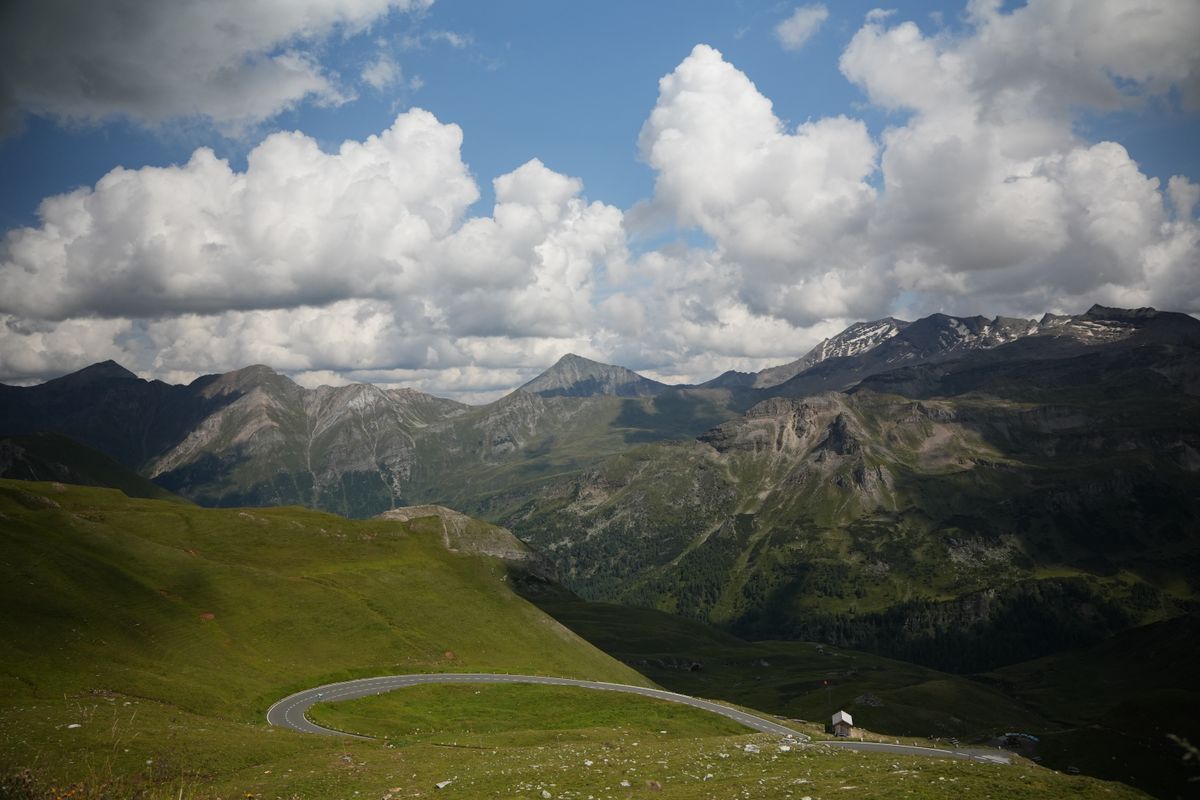
Salzburg Travel Guide
Mozart's city, a baroque jewel at the edge of the Alps.
Last updated: 2026-09-05
The city's 24-hour rhythm.
Turn the dial to any hour and it tells you where you should be.
Hohensalzburg Fortress
Buy the combo ticket with the funicular; one of Europe's best-preserved castles.
Salzburg: places to visit
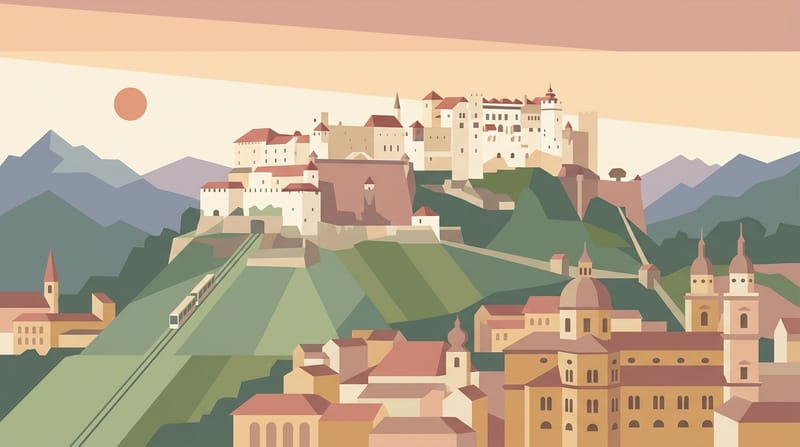
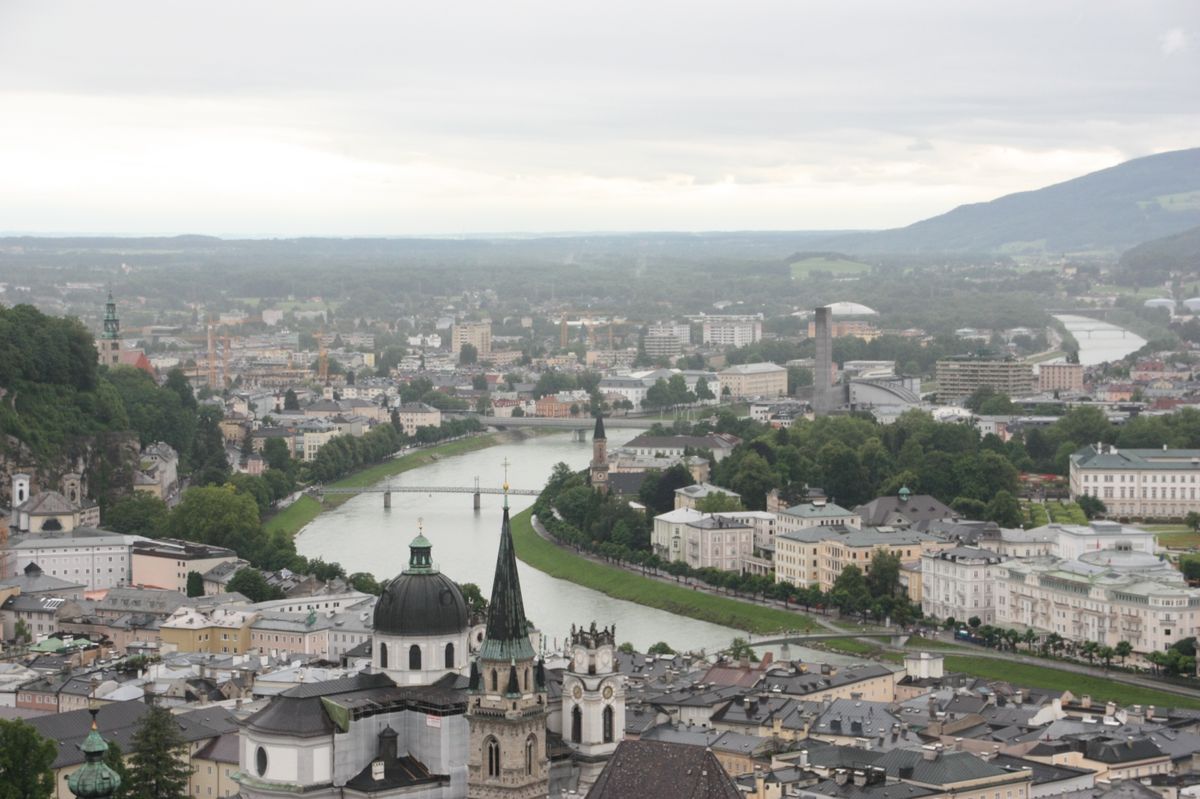
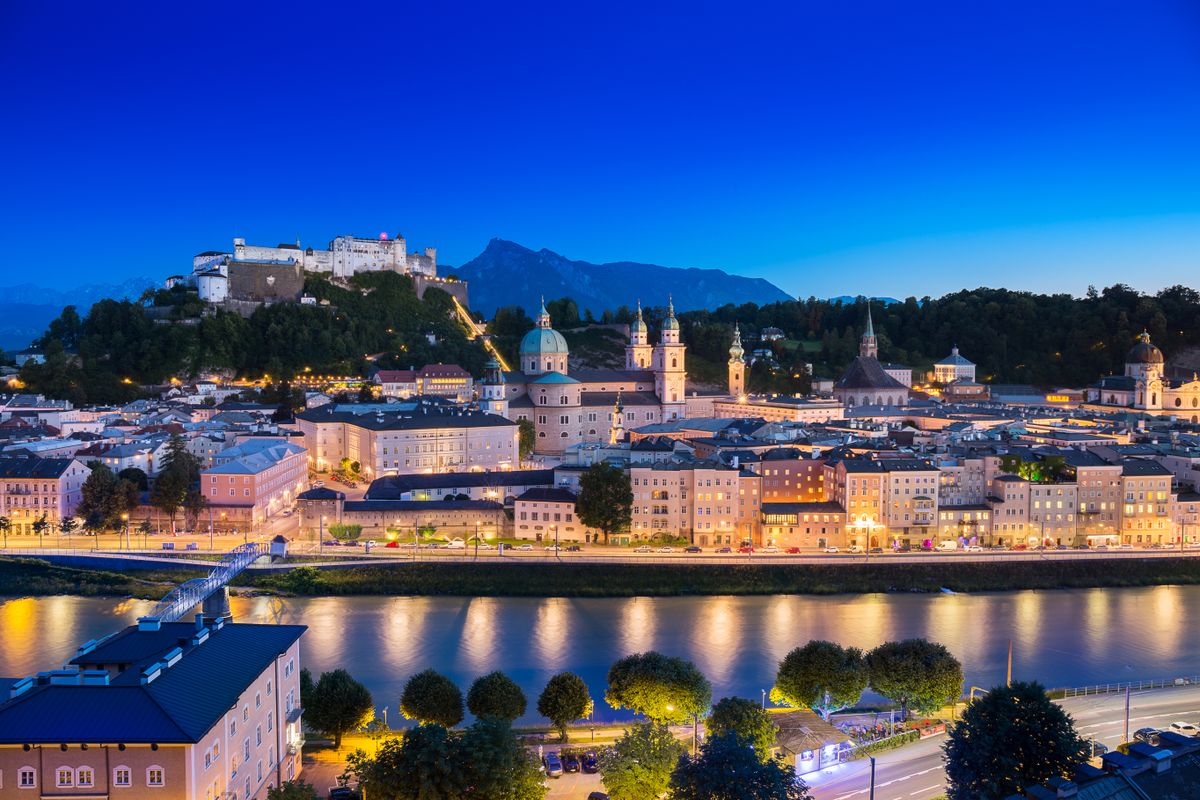
Hohensalzburg Fortress
One of Europe's best-preserved medieval fortresses, overlooking Salzburg for more than 900 years.
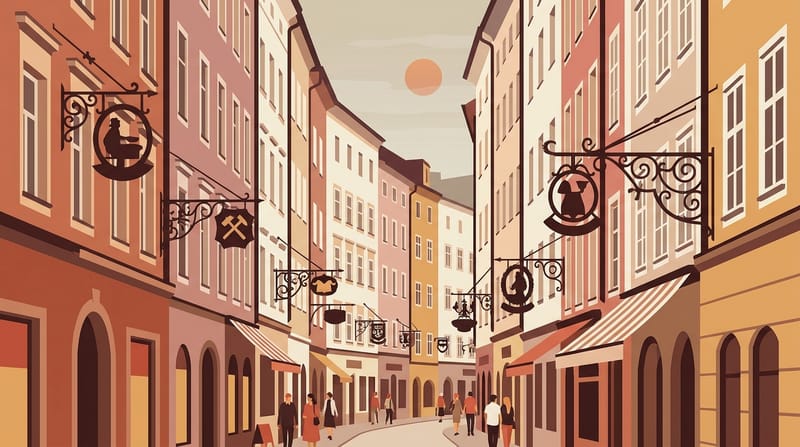
Getreidegasse
Historic shopping street famous for its wrought-iron guild signs; Mozart's birthplace stands here too.
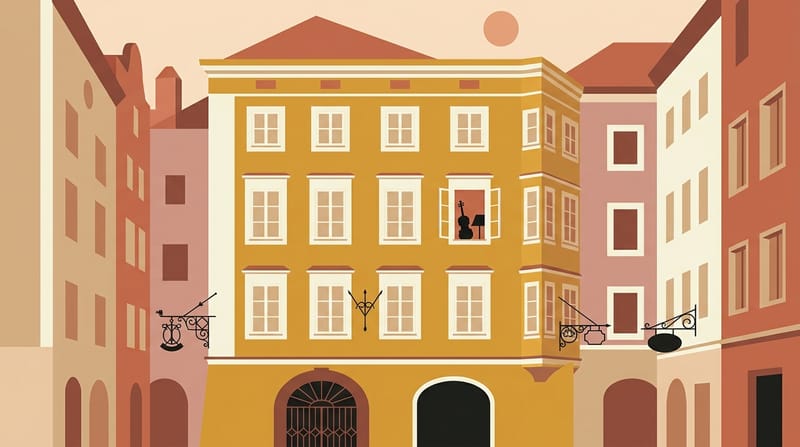
Mozart's Birthplace
The yellow-fronted house where Wolfgang Amadeus Mozart was born in 1756, now displaying his original instruments.
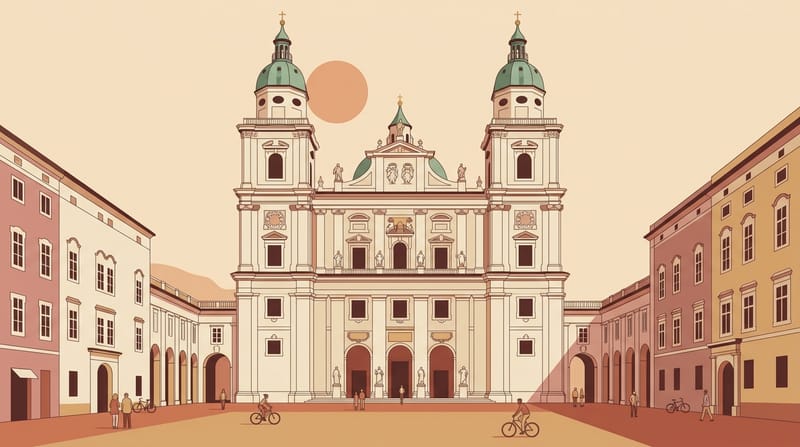
Salzburg Cathedral (Dom)
A masterpiece of Italian Baroque architecture; the bronze baptismal font in which Mozart was baptised is here.

Untersberg Cable Car
A ten-minute ride up to 1,800 metres, with postcard views over the Alps at the top.
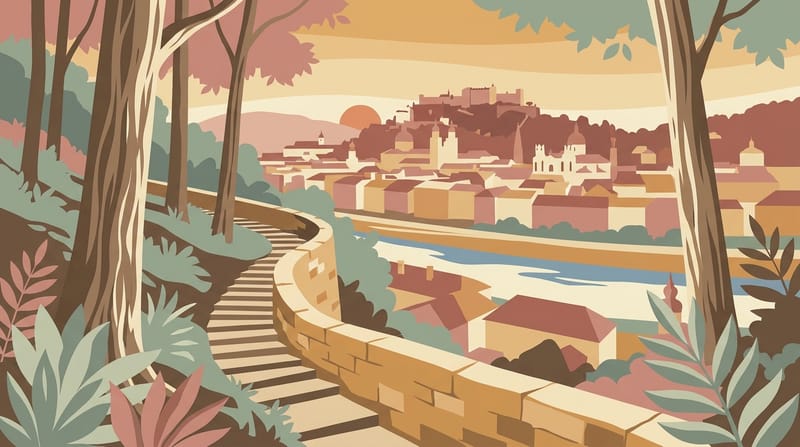
Kapuzinerberg
The forested hill opposite the old town, climbed on foot, a quiet viewpoint away from the tour groups.
What to eat in Salzburg
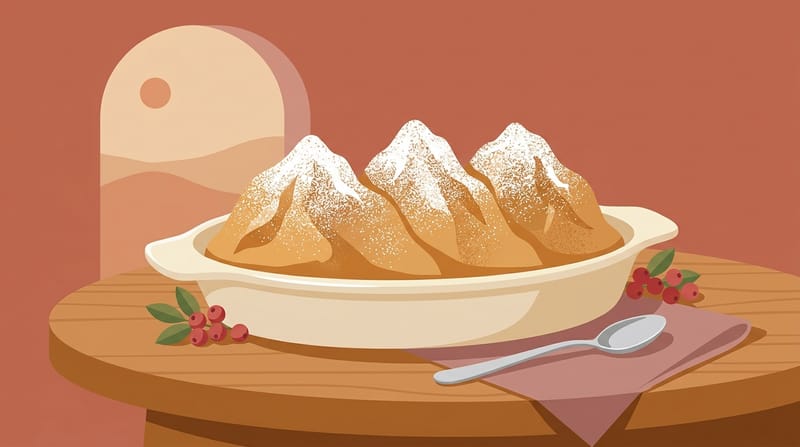
Salzburger Nockerl
A giant, oven-fresh soufflé shaped like the Alps' snowy peaks.Egg whites whipped with sugar and baked into three mounds; the traditional Salzburg dessert, served hot.
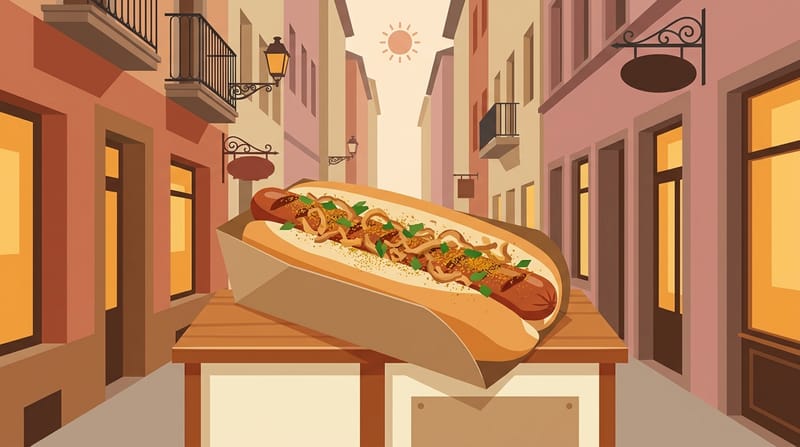
Bosna Sausage at Balkan Grill
The cult street food of the Getreidegasse passage since the 1950s.Grilled sausage with fried onions and a house curry-mustard sauce, tucked into a small roll.
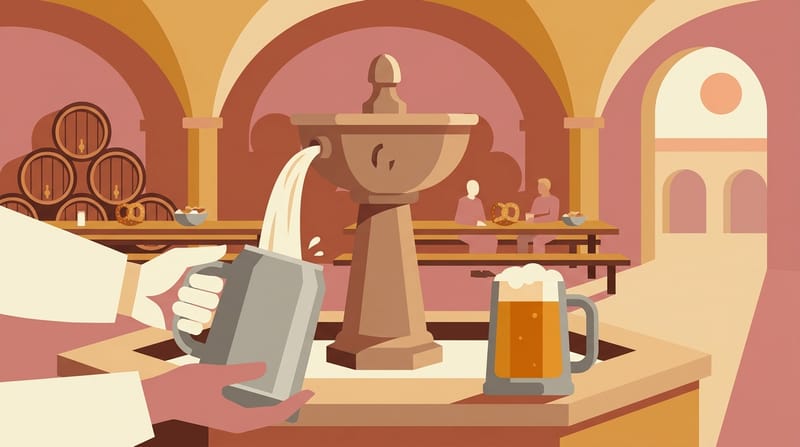
Augustiner Bräustübl
At this monastery brewery, operating since 1621, rinse your mug at the fountain before having it filled from the barrel.Rinse your stone mug at the fountain, then have it filled with beer; pair it with cold snacks and pretzels.

Mozartkugel
Salzburg's signature sweet, where pistachio marzipan meets chocolate.A round chocolate invented by baker Paul Fürst in 1890; the original is still handmade at his Alter Markt shop.
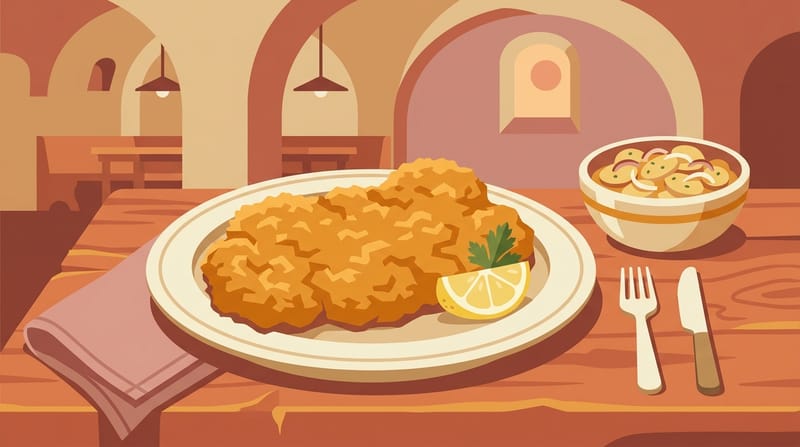
Wiener Schnitzel at a traditional Gasthaus
A golden, crispy Austrian classic of veal or pork.Thin-pounded meat breaded and pan-fried in butter, served with potato salad or fried potatoes.
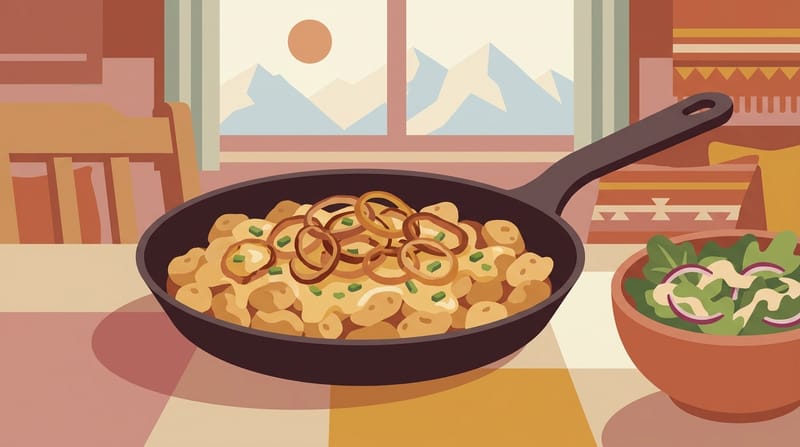
Kasnockerln
A hearty mountain dish of soft dumplings baked with Alpine cheese and topped with caramelised onions.Hand-shaped dumplings baked with cheese, crowned with fried onions, usually served with a green salad.
Where to stay
| Areas | Altstadt / GetreidegassePrice: High | Andräviertel / MirabellPrice: Medium | Elisabeth-Vorstadt / HauptbahnhofPrice: Medium | NonntalPrice: Medium | SchallmoosPrice: Medium | MaxglanPrice: Medium |
|---|---|---|---|---|---|---|
| Atmosphere | The most central option for first-time visitors who want to see the main historic sights on foot. Getreidegasse, Mozart's birthplace, the squares and the historic centre are all concentrated along the same walking axis. | A balanced area for travellers who want to stay close to the Altstadt while enjoying more of a neighbourhood feel, with plenty of cafés and restaurants on the right bank. | A transport-focused choice for travellers planning day trips by train or wanting the easiest access to the main station. | A strong alternative just south of the Altstadt for travellers who prefer green space and a quieter urban atmosphere. | An alternative east and northeast of the Altstadt for travellers looking for a more local, creative neighbourhood with some evening activity. | A western Salzburg option for travellers who want to be near the airport, experience local life and stay in a quieter base outside the tourist centre. |
| Best for | First-time visitorsTravellers who want to walk to the main sightsHistory and architecture-focused trips | Café and restaurant loversTravellers who want to stay near the centre but outside the AltstadtCouples and city-break travellers | Travellers taking train day tripsShort staysTravellers who prioritise easy transport | Travellers seeking peace and quietGreen-space loversPeople who enjoy long walksTravellers who like a university-area atmosphere | Travellers seeking a local neighbourhood feelBar and live-music fansTravellers comfortable staying outside the centre | Travellers who want to stay near the airportTravellers seeking local lifeTravellers who do not mind staying outside the centre |
| Accommodation profile | PriceHighNightlifeMediumWalkabilityHigh | PriceMediumNightlifeMediumWalkabilityHigh | PriceMediumNightlifeMediumWalkabilityMedium | PriceMediumNightlifeLowWalkabilityHigh | PriceMediumNightlifeHighWalkabilityMedium | PriceMediumNightlifeLowWalkabilityMedium |
| Transport | The historic centre is very suitable for exploring on foot.Bus stops located in the city centre provide connections to other parts of the city. | Urban buses are readily accessible via the stops at Mirabell and in the city centre.Reaching Altstadt on foot is practical. | Provides direct pedestrian access to the main train station.There is a direct connection to the airport via Obus 2. | The city centre can be reached on foot or by urban buses.Several different urban bus lines provide service around the Nonntal area. | Connected to the city centre by urban bus and trolleybus lines.Using public transport toward Hauptbahnhof and Altstadt is practical. | Trolleybus connections are available toward the city centre.Its proximity to the airport can be an advantage, especially for early flights. |
| Advantages |
|
|
|
|
|
|
| Consider |
|
|
|
|
|
|
Planning notes.
Researched recommendations, practical information and route decisions.
- Experience the Augustiner ritual: take a mug from the shelf, rinse it at the fountain, then have it filled from the barrel.
- Take the Untersberg cable car to 1,800 m — the Alps at your feet.
- At Christmas, drink proper Glühwein at the Christkindlmarkt.
- Restaurants on Getreidegasse itself — one street back is half the price.
- The pricier Sound of Music bus tours; many locations are walkable.
- Arriving unplanned on a Sunday: most shops are closed.
- The Salzburg Card pays for itself even in 24 hours (fortress + funicular + museums); the summer (April–October) 24-hour card runs about EUR 38.
- The centre is tiny: you barely need public transport.
- Day trip to Hallstatt: bus 150 goes to Bad Ischl; continue from there by train/bus connection to Hallstatt.
Salzburg map
What will it cost me?
Figures are per-person daily USD estimates compiled from BudgetYourTrip, Numbeo and recent traveller reports. Flight/ferry tickets not included.
✓ Prices are compiled from real traveller spending. · Last updated: Aug 2026
How many days?
Choose the best route for your schedule.
What to know before you go.
Tourist traps, SIM, money, taxis, safety, health, transit and language — the city in eight answers.
112 — the free EU-wide emergency number for police, ambulance or fire services.
Treating Salzburg as a Sound of Music set and skipping Augustiner Bräu and the Untersberg summit.
scamSalzburg is generally very safe; take normal precautions against pickpocketing in crowded tourist areas.
safetyPharmacies and hospitals are easy to reach; call 144 in an emergency. Carry water in the Festspiele-season summer crowds.
healthThe Salzburg Card bundles public transport, museums and the Festungsbahn funicular into one pass — buy it at the airport, your hotel or the tourism office.
cardA few words of German help: 'Grüß Gott' (Hello), 'Danke' (Thanks) and 'Wie viel kostet das?' (How much is it?) are useful day to day.
languageSalzburg: weather and crowds by month
🎒 What to pack
- ✔ Walking shoes
- ✔ Power adapter
- ✔ Jacket
- ✔ Layers
- ✔ Gloves & beanie
- ✔ Umbrella
FLIGHTS
Airport to city
Obus 2Salzburg Hauptbahnhof and city centre
Airport–Salzburg Hauptbahnhof takes about 23 minutes.
Best for: Travellers heading to the main railway station, Elisabeth-Vorstadt, or making an onward connection from the station.
Limitations: Frequency varies by day and public-holiday schedule on the airport's official page; check the current timetable on your travel day.
↗ Official sourceObus 10Salzburg city centre
Airport–city centre takes about 15 minutes.
Best for: Travellers who want to go directly to the city centre and the Altstadt area.
Limitations: Salzburg Airport lists this as a Monday–Saturday option; on Sundays and public holidays, Obus 2 is the more reliable default option.
↗ Official source