Cartagena Travel Guide
A colorful walled city on the Caribbean coast
Last updated: 2026-09-05
The city's 24-hour rhythm.
Turn the dial to any hour and it tells you where you should be.
Time for midday shade
The sun gets intense. A shaded courtyard, a cool café or a long lunch suits Cartagena’s rhythm better than pushing through a long walk.
Cartagena: places to visit
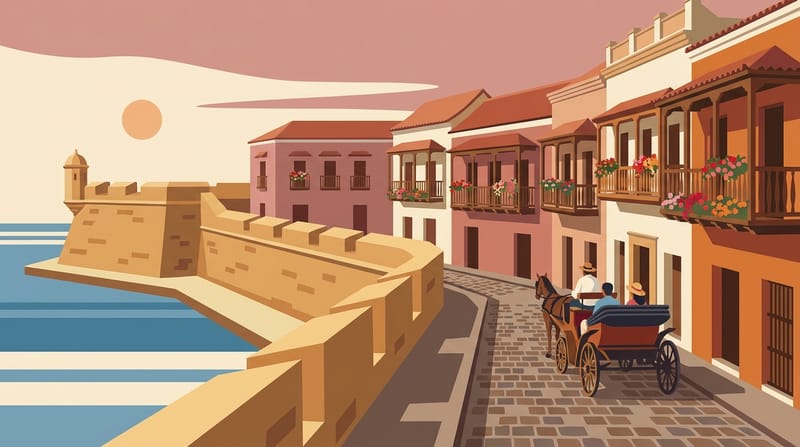
Cartagena Walled City and Historic Center
The UNESCO-listed historic core is Cartagena’s essential walking route, lined with fortifications, colorful colonial façades, plazas and balcony-filled streets.

Castillo San Felipe de Barajas
This immense fortress, built to defend the city from land attacks, is worth visiting for its ramps, tunnels and broad views over Cartagena.
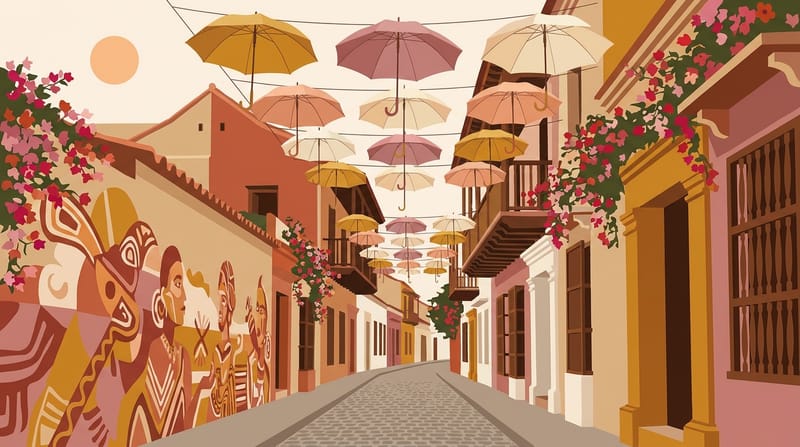
Getsemaní Neighborhood
Street art, bright houses and everyday life around Plaza de la Trinidad reveal a livelier, more local side of the historic center.

Rosario Islands
These coral islands off Cartagena offer clear Caribbean water, snorkeling and boat trips, making them the city’s standout full-day escape.

La Popa Convent
Set on one of Cartagena’s highest points, this historic convent rewards the trip with a peaceful courtyard and sweeping views over the city.
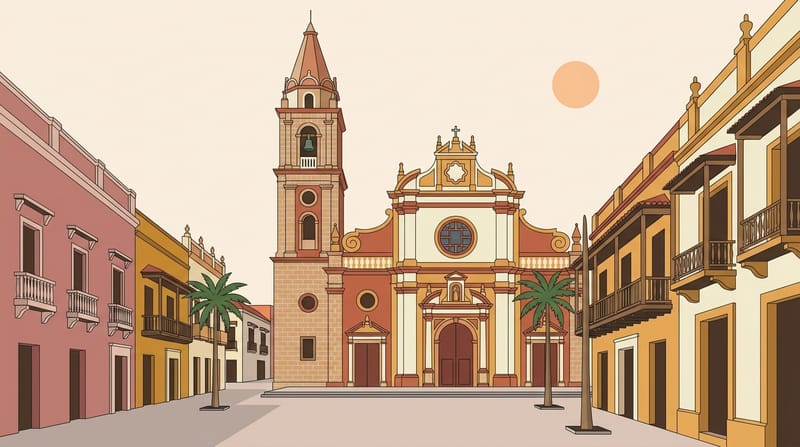
San Pedro Claver Sanctuary and Museum
Combining church, cloister and museum, this historic complex explores Pedro Claver’s life and Cartagena’s Afro-Caribbean memory.
What to eat in Cartagena

Arepa de huevo
A hot egg inside crisp corn doughA corn arepa filled with an egg and fried again until crisp. In Cartagena it is a classic street snack, especially in the morning and evening.

Cartagena-style posta negra
Cartagena’s beef classic in a dark sweet-savory sauceSlow-cooked beef served in a deeply caramelized dark sauce, one of Cartagena’s signature dishes and especially good with coconut rice.

Fried fish with coconut rice and patacón
The Caribbean coast on one filling plateA whole mojarra or red snapper is typically fried crisp and served with lightly sweet coconut rice and smashed fried green plantain.

Mote de queso
Creamy yam soup with salty coastal cheeseA thick Caribbean soup made with ñame yam and salty costeño cheese. It looks simple, but its tangy, comforting flavor is unmistakably coastal.

Shrimp ceviche
Bright, citrusy and full of the seaShrimp marinated with citrus, onion and seasoning for a cool coastal bite. Small cocktail-style portions are especially common around Cartagena.

Cocada
Coconut at its sweetestA traditional sweet made from grated coconut and sugar. Around Portal de los Dulces you will find many colors, textures and flavor variations.
Where to stay
| Areas | Historic CenterPrice: High | San DiegoPrice: High | GetsemaníPrice: Medium | BocagrandePrice: High | MangaPrice: Medium |
|---|---|---|---|---|---|
| Atmosphere | The main historic core inside the city walls. The most straightforward area to stay if you want to walk to squares, museums, churches and Cartagena’s best-known colonial streets. | One of the three main neighborhoods of the Historic Center. Around Plaza de San Diego, the walls and La Serrezuela, it offers a good balance of history, boutique lodging, dining and walkability. | A more social and energetic neighborhood beside the Historic Center, known for street art, music, Plaza de la Trinidad and lively nightlife. | A waterfront district with city beaches, high-rise hotels and a dense range of modern visitor services. It suits travelers who prioritize beach access and modern hotel infrastructure over staying in the historic core. | A more residential neighborhood on the inner-bay side, notable for its central location and historic housing. A strong alternative for staying close to the center without being inside the tourist core. |
| Best for | First-time visitorsHistory and architectureTravelers who prefer to explore on foot | CouplesBoutique-hotel travelersTravelers seeking a more balanced pace within the historic center | Travelers looking to socializeNightlifeStreet art and local atmosphere | Travelers who want to stay near the beachTravelers who prefer modern hotelsFamilies | Quieter staysLonger staysA more local neighborhood feel |
| Accommodation profile | PriceHighNightlifeHighWalkabilityHigh | PriceHighNightlifeMediumWalkabilityHigh | PriceMediumNightlifeHighWalkabilityHigh | PriceHighNightlifeMediumWalkabilityHigh | PriceMediumNightlifeLowWalkabilityMedium |
| Transport | The main routes inside the walls can be explored on foot.The Centro stop on TransCaribe route T102 provides a connection toward Crespo.Taxis are widely available, although door-to-door vehicle access is restricted on some streets inside the walls. | It connects easily on foot toward Centro and Getsemaní.The T102 route passes near reference points along the San Diego/Crespo corridor.Short taxi rides are a practical complement for getting around the city. | The Historic Center and Convention Center area are reachable on foot.Access to the Centro/Chambacú TransCaribe corridor is possible.Short taxi rides are practical for reaching Bocagrande and other areas. | Taxis provide a practical direct connection to the Historic Center.TransCaribe routes serving the Bocagrande direction connect with the city network; check the current route operation on the day of travel. | Avenida Alfonso Araujo/Calle 26 connects the neighborhood with Centro and other main corridors.Short taxi rides provide access to the Historic Center and Getsemaní. |
| Advantages |
|
|
|
|
|
| Consider |
|
|
|
|
|
Planning notes.
Researched recommendations, practical information and route decisions.
- Walk the historic center through its walls, plazas and balcony-lined streets.
- Visit Castillo San Felipe de Barajas in the cooler morning hours.
- Wander through Getsemaní in the late afternoon and see the scene around Plaza de la Trinidad.
- Do not accept beach, boat or street services until the full price is clearly agreed.
- Avoid long, unshaded walks around midday; the heat and humidity can be draining.
- Do not expect city beaches to feel like a white-sand island escape; the Rosario Islands fit that expectation better.
- For the airport and longer trips, use a ride-hailing app or the official taxi line; agree on the fare before entering a taxi.
- The Old City and Getsemaní are very close, so walking is often faster than waiting for a car on short trips.
- Popular sections of the walls fill up at sunset; arrive 30-45 minutes early.
Cartagena map
What will it cost me?
Figures are per-person daily USD estimates compiled from BudgetYourTrip, Numbeo and recent traveller reports. Flight/ferry tickets not included.
✓ Prices can vary sharply by season, neighborhood and booking date. Treat the budget figures as planning ranges based on current price checks, not as fixed tariffs. · Last updated: Aug 2026
How many days?
Choose the best route for your schedule.
What to know before you go.
Tourist traps, SIM, money, taxis, safety, health, transit and language — the city in eight answers.
Agree on the full price before accepting any beach, boat or street service; do not hesitate to ask for a menu or price list.
scamThe Old City and Getsemaní are busy tourist areas, so keep your phone and wallet discreet in crowds. At night, stick to main, well-lit streets and avoid wandering alone into quiet areas.
safetyCartagena’s utility states that tap water meets drinking-water standards. If you have a sensitive stomach, bottled water is still an option; hydration, sunscreen and mosquito repellent matter in the heat and humidity.
healthTransCaribe’s 2026 single fare is COP 3,900 and the system uses a card. Because the historic center is easy to walk, the card is mainly useful for short-stay visitors who expect to use buses often.
cardA little Spanish goes a long way: “¿Cuánto cuesta?” asks the price, while “No, gracias” is a simple, polite way to decline.
languageCartagena: weather and crowds by month
🎒 What to pack
- ✔ Walking shoes
- ✔ Power adapter
- ✔ Umbrella
- ✔ Sunscreen
- ✔ Hat
- ✔ Light clothing
FLIGHTS
Airport to city
TransCaribe T102 Portal–CrespoCentro / city network via Portal
Official sources do not provide a total airport-to-center journey time; it depends on traffic, the walk to the stop and waiting time.
Best for: Budget-conscious travelers with light luggage arriving during the day or early evening.
Limitations: The route does not stop at the terminal door; it runs through Crespo at stops near the airport. The airport website specifically notes that schedules and routes may change, so check TransCaribe channels again on the day of travel.
↗ Official sourceAuthorized airport taxiHistoric Center and citywide
The Historic Center is about 10 minutes away, depending on traffic.
Best for: Travelers with luggage, late-night arrivals and anyone wanting door-to-door transport.
Limitations: The airport’s '2026 taxi fares' link was pointing to a 2022 PDF on the review date. For that reason, no exact zone fare is published in this package.
↗ Official sourceCartagena: frequently asked questions
Should I stay in Cartagena’s Walled City, Getsemaní, or Bocagrande?
Is a day trip from Cartagena to the Rosario Islands or Playa Blanca in Barú worth it?
How do I get from Rafael Núñez Airport to Cartagena’s Walled City, and how do taxis work?
Can I visit Cartagena’s Walled City and Castillo San Felipe de Barajas on the same day?
Are Cartagena’s city beaches comparable to Barú and the Rosario Islands?
Nearby routes