Marrakesh Travel Guide
A living city of red walls, spice-scented souks and courtyard riads
Last updated: 2026-09-05
The city's 24-hour rhythm.
Turn the dial to any hour and it tells you where you should be.
Lunch slows the pace
Especially in hot months, shade, a long lunch or a short riad break helps; splitting outdoor sightseeing between morning and late afternoon is more comfortable.
Marrakesh: places to visit
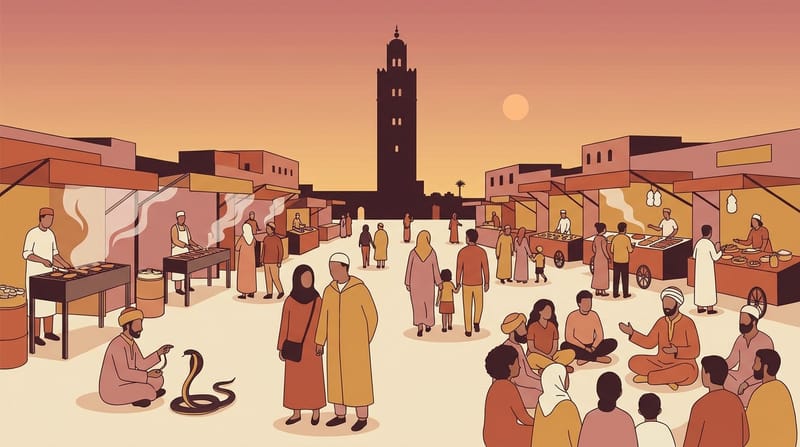
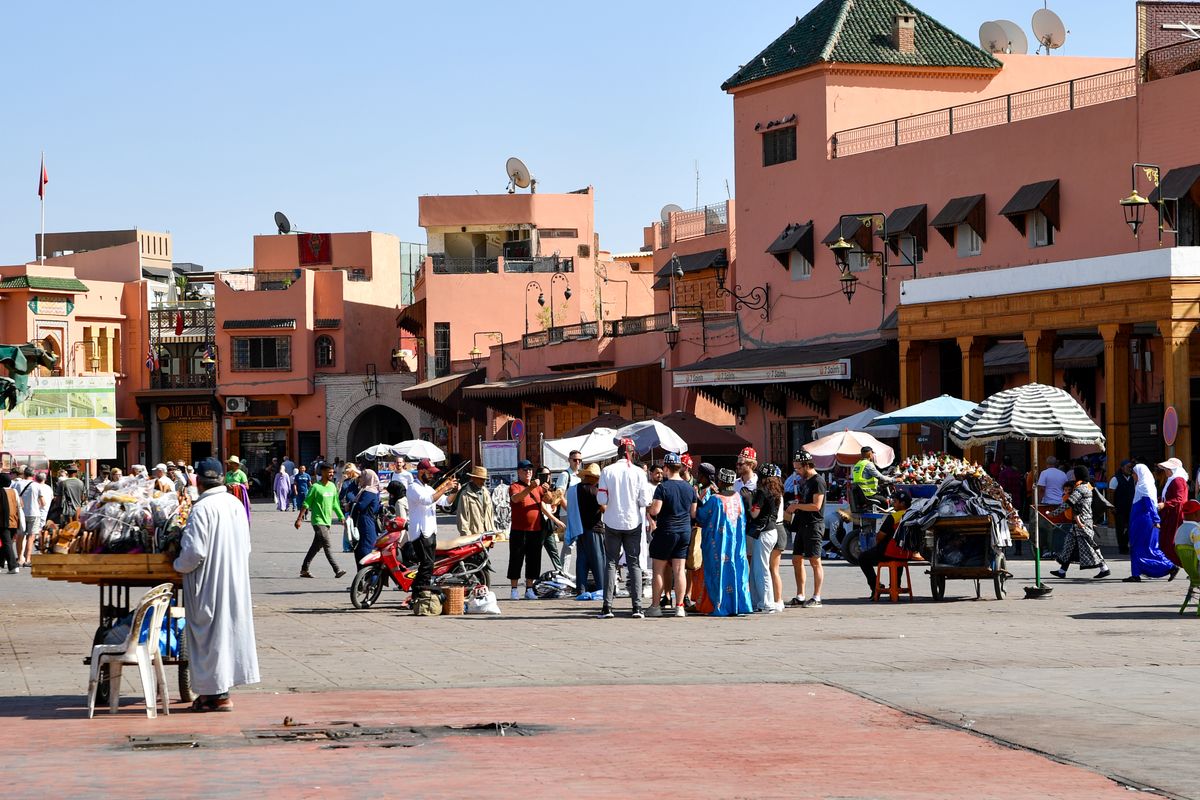
Jemaa el-Fna
Marrakesh's symbolic heart is a market and crossroads by day, then changes after sunset as food stalls, musicians and traditional street performances take over.
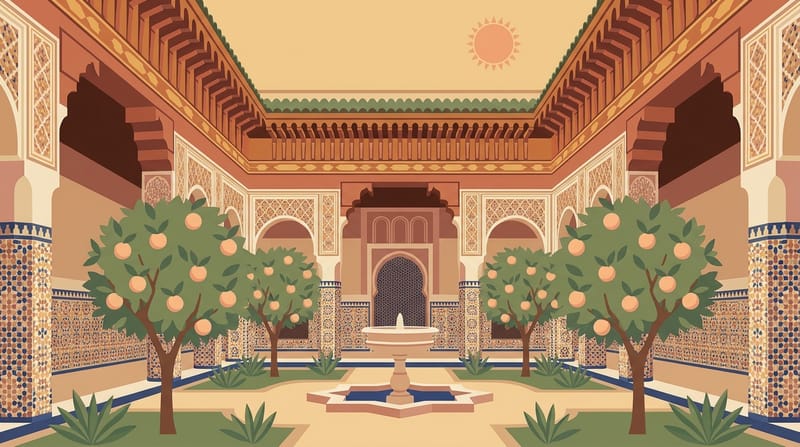
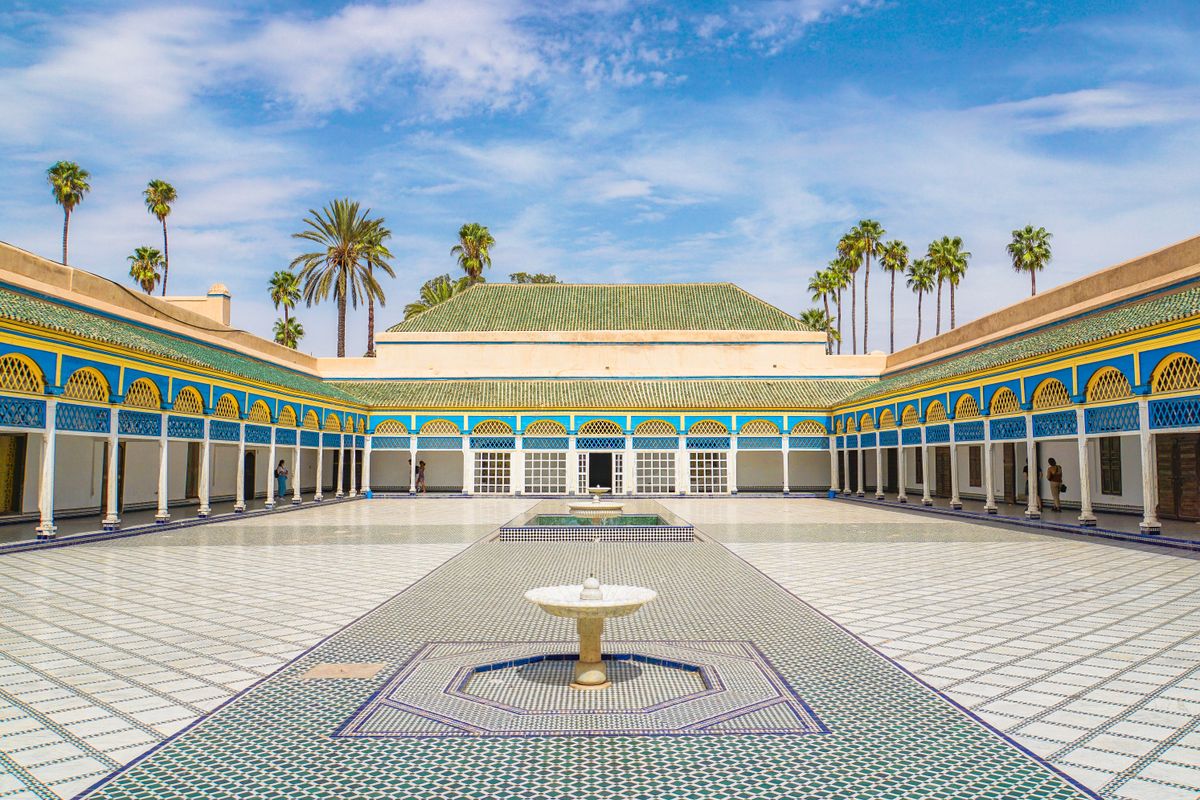
Bahia Palace
This 19th-century palace is one of Marrakesh's finest displays of traditional palace craftsmanship, with zellij mosaics, painted cedar ceilings, carved plaster and elegant courtyards.
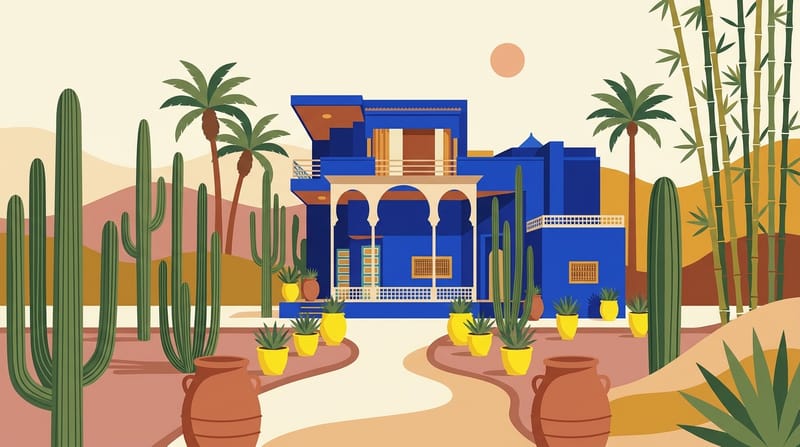
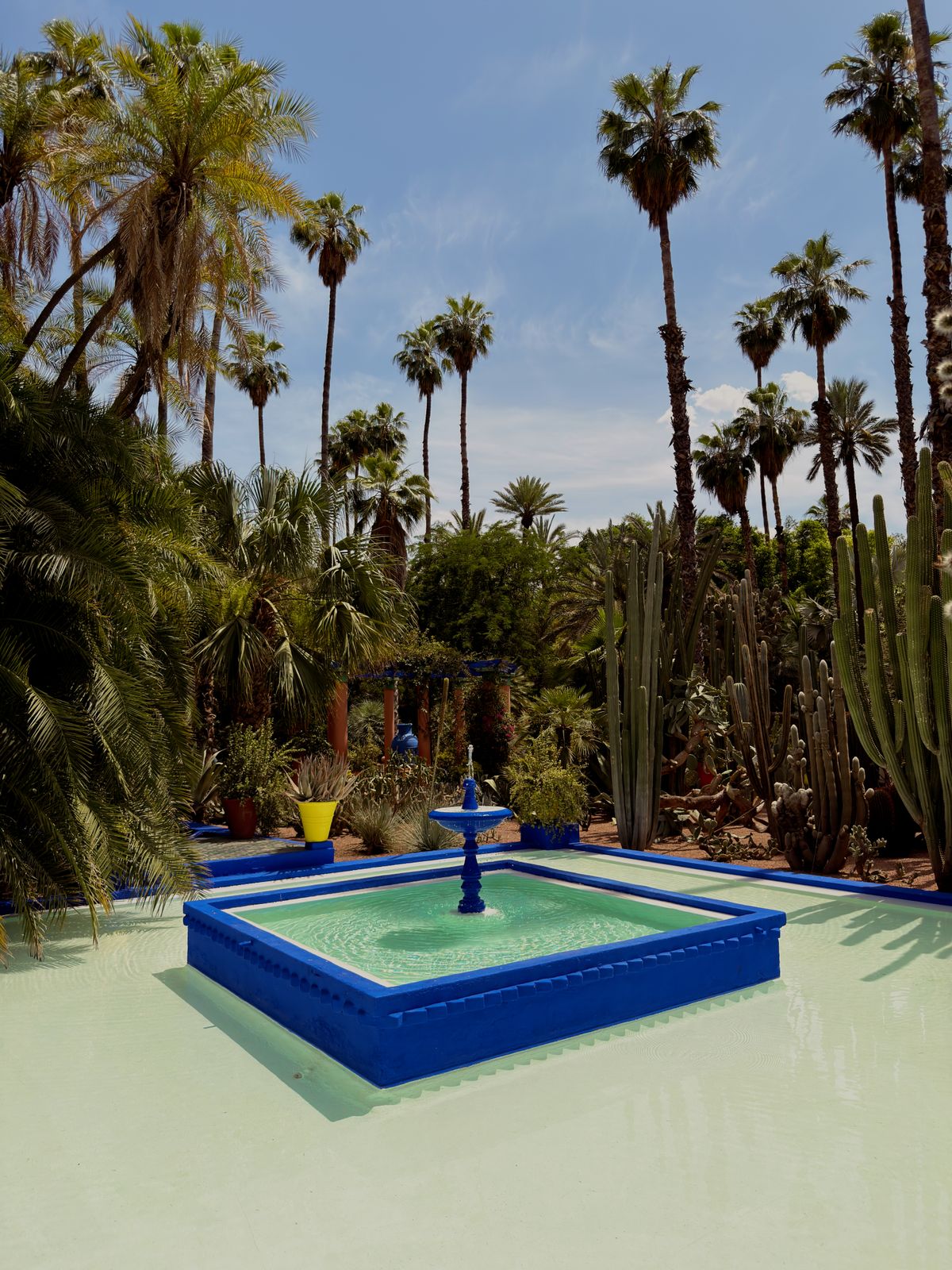
Jardin Majorelle
Marrakesh's most distinctive garden combines cobalt-blue architecture with cacti, palms and a dense botanical collection. Created by Jacques Majorelle, it was later preserved and developed by Yves Saint Laurent and Pierre Bergé.
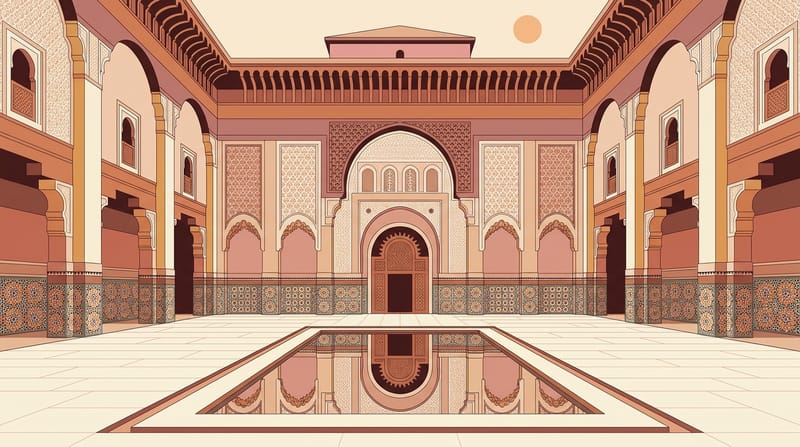
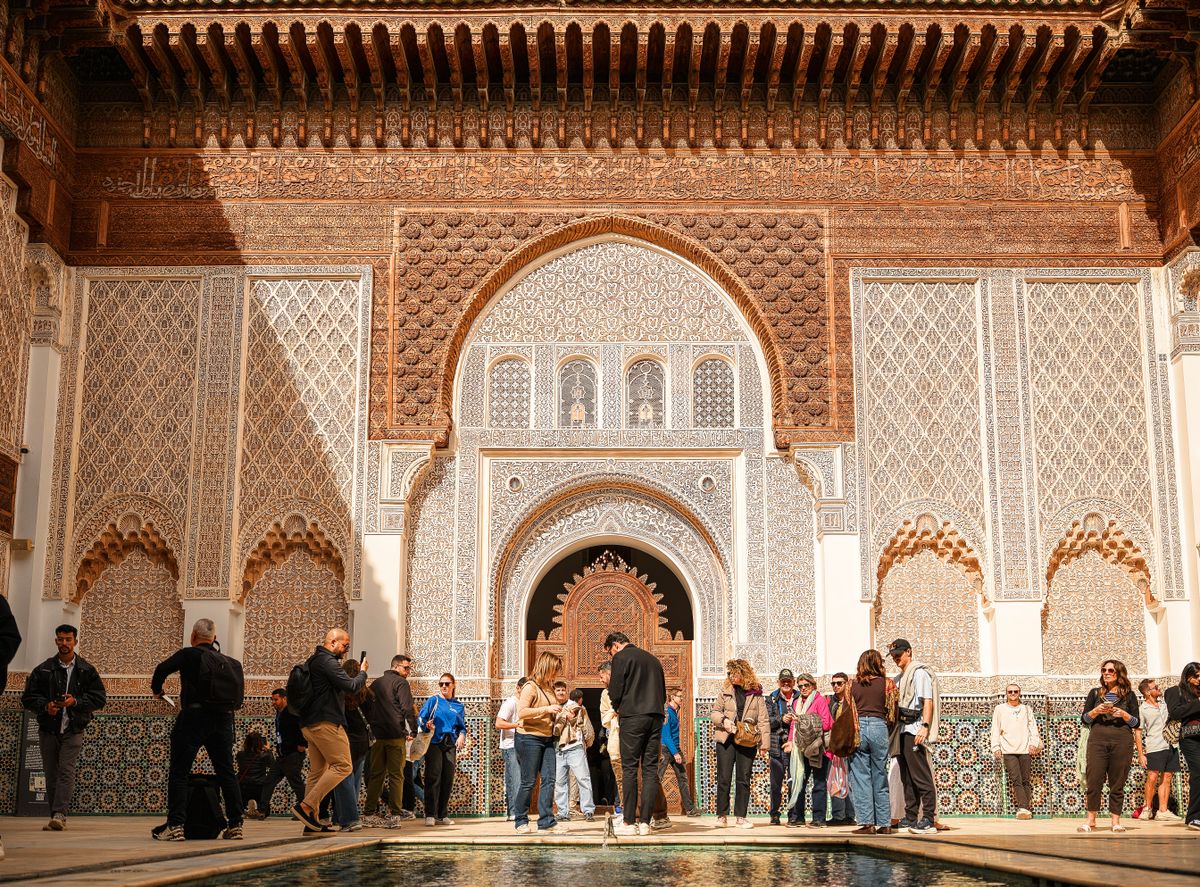
Ben Youssef Madrasa
One of the finest surviving Saadian monuments, this former college pairs cedar wood, carved plaster, zellij and a serene central courtyard, making it a standout stop for architecture lovers.
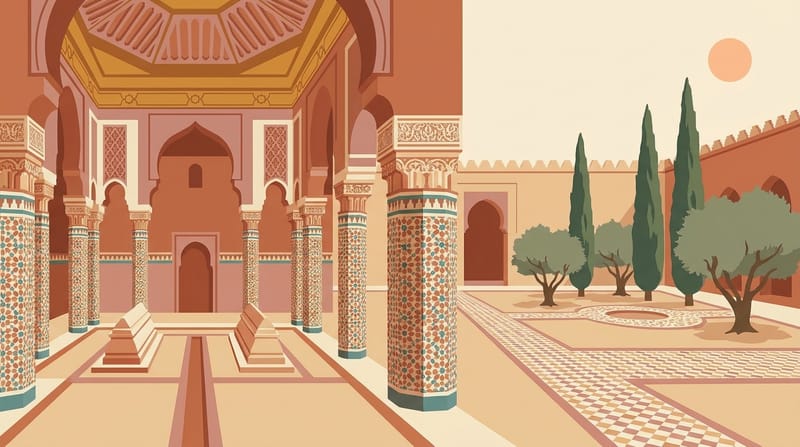
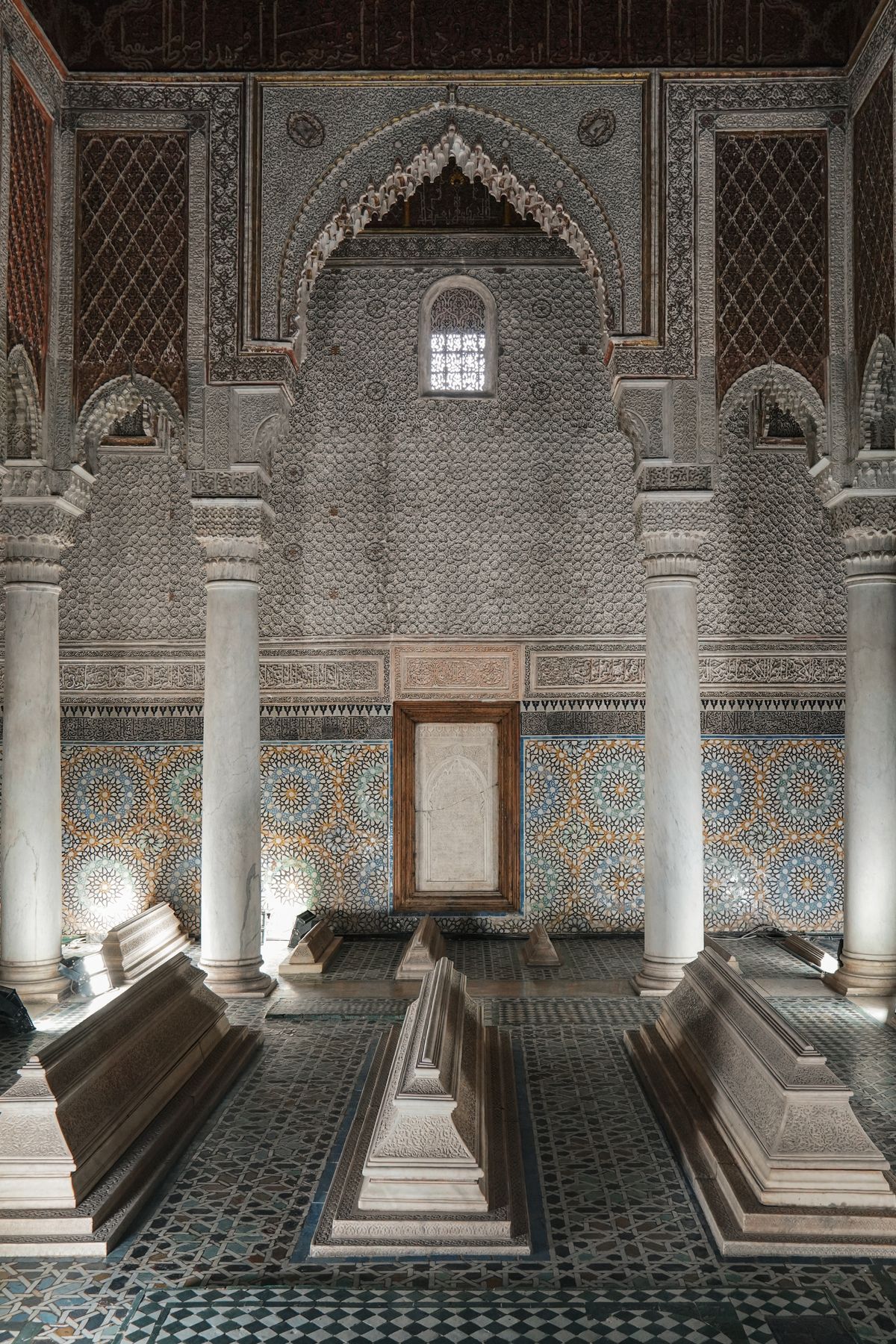
Saadian Tombs
The royal necropolis of the Saadian dynasty is compact but richly decorated, especially the Hall of Twelve Columns with its marble, zellij and finely carved plaster.
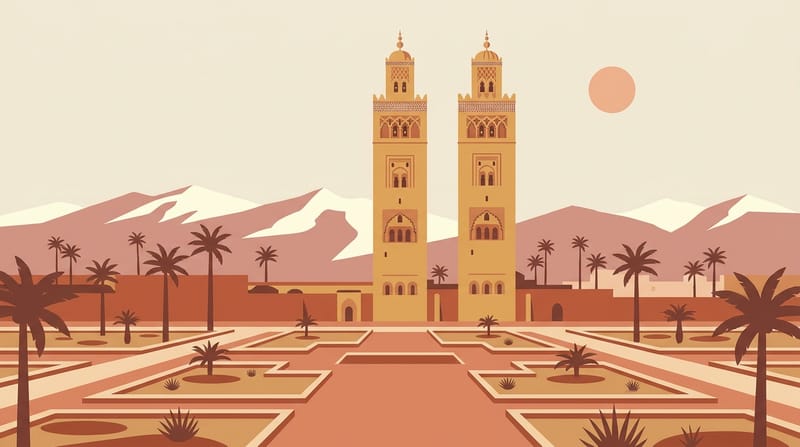
Koutoubia Mosque
This 12th-century Almohad mosque and its 77-metre minaret define the city skyline. Non-Muslims cannot enter the prayer space, but the exterior, minaret and surrounding gardens remain well worth seeing.
What to eat in Marrakesh
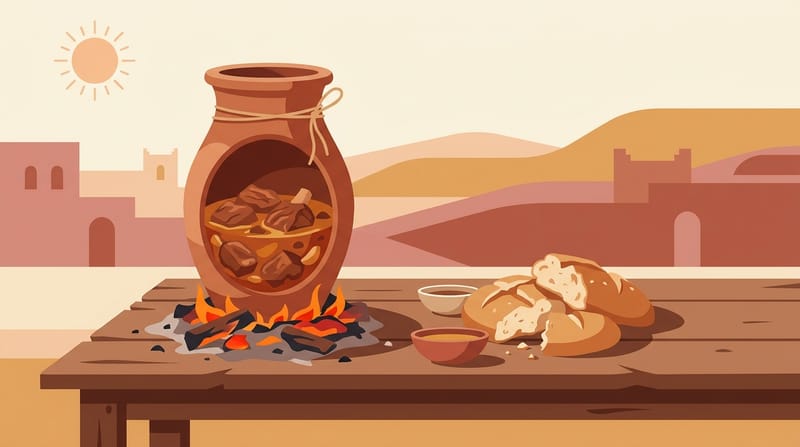
Tanjia Marrakchia
Marrakesh's signature meat, slow-cooked in a clay urnLamb or beef is sealed in a clay urn with preserved lemon, garlic, cumin, saffron and smen, then traditionally cooked for hours in the hot ashes of a hammam furnace. It is not a tagine: both the vessel and method are different, and the dish is distinctly Marrakchi.
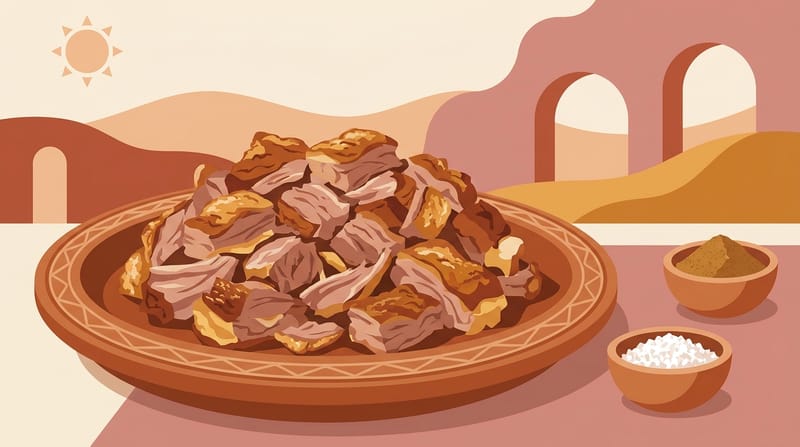
Mechoui Lamb
Slow-roasted lamb so tender it pulls apart by handWhole lambs or large cuts roast slowly in deep ovens; the meat is usually sold by weight and eaten with bread plus a cumin-and-salt mix. Mechoui Alley in the medina is the classic place to try it, especially around lunch.

Babbouche Snail Soup
Jemaa el-Fna's aromatic street-food curiositySmall snails are served in a hot broth scented with anise, thyme and other spices. Diners usually pick out the snails with a toothpick, then drink the broth. Evening stalls on Jemaa el-Fna make this one of the square's most distinctive street foods.

Msemen Flatbread
Flaky, layered Moroccan breakfast breadLayered dough is cooked on a griddle and can be eaten plain, with honey and butter, or with savoury fillings. It is common at riad breakfasts, but fresh from a small medina griddle is better. Morning is the ideal time to try it.
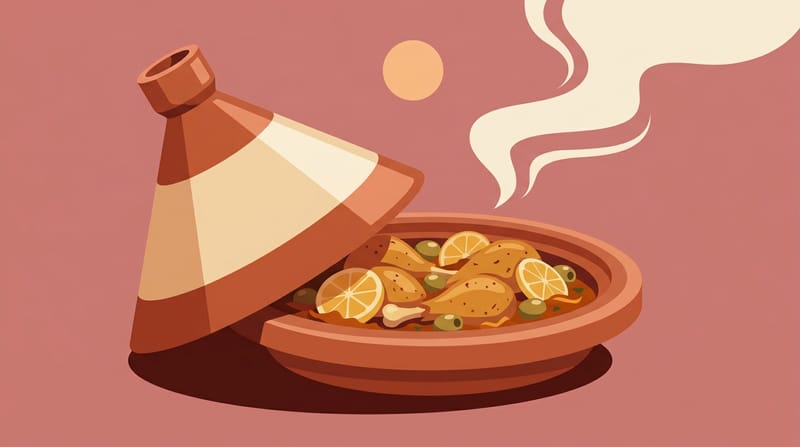
Moroccan Tagine
Morocco's slow-cooked classic in a conical clay potChicken, lamb or vegetables cook slowly in the conical clay pot with combinations such as preserved lemon and olives, prunes and almonds, or seasonal vegetables. Tagine belongs to all of Morocco rather than Marrakesh alone, but it remains essential for a first taste of Moroccan cuisine here.
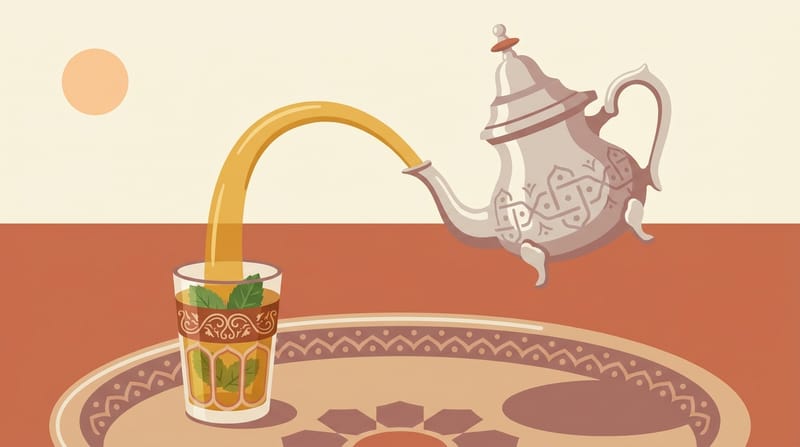
Moroccan Mint Tea
More than a drink, a Marrakesh pause ritualGreen tea is brewed with fresh mint and usually plenty of sugar; pouring it from height helps mix the tea and create its characteristic foam. Having a glass on a medina rooftop near sunset may sound clichéd, but in Marrakesh it genuinely works.
Where to stay
| Areas | MedinaPrice: Medium | GuelizPrice: Medium | HivernagePrice: High | MellahPrice: Low | KasbahPrice: Medium | PalmeraiePrice: High |
|---|---|---|---|---|---|---|
| Atmosphere | Marrakech's historic core; the most distinctive area for travellers who want a riad experience and to reach the souks, Jemaa el-Fna and many major monuments on foot. | One of Marrakech's most practical modern bases, with broad avenues, large café terraces, shops, contemporary cultural venues and proximity to the train and bus stations. | A modern district around Mohammed VI Avenue focused on comfort and nightlife, with luxury hotels, upscale restaurants, hotel bars and nightclubs. | The historic Jewish quarter around Bahia Palace and El Badi; a strong choice for travellers who want to explore the southern Medina on foot and stay close to a more local layer of the city's history. | The historic southern Medina around Bab Agnaou, the Saadian Tombs and the Kasbah Mosque; a balanced option for staying near the main visitor areas while retaining a more residential feel. | A broad palm-grove area north of the Medina; a more isolated option for travellers seeking large hotels, private villas, golf and resort-style accommodation. |
| Best for | First-time visitorsRiad experienceHistory and cultureSouksTravellers who want to explore on foot | Modern city comfortCafés and shoppingPublic transport connectionsLonger staysTravellers who prefer to stay outside the Medina | Luxury hotelsNightlifeCouplesUpscale restaurantsResort-style comfort | History enthusiastsBahia and El Badi areaA more local medina experienceWalking | Saadian historySouthern MedinaA quieter historic settingExploring on foot | Resort holidaysGolfFamiliesPools and large facilitiesQuiet away from the city centre |
| Accommodation profile | PriceMediumNightlifeMediumWalkabilityHigh | PriceMediumNightlifeMediumWalkabilityHigh | PriceHighNightlifeHighWalkabilityMedium | PriceLowNightlifeLowWalkabilityHigh | PriceMediumNightlifeLowWalkabilityHigh | PriceHighNightlifeLowWalkabilityLow |
| Transport | Many important central sights can be reached on foot.For vehicle access, medina gates and car-accessible main points are used; movement inside is largely on foot. | Marrakech's train and bus stations are in Gueliz.ALSA buses and taxis connect the district with the Medina and other areas. | A short taxi ride from Gueliz and the western gates of the Medina.Easy road access across the city via Mohammed VI Avenue. | Strong walking connection between Jemaa el-Fna and the southern Medina.For approaching by car, Place des Ferblantiers and nearby accessible main points are useful. | Walking works well for the Mellah and southern Medina sights.Main road connections around Bab Agnaou make taxi access easier. | Taxis, hotel transfers or a car are more practical for connections to the centre and Medina.Walking is more meaningful within individual properties and resort surroundings. |
| Advantages |
|
|
|
|
|
|
| Consider |
|
|
|
|
|
|
Planning notes.
Researched recommendations, practical information and route decisions.
- See Jemaa el-Fna before sunset and again after dark; the square changes character completely within a few hours.
- After Ben Youssef Madrasa, walk into the medina's craft souks to connect historic architecture with living artisan culture.
- Take time with the intricate interiors of Bahia Palace, then slow the pace with a walk through the nearby Mellah streets.
- Do not follow strangers in the medina who say a street is closed or insist on showing you the way; confirm directions with a shop or your accommodation.
- At Jemaa el-Fna, ask permission before photographing performers, animals or people, and clarify any expected fee first.
- In summer, avoid packing a long medina walk and several outdoor sights into midday; use the morning and late afternoon for heavier sightseeing.
- Download an offline map and save the actual entrance to your riad as a separate pin; in the medina's narrow lanes, that is more useful than storing the address alone.
- Before taking a petit taxi, ask whether the meter will be used; if it will not, agree the fare before the vehicle moves.
- Bargain in the souks only when you genuinely want the item. If the numbers do not meet, a smile, a thank-you and walking away is easier than stretching the exchange into a tense negotiation.
Marrakesh map
What will it cost me?
Figures are per-person daily USD estimates compiled from BudgetYourTrip, Numbeo and recent traveller reports. Flight/ferry tickets not included.
✓ Treat the budget figures as planning estimates rather than fixed tariffs. Accommodation, museum tickets, transfers and restaurant prices can change by season and operator, so check the current amount with the official site or the business itself before booking or paying. · Last updated: Sep 2026
How many days?
Choose the best route for your schedule.
What to know before you go.
Tourist traps, SIM, money, taxis, safety, health, transit and language — the city in eight answers.
In the medina, be wary of self-appointed guides, people claiming a street is closed to redirect you, and unexpected payment demands after photos. If you use a guide, check that they are officially licensed; for directions, ask a shop or your accommodation.
scamPickpocketing, bag-snatching and theft from passing motorcycles can occur in the medina and busy tourist areas. Keep phones and bags away from the road side, stay alert at ATMs and avoid wandering alone into deserted derbs late at night.
safetyAvoid prolonged sun exposure in hot weather and drink water regularly. Official health advice recommends washing and peeling fruit and vegetables and eating meat well cooked. If you have a sensitive stomach, bottled water may feel safer; the national medical emergency number is 141.
healthALSA's Ikhlas card can be used on the Marrakesh bus network. It is available on buses, can be recharged at sales offices, and the same card can be used with friends or family. Fares and sales conditions may change, so check current ALSA information before travelling.
cardArabic and Darija are common in daily life, and French is also very useful in the city. A simple 'salam' for hello, 'shukran' for thank you and 'bshhal?' for how much can make souk interactions friendlier.
languageMarrakesh: weather and crowds by month
🎒 What to pack
- ✔ Walking shoes
- ✔ Power adapter
- ✔ Sunscreen
- ✔ Hat
- ✔ Light clothing
FLIGHTS
Airport to city
Bus 19Marrakech city centre
The official source does not give a journey time; the service runs roughly every 20 minutes.
Best for: Travellers going to the centre economically, especially solo or with light luggage.
Limitations: The official Visit Marrakech page lists operating hours as 06:00-21:30. A taxi may be more suitable for late arrivals. Recheck the route and fare before travelling.
↗ Official sourceOfficial airport taxiMarrakech city centre and other city destinations
Official sources do not publish a fixed journey time.
Best for: Late arrivals, heavier luggage, or travellers wanting to go directly to a hotel or near a riad.
Limitations: Cars cannot enter some narrow streets in the Medina, so the final section may need to be walked. Check the current fare board at the taxi rank before boarding.
↗ Official sourceOn-airport car rentalMarrakech and the surrounding region
There is no fixed journey time; it depends on the accommodation area and traffic.
Best for: Travellers staying in Palmeraie, planning trips outside the city or preferring to drive themselves.
Limitations: Cars cannot enter many narrow Medina streets; parking and the final walking distance in the centre need separate planning.
↗ Official source