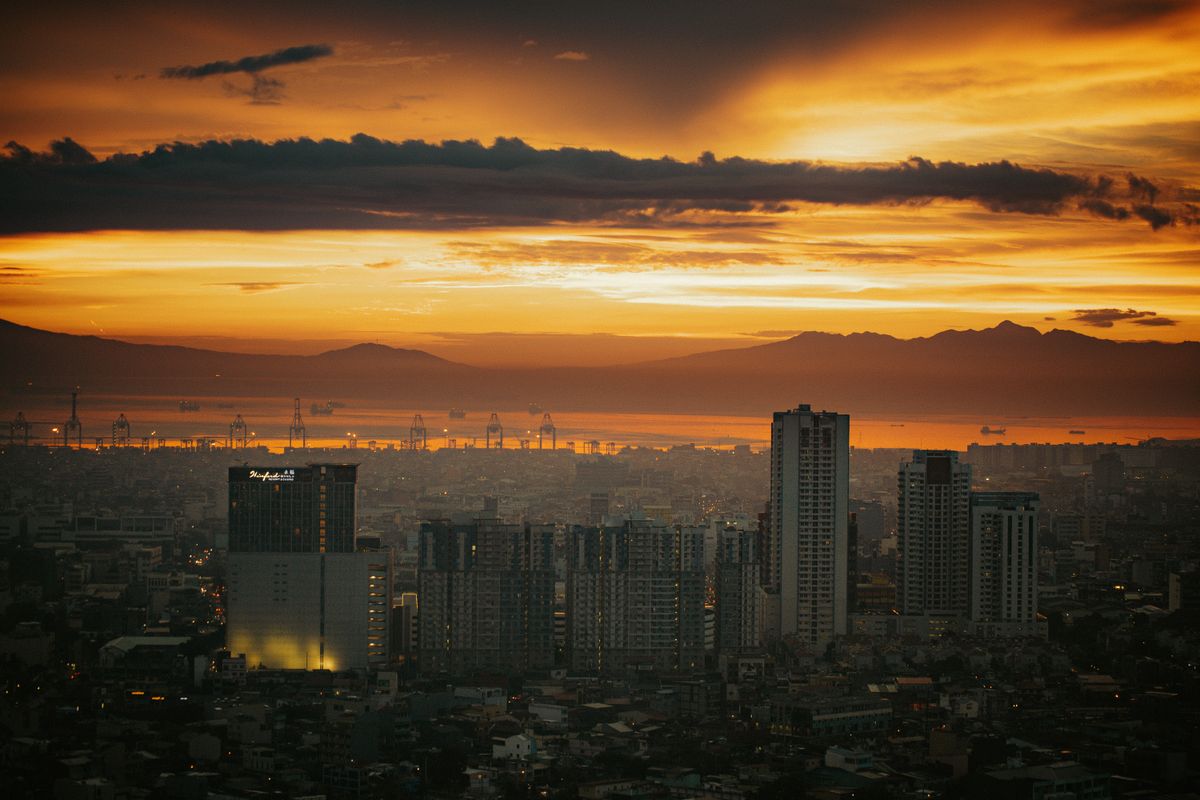


Manila Travel Guide
A capital of old walls, street food and sunsets
Last updated: 2026-09-05
The city's 24-hour rhythm.
Turn the dial to any hour and it tells you where you should be.
Lunch in Binondo
Ongpin and the surrounding streets are at their liveliest around lunch. Several small food stops suit the neighborhood better than one large meal.
Manila: places to visit

Intramuros
Manila’s historic walled core. Walking among stone walls, plazas, churches and colonial-era buildings is the best introduction to the city’s layered past.
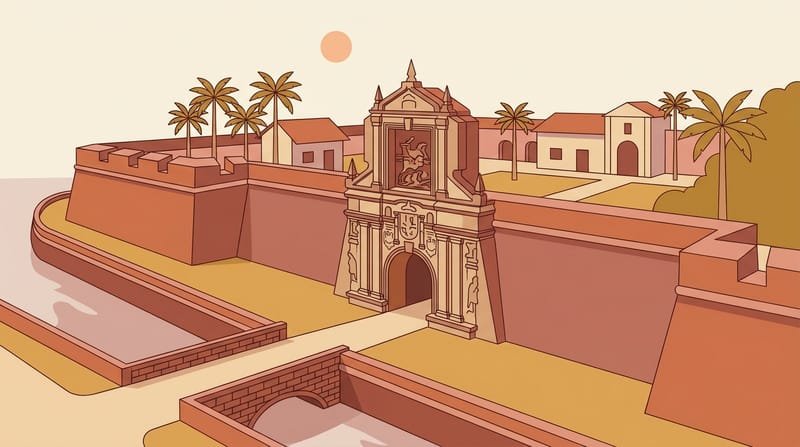
Fort Santiago
One of Intramuros’ most powerful historic sites. See the cells connected with José Rizal, fortress walls, courtyards and riverside defenses overlooking the Pasig.
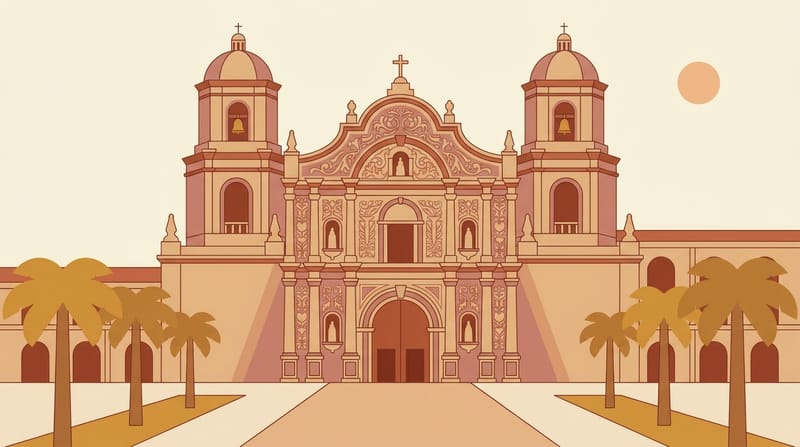
San Agustin Church and Museum
Completed in 1607, this UNESCO-listed church is the oldest surviving stone church in the country. Its Baroque interior and monastery museum make it one of Intramuros’ essential cultural stops.

National Museum of Fine Arts
Home to major works of Philippine art, including Juan Luna’s Spoliarium. The grand halls of the former legislative building are almost as impressive as the collection itself.
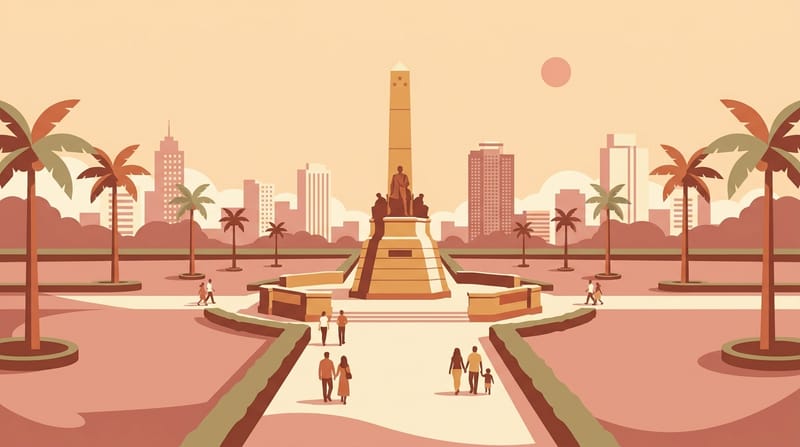
Rizal Park
Broad lawns, gardens and historic sites spread around the José Rizal Monument. It is a good place to decompress after the museums or continue toward Manila Bay near sunset.
Binondo Chinatown
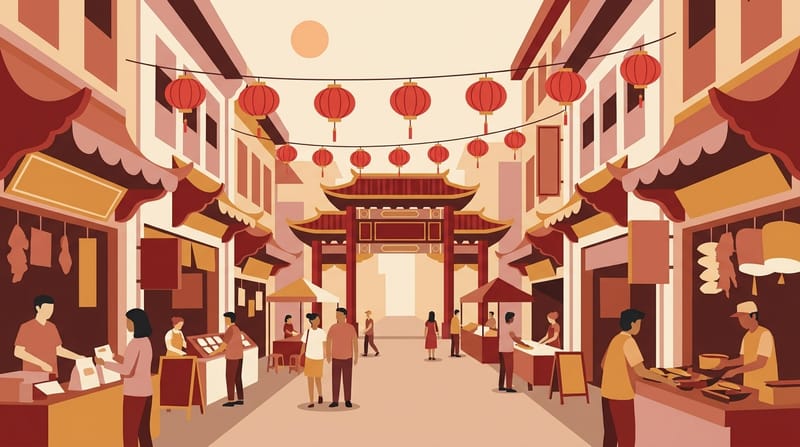
Dating to 1594, it is one of the world’s oldest Chinatowns. Around Ongpin Street, churches, shops and dozens of small food stops blend together; the neighborhood is best explored hungry.
What to eat in Manila
Adobo
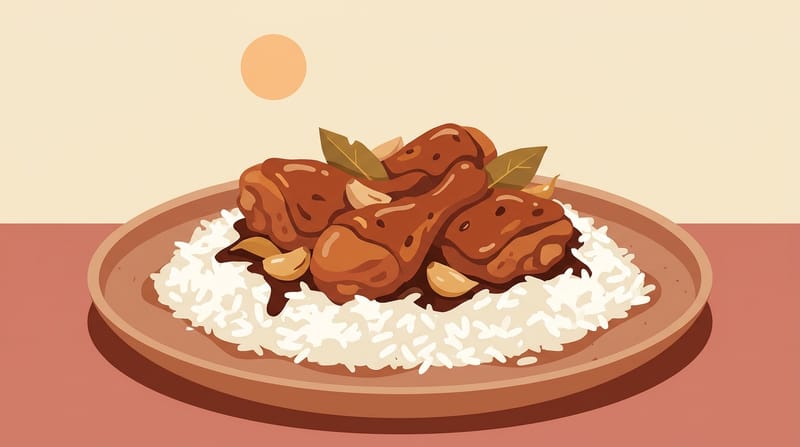
The Filipino classic of vinegar, soy and garlicChicken or pork is slowly braised with vinegar, soy sauce, garlic, peppercorns and bay leaf. If this is your first Filipino meal in Manila, adobo with rice is an easy but distinctive introduction.
Sinigang
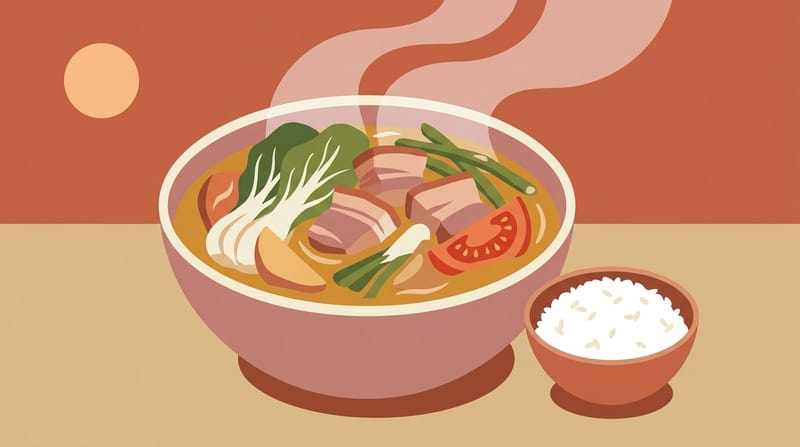
A bright, tamarind-sour hot soupMeat or seafood cooks in a vegetable broth soured with tamarind. Pork sinigang in particular is one of the best ways to understand the Filipino love of bright, sour flavors.
Sisig
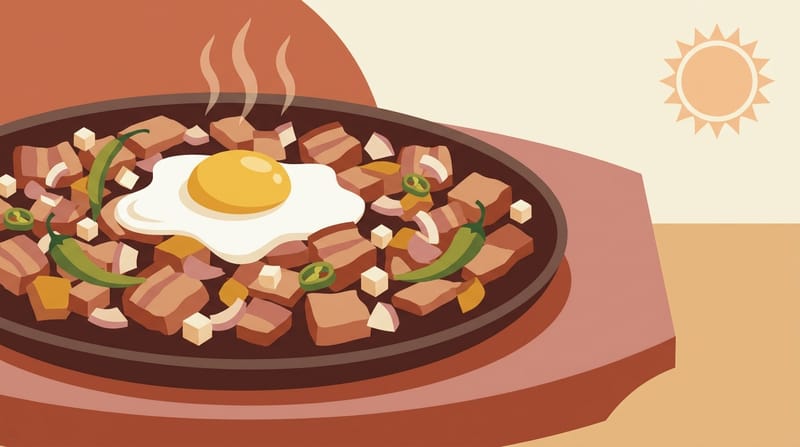
Crisp, tangy and sizzling hotFinely chopped pork is tossed with onion, chili and calamansi and served on a sizzling plate. Although it originated in Pampanga, sisig is everywhere in Manila and is especially good alongside a cold beer.

Halo-halo
Shaved ice, ube and sweets in one cooling bowlShaved ice, milk, ube, sweet beans, jellies and fruit arrive in colorful layers, and mixing everything before eating is part of the ritual. In Manila’s heat, it is almost the perfect afternoon dessert.

Fresh Lumpia
A saucy, peanut-topped Binondo classicBinondo-style fresh lumpia wraps cooked vegetables, meat or shrimp, peanuts and crunchy elements in a thin wrapper, then adds sweet or spicy sauce. New Po-Heng is one of the neighborhood’s best-known stops for it.

Hopia
The sweet Binondo pastry made for taking homeFlaky pastry encloses traditional mung bean, purple ube or other sweet fillings. Eng Bee Tin, established in Binondo in 1912, is one of the easiest places to explore several hopia styles in one stop.
Where to stay
| Areas | Makati CBD, Legazpi and SalcedoPrice: High | Bonifacio Global City (BGC)Price: High | Ermita and MalatePrice: Medium | IntramurosPrice: Medium | Pasay, Mall of Asia and Manila BayPrice: Medium | BinondoPrice: Low |
|---|---|---|---|---|---|---|
| Atmosphere | One of the most balanced bases for first-time visitors. Museums, parks, weekend markets, restaurants and major shopping malls are grouped in walkable clusters, while the business district’s orderly layout makes day-to-day planning easier. | A strong option for travelers who want a modern, orderly and walkable Metro Manila experience. High Street, Burgos Circle and Forbestown bring restaurants, cafés, parks and nightlife close together. | A central option for travelers who want to stay near the National Museum, Rizal Park, Roxas Boulevard and Manila Bay. It offers a balanced position between historic Manila and the waterfront. | The most thematic choice for travelers who want to stay as close as possible to Manila’s colonial-era history. Fort Santiago, Casa Manila and other sites inside the walls can be connected on foot. | A good fit for travelers who want relative proximity to NAIA along with major shopping, events and the Manila Bay waterfront. It offers a logistical advantage especially for short stays, concerts or trade-fair itineraries. | A characterful base for travelers who want food, Chinese-Filipino heritage and old Manila streets at the center of their stay. The dense food routes around Ongpin are well suited to exploring on foot. |
| Best for | First-time visitorsTravelers who enjoy walkingTravelers seeking a wide choice of restaurants and cafésTravelers looking for mid-range and upscale accommodation | Travelers seeking modern city lifeTravelers looking for a walkable areaFamiliesTravelers seeking restaurants and nightlife | Museum- and history-focused travelersTravelers who want to keep costs under controlTravelers who want to be near Manila Bay at sunsetShort city stays | History enthusiastsPhotographersTravelers who want to make the most of the first morning before the crowds arriveShort cultural trips | Travelers who want to stay near the airportEvent and concert visitorsFamiliesTravelers seeking shopping and the waterfront | Gastronomy-focused travelersTravelers seeking local street characterPhotographersTravelers planning to cluster Binondo and Intramuros on the same day |
| Accommodation profile | PriceHighNightlifeHighWalkabilityHigh | PriceHighNightlifeHighWalkabilityHigh | PriceMediumNightlifeMediumWalkabilityMedium | PriceMediumNightlifeLowWalkabilityHigh | PriceMediumNightlifeMediumWalkabilityMedium | PriceLowNightlifeLowWalkabilityMedium |
| Transport | One Ayala and the EDSA corridor are major public-transport hubsGrab and taxis are easy to useFor historic Manila, a rail connection plus a short car ride can often be more predictable than going by car all the way | BGC Bus and road connections form the area’s main public-transport backboneA transfer is required from the MRT-3 Ayala/Guadalupe corridorGrab and taxis are particularly practical for airport and historic Manila connections | LRT-1 United Nations and Pedro Gil stations serve the areaJeepneys, buses and taxis are widely availableIntramuros and the National Museum clusters can be linked by a short ride or on foot | Walking is the most practical way to get around inside the wallsThe final leg can be completed by a short ride from Central Terminal LRT-1 and nearby public-transport stopsTaxis and app-based rides are practical for reaching outside districts | UBE Express to NAIA and many city routes are available via PITXEDSA Carousel and LRT-1 connections support regional transportGrab and taxis are widely used for airport transfers | The Carriedo area on LRT-1 is one of the main rail access pointsJeepneys and short taxi/Grab connections are widely availablePlanning Intramuros and Escolta on the same day reduces the transport burden |
| Advantages |
|
|
|
|
|
|
| Consider |
|
|
|
|
|
|
Planning notes.
Researched recommendations, practical information and route decisions.
- Explore Intramuros on foot and make time for Fort Santiago and the San Agustin area.
- Do not settle for one restaurant in Binondo; try several small portions as you move from street to street.
- Pair the National Museum complex with Rizal Park on the same day; they are very close to each other.
- Do not assume you can move quickly between two places just because they look close on the map.
- Do not start a taxi ride without knowing how the fare will be charged; use an app or an official taxi when possible.
- Avoid stacking long outdoor walks around midday; break them up with shaded or indoor stops.
- Using the LRT on suitable routes can be more predictable than road travel during heavy traffic.
- Keep some small peso notes and coins for small shops, markets and short local transport payments.
- During the rainy season, carry a light umbrella for sudden heavy showers so they do not have to derail the whole day.
Manila map
What will it cost me?
Figures are per-person daily USD estimates compiled from BudgetYourTrip, Numbeo and recent traveller reports. Flight/ferry tickets not included.
✓ Budget figures are current planning estimates; actual spending can vary with travel dates, traffic, demand and the places you choose. · Last updated: Aug 2026
How many days?
Choose the best route for your schedule.
What to know before you go.
Tourist traps, SIM, money, taxis, safety, health, transit and language — the city in eight answers.
Before taking a calesa ride, agree on the total price, duration and route. Around Intramuros in particular, confirm whether the quoted fare is per person or for the whole carriage.
scamNormal big-city precautions go a long way in Manila: keep your phone secure in crowded stations, markets and streets, carry bags closed, and avoid using isolated streets as shortcuts late at night. The national emergency number is 911.
safetyWater utilities treat the supply to drinking-water standards, but building tanks and plumbing can vary, so short-term visitors may prefer bottled or reputable refill water. Drink extra fluids in the heat and do not neglect sun and mosquito protection.
healthThe reloadable Beep card works on LRT-1, LRT-2 and MRT-3. Single-journey tickets are also available, but if you expect to use the rail network often for several days, a Beep card reduces repeated ticket queues.
cardEnglish is widely spoken in Manila, so communication is usually easy in visitor areas. In Tagalog, “salamat” means thank you, while adding “po” makes a phrase more polite, especially when speaking to someone older.
languageManila: weather and crowds by month
🎒 What to pack
- ✔ Walking shoes
- ✔ Power adapter
- ✔ Umbrella
- ✔ Sunscreen
- ✔ Hat
- ✔ Light clothing
FLIGHTS
Airport to city
UBE Express NAIA–PITX Airport BusParañaque Integrated Terminal Exchange (PITX), with connections from all NAIA terminals
The official PITX page does not provide a journey time; duration varies with road traffic.
Best for: Passengers transferring through PITX toward Pasay, MOA or southern Metro Manila.
Limitations: It does not drop passengers directly at hotels in Makati, BGC or historic Manila; a transfer to a city route or another vehicle is required at PITX. Check the official page on the day of travel because schedules may change.
↗ Official sourceGrab Airport PickupDoor-to-door within Metro Manila
Travel time depends on the destination and traffic; the official NAIA page does not provide a fixed journey time.
Best for: Passengers with luggage, late-night arrivals, or travelers who want a direct ride to a hotel in places such as Makati or BGC.
Limitations: Prices may vary with demand and congestion. Terminal 3 has a centralized ride-hailing hub; at the other terminals, follow the designated pickup points.
↗ Official sourceGenesis P2P Clark Airport–NAIANAIA, Metro Manila
The official Clark Airport page lists the current timetable but does not provide an exact journey time; duration depends on NLEX and Metro Manila traffic.
Best for: Passengers landing at Clark and continuing to the NAIA area, Pasay or southern Metro Manila.
Limitations: It does not drop passengers directly at hotels in Makati or BGC; a second transfer is required from NAIA. Check the Clark Airport page on the day of travel for schedule changes.
↗ Official sourceGenesis P2P Clark Airport–TrinomaTrinoma / North EDSA, Quezon City
The official Clark Airport page lists the service timetable but does not provide an exact journey time; duration depends on traffic conditions.
Best for: Passengers heading to Quezon City, the northern MRT-3 corridor or the northern part of Metro Manila.
Limitations: An additional MRT, taxi or app-based ride is required for Makati, BGC and Manila City. Verify departure times on the official page on the day of travel.
↗ Official sourceManila: frequently asked questions
Which Manila stops belong on a walking route through Intramuros?
How should a first-time visitor plan a food crawl in Manila's Binondo?
What should I plan for when travelling from NAIA to Manila, Makati or Bonifacio Global City?
Can I visit Rizal Park and Manila's three National Museum buildings in one day?
Should I stay in the City of Manila, Makati or BGC to explore historic Manila?


You may also like