Busan Travel Guide
Korea’s port city of sea, hills and glowing bridges
Last updated: 2026-09-05
The city's 24-hour rhythm.
Turn the dial to any hour and it tells you where you should be.
Wander the colorful hillside
This is a good time to explore the hillside lanes before the midday crowds build. Take the stairs slowly, pause at the viewpoints and keep your voice down in residential sections.
Busan: places to visit
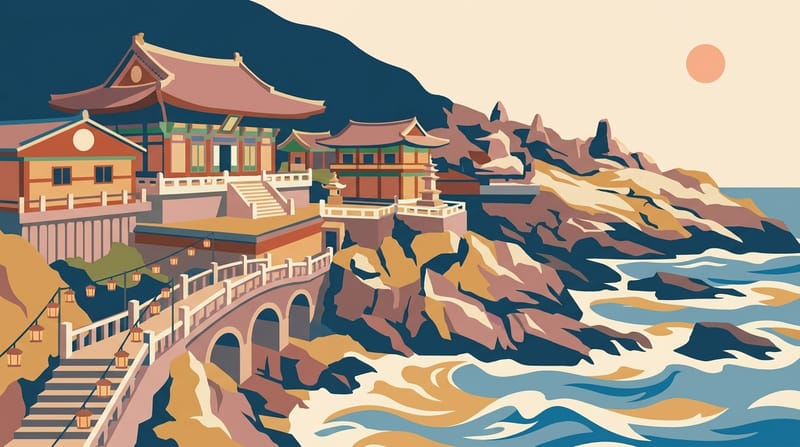
Haedong Yonggungsa Temple
Built along a rocky shoreline, this Buddhist temple is one of Busan’s most striking sights, especially for its sea views and sunrise atmosphere. Early morning is quieter and usually offers the best light.
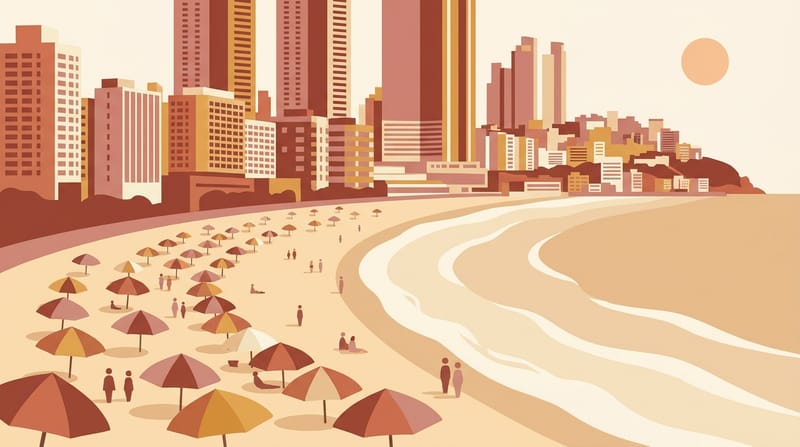
Haeundae Beach
Busan’s best-known beach combines a broad sandy shore, promenade, cafés and a modern skyline. It is worth visiting year-round, even outside swimming season, simply for a walk along the coast.
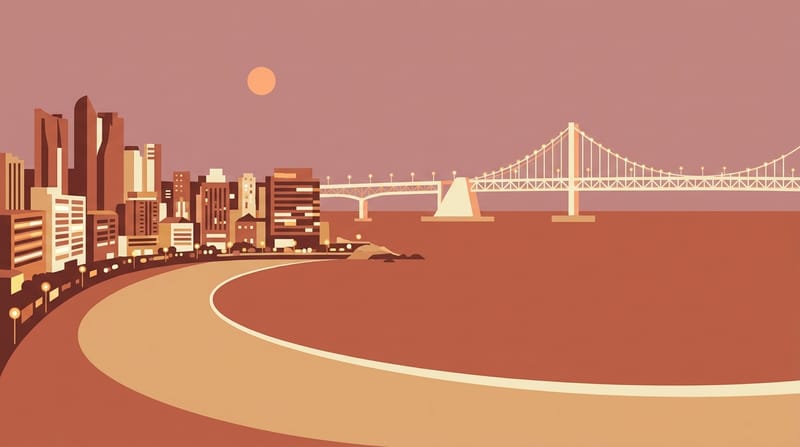
Gwangalli Beach
Facing Gwangandaegyo Bridge, this beach offers one of Busan’s best night views once the sun goes down. For an evening walk, cafés and simply sitting by the water, it can feel even more atmospheric than Haeundae.
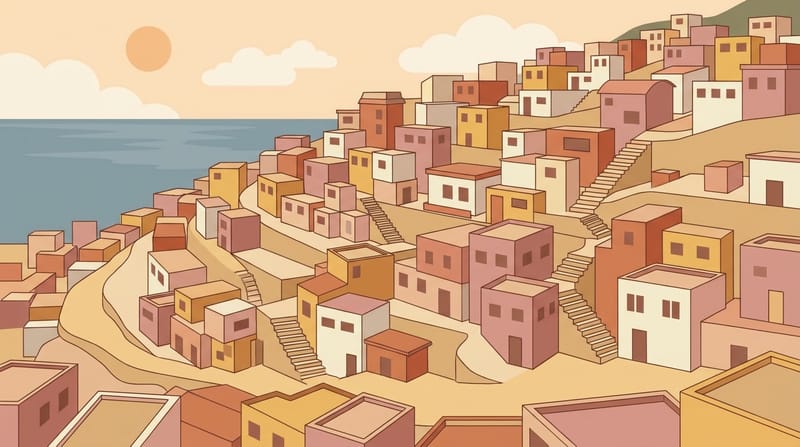
Gamcheon Culture Village
With colorful hillside homes, narrow lanes and small art spaces, this is one of Busan’s most photogenic neighborhoods. It is still a real residential area, so arriving early means fewer crowds and a more relaxed walk.
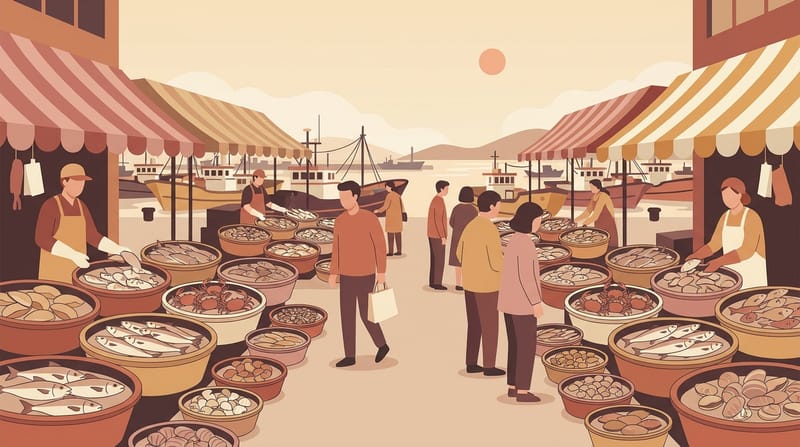
Jagalchi Fish Market
One of the best places to experience Busan’s seafood culture at close range. Live-fish stalls, food floors and the harbor atmosphere make it worthwhile not only for eating or shopping, but also for seeing the city’s everyday rhythm.

Taejongdae Resort Park
This forested coastal park at the tip of Yeongdo reveals a very different side of Busan, with cliffs, sea views and the lighthouse area. If you do not want a long walk, the Danubi train makes getting around the park much easier.
What to eat in Busan
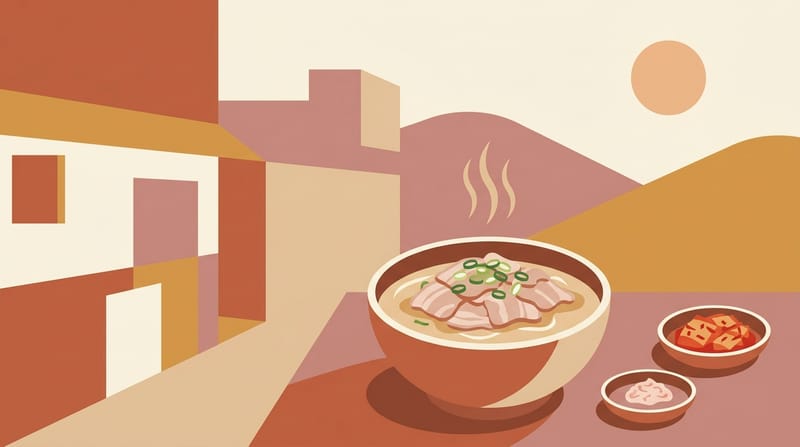
Dwaeji Gukbap (Pork and Rice Soup)
Busan’s soul in a bowl.Pork and rice served in a rich yet clean-tasting broth make this one of Busan’s defining comfort foods. Add chives, salted shrimp and seasoning at the table until the bowl tastes exactly right for you.

Milmyeon (Cold Wheat Noodles)
Busan’s cool answer to a hot day.Thin wheat noodles arrive in chilled broth with spicy sauce, cucumber and egg, making Milmyeon especially refreshing in summer. Softer than naengmyeon and deeply associated with Busan, it is a true local classic.

Ssiat Hotteok (Sweet Seed Pancake)
The crunchy sweet bite of BIFF Square.Busan’s take on hotteok fills fried dough with brown sugar, sunflower and pumpkin seeds plus assorted nuts. Eaten hot, it is crisp outside, gooey inside and wonderfully nutty.

Busan Eomuk (Fish Cake)
The warm street-food classic of a port city.Made from seasoned fish paste that is fried in different shapes or served on skewers in hot broth, eomuk is everywhere in Busan. A simple market skewer is one of the easiest ways to taste the city like a local.

Nakgopsae (Octopus, Beef Intestine and Shrimp)
Busan’s fiery trio in one pan.Born in Busan, the name combines nakji, gopchang and saeu: octopus, beef intestine and shrimp simmered together in a sweet-spicy sauce. Mixing it into rice with seaweed is one of the best ways to finish the dish.

Busan Hoe (Fresh Raw Fish)
From sea to table, Busan’s simplest luxury.In port-city Busan, hoe is all about serving fish as fresh and simply as possible. Choosing your fish at a market such as Jagalchi and having it prepared on the spot, then eating it with leafy wraps and sauces, is a classic local seafood experience.
Where to stay
| Areas | HaeundaePrice: High | GwangalliPrice: High | SeomyeonPrice: Medium | Nampo-dong and JagalchiPrice: Medium | SongjeongPrice: Medium |
|---|---|---|---|---|---|
| Atmosphere | Busan’s best-known seaside district. One of the easiest choices for first-time visitors who want to stay near the sea and combine beach walks, cafés and high-rise city views in the same area. | A waterfront district known for views of Gwangandaegyo Bridge, seaside cafés and its evening atmosphere. A strong alternative for travelers who value night views and a local social feel more than Haeundae’s resort character. | Not by the sea, but one of Busan’s most practical hubs for transport and shopping. A strong base for travelers who want to explore the east and west sides evenly and reduce long cross-city journeys when returning to the hotel at night. | One of the most characterful areas to stay for travelers prioritizing Busan’s historic downtown atmosphere, markets and port culture. Jagalchi, BIFF Square, Gukje Market and Yongdusan Park are concentrated in the same part of the city. | Farther east than Haeundae, this area stands out for surfing and a calmer seaside pace. Better suited to travelers who want to spend a few days focused on the sea, beach and eastern Busan rather than visiting the city centre every day. |
| Best for | First-time visitorsSea and beachCouplesBeachfront walksClose to tourist amenities | Night viewsCafésCouplesGroups of friendsTravelers who want to stay near the sea | Easy transportFirst-time visitorsShoppingLocal foodTravelers exploring both sides of the city | Historic downtownMarketsStreet foodPhotographyFirst-time visitors | SurfingQuiet beachFamiliesLonger staysEastern Busan routes |
| Accommodation profile | PriceHighNightlifeHighWalkabilityHigh | PriceHighNightlifeHighWalkabilityHigh | PriceMediumNightlifeHighWalkabilityHigh | PriceMediumNightlifeMediumWalkabilityHigh | PriceMediumNightlifeLowWalkabilityMedium |
| Transport | Busan Metro Line 2: Haeundae Station.A current airport bus runs from Gimhae Airport toward Haeundae/Gijang.The airport’s official taxi estimate to Haeundae is about 70 minutes. | Busan Metro Line 2: Gwangan Station, about a 13-minute walk to the beach.Bus routes 42 and 62 serve the Gwangalli Beach stop.The official airport taxi estimate is about 70 minutes. | Busan Metro Lines 1 and 2: Seomyeon Station.A direct airport bus runs from Gimhae Airport toward Seomyeon/Bujeon.The airport’s official taxi estimate to Seomyeon is about 45 minutes. | Nampo and Jagalchi stations are on Busan Metro Line 1.The airport’s official taxi estimate toward Jagalchi/Nampo is about 60 minutes.By rail from the airport, you can transfer at Sasang to Metro Line 2 and then connect to Line 1. | The Haeundae Blueline Park Beach Train links Songjeong with the Mipo coastal route.Because it is in eastern Busan, allow extra time when traveling into the city centre. |
| Advantages |
|
|
|
|
|
| Consider |
|
|
|
|
|
Planning notes.
Researched recommendations, practical information and route decisions.
- Watch Gwangan Bridge light up from Gwangalli Beach after sunset.
- Visit Haedong Yonggungsa early, while the seaside temple is still calmer.
- Walk part of the Haeundae coast, from Dongbaekseom toward Mipo or Cheongsapo.
- Do not pack east and west Busan into the same day; the cross-city rides eat up hours.
- Avoid arriving at Gamcheon around peak late-morning hours if you want quiet lanes and clean views.
- Do not plan every coastal stop back-to-back; wind, hills and transfers make Busan days longer than they look.
- Use a rechargeable Korean transit card for metro and buses; transfers are much easier than buying single tickets repeatedly.
- Use Naver Map or Kakao Map for local navigation; they are generally more useful in Korea than Google Maps.
- Carry a light layer even in mild weather; evenings on Gwangalli and Haeundae can turn breezy.
Busan map
What will it cost me?
Figures are per-person daily USD estimates compiled from BudgetYourTrip, Numbeo and recent traveller reports. Flight/ferry tickets not included.
✓ This budget note is a planning estimate based on transport, food and typical admission costs; accommodation level, season, weekend demand and exchange rates can change the total noticeably. · Last updated: Aug 2026
How many days?
Choose the best route for your schedule.
What to know before you go.
Tourist traps, SIM, money, taxis, safety, health, transit and language — the city in eight answers.
In tourist areas such as Jagalchi and Haeundae, confirm the price, portion size and any extra charges before ordering seafood or choosing a restaurant. If a menu has no visible prices, ask first; at places selling live seafood, the final bill can vary with the weight of what you choose.
scamBusan is generally comfortable and safe for visitors, but use normal city precautions in crowded markets, nightlife areas and on public transport. For emergencies, call 112 for police and 119 for fire or ambulance services.
safetyThe municipal water supply is treated, but if you have a sensitive stomach you may feel more comfortable with bottled or filtered water. Pharmacies are common; for a serious problem, use a hospital or emergency department. Keep travel insurance and any personal medication with you.
healthTransit cards such as T-money and Cashbee can be used on the Busan Metro and many buses; tapping when entering and leaving is important for transfer discounts. Sales and top-up points can change, so check current information at stations or on the official transport site.
cardEnglish is workable in tourist areas, but it is not spoken fluently everywhere. Save hotel and restaurant addresses in Korean. Naver Map or KakaoMap is more useful for local navigation, and a Korean translation app can make everyday interactions much easier.
languageBusan: weather and crowds by month
🎒 What to pack
- ✔ Walking shoes
- ✔ Power adapter
- ✔ Jacket
- ✔ Layers
- ✔ Umbrella
FLIGHTS
Airport to city
Busan-Gimhae Light Rail Transit + Busan MetroCentral Busan via Metro Line 2 at Sasang or Line 3 at Daejeo
The full light-rail line is designed for a 37-minute one-way journey; from Airport Station, total time varies by final destination when transferring at Sasang or Daejeo.
Best for: Budget-conscious travelers and those who want to avoid traffic delays.
Limitations: At least one transfer is required for areas such as Haeundae, Gwangalli or Nampo; with heavy luggage it can be less convenient than the bus.
↗ Official sourceAirport Limousine Bus · Seomyeon/BujeonJurye Station · Dongeui University · Seomyeon Station · Bujeon Market · Bujeon Station
The airport’s official page lists departures between 07:20 and 21:30 at roughly 70-minute intervals; journey time varies with traffic and the stop where you get off.
Best for: Travelers staying in Seomyeon or Bujeon who want to avoid transfers with luggage.
Limitations: Affected by road traffic more than rail; service is roughly every 70 minutes and operating times may be changed by the operator.
↗ Official sourceAirport Limousine Bus · Haeundae/GijangNamcheon-dong · Centum City · BEXCO · Marine City · Haeundae Beach · Jangsan · Gijang on selected services
The official page lists departures throughout the day at roughly 60-minute intervals; total journey time varies with traffic and stop location.
Best for: Travelers staying in Haeundae, Marine City, Centum City or Gijang who want a direct ride without transfers.
Limitations: Some services do not continue to Gijang; traffic can affect travel time, and the latest timetable should be rechecked before travel.
↗ Official sourceBusan: frequently asked questions
Which is the best area to stay in Busan: Haeundae, Seomyeon or Nampo?
Should I ride the Haeundae Sky Capsule or the Beach Train, and do I need to book ahead?
Can I visit Gamcheon Culture Village, Jagalchi Market and BIFF Square in one day?
Is the Visit Busan Pass worth buying?
What is the easiest way to get from Gimhae International Airport to Haeundae, Seomyeon or Nampo?
Nearby routes



You may also like