

Sapporo Travel Guide
A northern city of snow, food and broad boulevards
Last updated: 2026-09-05
The city's 24-hour rhythm.
Turn the dial to any hour and it tells you where you should be.
Take downtown at an easy pace
By late morning the park and surrounding streets come alive. It is a good time to wander between the TV Tower, cafés and broad boulevards without rushing.
Sapporo: places to visit
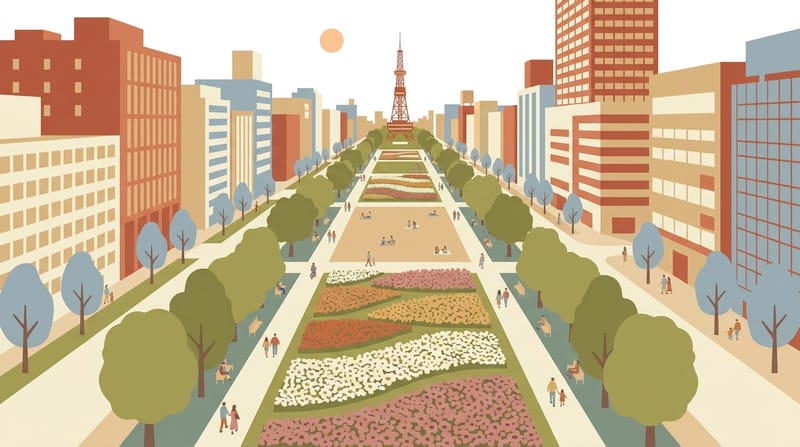
Odori Park
Stretching about 1.5 km east to west through central Sapporo, this broad green corridor is one of the best places to start exploring on foot. Flowers, seasonal events, summer beer gardens and the Snow Festival transform its atmosphere throughout the year.

Sapporo TV Tower
This 147 m landmark at the eastern end of Odori Park offers a clear view along the park’s long axis and across central Sapporo from its observation deck. It is especially striking around sunset and after the city lights come on.

Mount Moiwa
One of Sapporo’s best-loved panoramas is found here. A ropeway and mini cable car carry you to the summit, where you get a broad city view by day and a sea of lights across the Sapporo plain after dark.

Sapporo Beer Museum
Inside the historic red-brick building, exhibits trace Japanese beer culture and the development of the Sapporo brand. Pairing the museum visit with the paid tasting hall is a good way to try Hokkaido-specific brews such as Sapporo Classic.
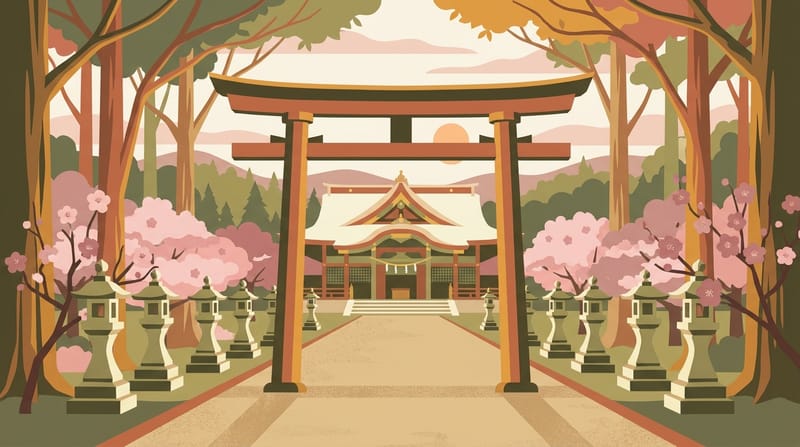
Hokkaido Shrine
Set beside the wooded grounds of Maruyama Park, this major Shinto shrine offers a calmer, more traditional side of Japan without leaving Sapporo. Cherry and plum blossoms in spring, autumn foliage and snow-covered winter scenery make it rewarding in every season.

Moerenuma Park
Designed by Isamu Noguchi as if the entire park were a single sculpture, Moerenuma is one of Sapporo’s most distinctive outdoor spaces. Geometric hills, the glass pyramid, broad lawns and the large Sea Fountain make it especially rewarding for architecture and photography fans.
What to eat in Sapporo
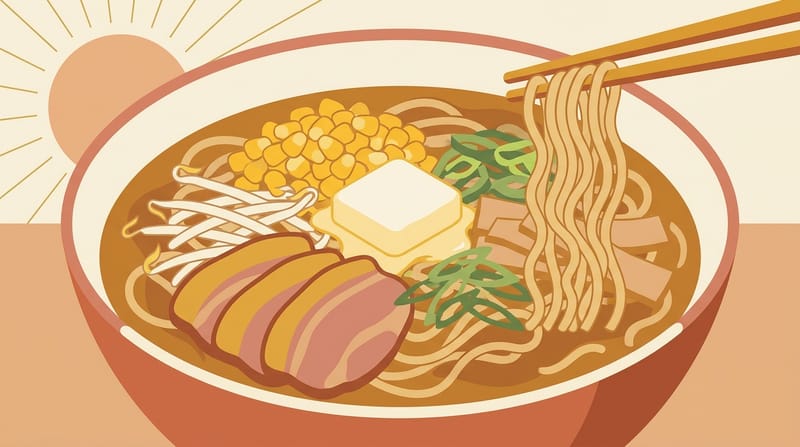
Sapporo Miso Ramen
The city’s classic warming bowl.Born in Sapporo, miso ramen combines a rich miso broth with medium-thick wavy noodles, often topped with corn, butter, vegetables or chashu. It is especially satisfying on a cold day.

Sapporo Soup Curry
Spicy, light and unmistakably Sapporo.Created in Sapporo about half a century ago, soup curry pairs a thin but deeply spiced broth with large-cut vegetables and chicken, pork or seafood. Most shops let you choose the heat level.
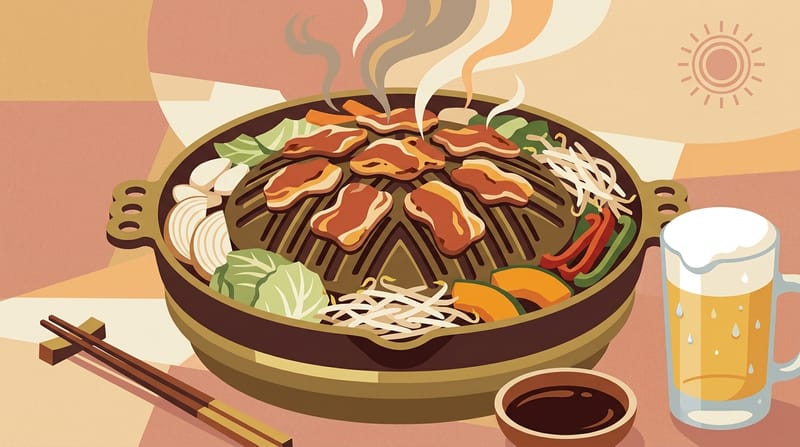
Jingisukan Lamb Barbecue
Grilled lamb, a Sapporo evening classic.Lamb or mutton is grilled with onions and other vegetables on a distinctive domed grill. Smoky, juicy and filling, it is one of the city’s classic meals, especially with a glass of Sapporo beer.
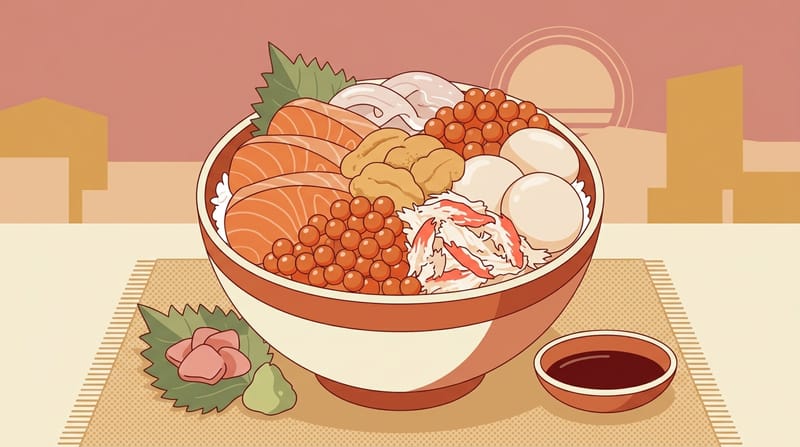
Hokkaido Seafood Donburi
The seas of Hokkaido in one bowl.At central markets such as Nijo Market, Hokkaido salmon, ikura, sea urchin, scallops and crab are piled over rice. Toppings change with the season, so the best choice is usually the freshest combination available that day.
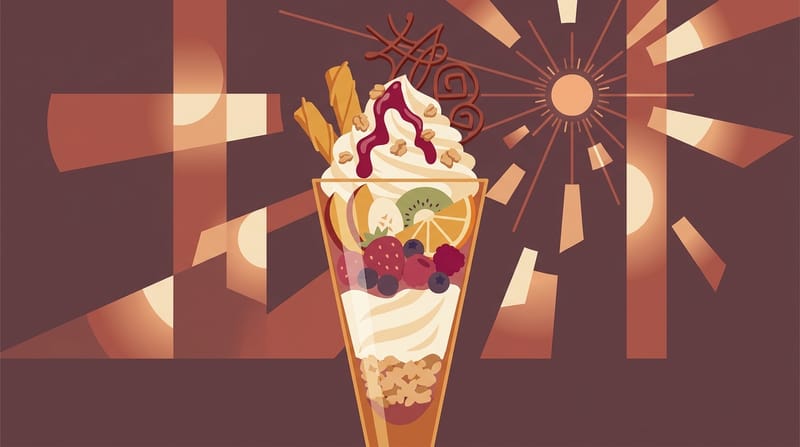
Shime Parfait
Sapporo’s sweet finish to the night.The custom of ending a night of food and drinks with an elaborate parfait originated in Sapporo. Ice cream, fruit, cream and crunchy elements are layered into polished desserts, with specialist shops around Susukino open late.

Sapporo Beer
A city signature since 1876.Sapporo played a major role in the beginnings of modern beer brewing in Japan. In the city, trying Sapporo Classic fresh on tap is especially worthwhile, and pairing it with jingisukan at a beer garden is the classic combination.
Where to stay
| Areas | Sapporo Station areaPrice: medium-high | OdoriPrice: medium-high | SusukinoPrice: Medium | Nakajima Park areaPrice: Medium | MaruyamaPrice: Medium | Jozankei OnsenPrice: High |
|---|---|---|---|---|---|---|
| Atmosphere | One of the most practical bases for first-time visitors who prioritize easy transport. JR, two subway lines, buses, shopping centers and major hotels all meet at the same hub. | A balanced location right in the middle of central Sapporo for travelers who want to reach sights on foot. It sits between Odori Park, the TV Tower, Tanukikoji and Susukino. | Sapporo's main entertainment district, packed with restaurants, bars, izakaya, karaoke and venues that stay open late. | Just south of Susukino, this is a strong alternative for travelers who want to stay close to the center while enjoying a park and a calmer setting. | A more local-feeling district, reachable from the center by public transport in roughly half an hour, combining quiet residential streets, stylish cafés and easy access to nature. | A mountainous hot-spring district within Sapporo's city limits. It suits travelers looking for a one- or two-night ryokan, onsen and nature escape rather than a base for city sightseeing. |
| Best for | First-time visitorsEasy airport accessJR day tripsShopping | First-time visitorsTravelers who like walkingFestival periodsThose who want a central location | NightlifeFood and drinkTravelers who stay out lateThose who want lively city energy | Quieter accommodationParks and walkingCouplesStaying close to the center | Quiet neighborhood atmosphereCafésNatureLonger stays | OnsenRyokan experienceRomantic getawayNatureSlow travel |
| Accommodation profile | Pricemedium-highNightlifeMediumWalkabilityHigh | Pricemedium-highNightlifemedium-highWalkabilityHigh | PriceMediumNightlifeHighWalkabilityHigh | PriceMediumNightlifeMediumWalkabilityHigh | PriceMediumNightlifeLowWalkabilitymedium-high | PriceHighNightlifeLowWalkabilityMedium |
| Transport | JR Sapporo StationNamboku LineToho LineAirport RapidCity and regional buses | Odori StationNamboku LineTozai LineToho LineUnderground pedestrian connections | Susukino StationNamboku LineSapporo StreetcarPedestrian connection to Odori | Nakajima Koen StationNamboku LineA short walk to Susukino | Maruyama Koen StationTozai Line | Kappa LinerLocal Jotetsu buses |
| Advantages |
|
|
|
|
|
|
| Consider |
|
|
|
|
|
|
Planning notes.
Researched recommendations, practical information and route decisions.
- Start at Odori Park and walk toward the Clock Tower, underground shopping areas and Susukino to get a feel for central Sapporo at your own pace.
- Head up Mt. Moiwa around sunset and see Sapporo’s distinctive grid spread out below you.
- Try miso ramen, soup curry and jingisukan at least once each; food is one of the quickest ways to understand Sapporo.
- Do not assume every famous Hokkaido attraction is in Sapporo; Otaru, Furano, Biei and Hakodate are separate destinations.
- Do not plan tight connections during heavy snowfall; leave extra time for possible bus and train delays.
- Avoid long winter walks in smooth-soled shoes; packed snow and ice can be extremely slippery even in the city centre.
- The underground passages linking Sapporo Station, Odori and Susukino are invaluable in cold, rain or snow.
- Compatible IC cards such as Kitaca and Suica work on the subway and much of the city’s public transport.
- Visit Nijo Market in the morning for a better selection and a calmer experience before the lunchtime crowds.
Sapporo map
What will it cost me?
Figures are per-person daily USD estimates compiled from BudgetYourTrip, Numbeo and recent traveller reports. Flight/ferry tickets not included.
✓ Treat the budget figures as planning estimates rather than fixed prices. Accommodation can rise sharply during the Snow Festival, weekends and peak periods, while food and transport costs vary with neighbourhood and travel style. · Last updated: Aug 2026
How many days?
Choose the best route for your schedule.
What to know before you go.
Tourist traps, SIM, money, taxis, safety, health, transit and language — the city in eight answers.
Do not jump into a taxi for every short trip downtown. Sapporo Station, Odori and Susukino are easy to connect on foot, by subway and through underground walkways, which are especially useful in winter.
scamSapporo is generally very safe. In winter, icy pavements and heavy snow are usually a bigger concern than crime; late at night in Susukino, normal big-city awareness is enough.
safetyTap water is safe to drink. Cold, dry winter air can be hard on your skin and lips, so stay hydrated and wear shoes with good grip if you plan to walk a lot.
healthKitaca, Suica, PASMO and other compatible Japanese IC cards work on the Sapporo subway and on many buses and streetcars. SAPICA is useful locally, but has more limited use outside the Sapporo area.
cardYou can usually get by with basic English in tourist areas, but a few Japanese phrases help in small restaurants. 'Sumimasen' is useful for getting attention or apologizing, and 'arigato gozaimasu' is a safe way to say thank you.
languageSapporo: weather and crowds by month
🎒 What to pack
- ✔ Walking shoes
- ✔ Power adapter
- ✔ Jacket
- ✔ Layers
- ✔ Gloves & beanie
- ✔ Umbrella
FLIGHTS
Airport to city
JR Rapid AirportSapporo Station
The fastest Special Rapid service takes about 33 minutes; Rapid Airport takes about 37 minutes. The basic one-way Sapporo–New Chitose fare is ¥1,230.
Best for: Travelers who want fast, traffic-independent access to Sapporo Station, Odori and JR connections.
Limitations: Non-reserved cars can be crowded at peak times; not every service is the 33-minute Special Rapid.
↗ Official sourceNew Chitose Airport Limousine BusCentral Sapporo / Nakajima Park
Travel time varies with traffic and stops; the official airport page confirms that the central Sapporo route is operating. In the 2026 timetable, the adult one-way fare to central Sapporo is ¥1,500.
Best for: Travelers with heavy luggage or those who want to get off at a bus stop closer to a hotel in areas such as Susukino or Nakajima Park.
Limitations: The trip is affected by road traffic and winter conditions; payment options may differ on services operated by the joint operator Hokuto Kotsu.
↗ Official sourceHokuto Kotsu Okadama Airport ShuttleSapporo Station / Sakaemachi Station
Okadama Airport to Sapporo Station takes about 30 minutes and costs ¥1,000; Okadama Airport to Sakaemachi Station takes about 5 minutes and costs ¥350.
Best for: Travelers who want a direct ride to Sapporo Station from April to November, or a year-round connection to the subway via Sakaemachi.
Limitations: The direct Sapporo Station service does not operate from 1 December to 31 March. Bus times may change with the flight schedule.
↗ Official sourceHokkaido Chuo Bus local serviceSakaemachi Station / Asabu Station
Okadama Airport to Sakaemachi Station takes about 5 minutes and costs ¥240; Okadama Airport to Asabu Station takes about 15 minutes and costs ¥240.
Best for: Travelers looking for a low-cost subway connection, using the Toho Line from Sakaemachi or the Namboku Line from Asabu.
Limitations: It does not go directly to the city center; a subway transfer at Sakaemachi or Asabu is required.
↗ Official sourceSapporo: frequently asked questions
How should you choose between the Odori, Susukino and Tsudome sites at the Sapporo Snow Festival?
What is the most practical way to get from New Chitose Airport to central Sapporo?
Can you walk between Sapporo Station, Odori and Susukino without going outside in winter?
Which local Sapporo foods should you prioritize: miso ramen, soup curry or jingisukan?
Is Mt. Moiwa worth visiting for Sapporo’s night view, and when should you go up?
Related articles

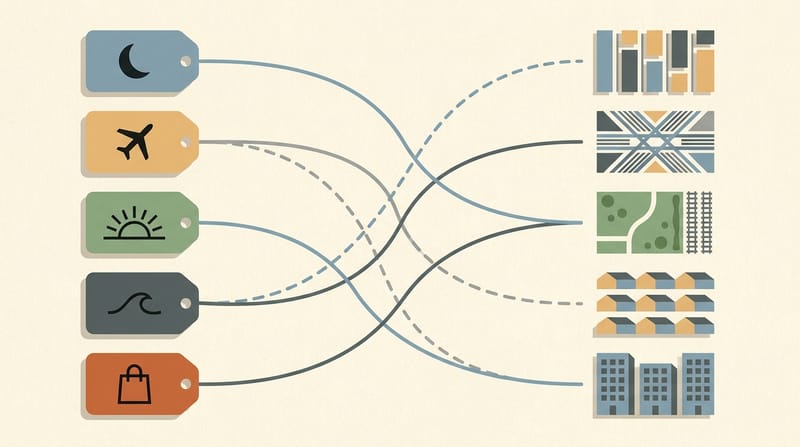

Nearby routes